OptiLinker
OptiLinker
OptiLinker
Engineered for immediate deployment across St. John's, Jolly Harbour, and Barbuda carrier backbones.
As the Caribbean pivots towards comprehensive digital integration, Antigua and Barbuda is establishing itself as a key technological hub in the Eastern Caribbean. Spearheaded by initiatives from the Ministry of Information, Broadcasting, Telecommunications & Information Technology, alongside investments by major carriers like Flow, Digicel, and the state-owned APUA (Antigua Public Utilities Authority), the twin-island nation is undergoing a massive network modernization campaign.
The deployment of high-reliability fiber optics and mobile backbones is crucial. In environments characterized by high humidity, coastal salinity, and tropical temperatures, standard network equipment faces premature degradation. The demand for industrial-grade 2.5G to 6G SFP transceivers has surged. These modules form the physical-layer backbone for enterprise broadband, yachting harbor connectivity, government e-services, and private banking infrastructures in St. John's.
OptiLinker Optoelectronics provides precision-engineered transceivers equipped with advanced Digital Diagnostic Monitoring (DDM) and salt-spray resistant physical housings, specifically tailored to mitigate the geographical and environmental challenges of Caribbean telecom installations.

Globally, the transition from legacy 1G networks to high-performance 10G and 25G infrastructures has left a critical gap. The 2.5G and 5G/6G bandwidth tiers have emerged as the absolute sweet spot for mid-haul transport, next-gen Wi-Fi 6/6E/7 access point backhaul, and industrial automation networks. Standardizing on 2.5G~6G SFP modules allows enterprise architectures to scale cost-effectively without incurring the steep power budgets and thermal dissipation requirements of 10G/25G high-speed optics.
Key international trends driving this market include:

Leveraging 12 years of core optical R&D to deliver uncompromising quality control standards.
OptiLinker Optoelectronics Co., Ltd. (OptiLinker) is a professional optical transceiver manufacturer and solution provider under the brand OptiLinker (www.optilinkertrans.com), specializing in high-speed optical communication modules for global data centers, enterprise networks, and national telecom infrastructures.
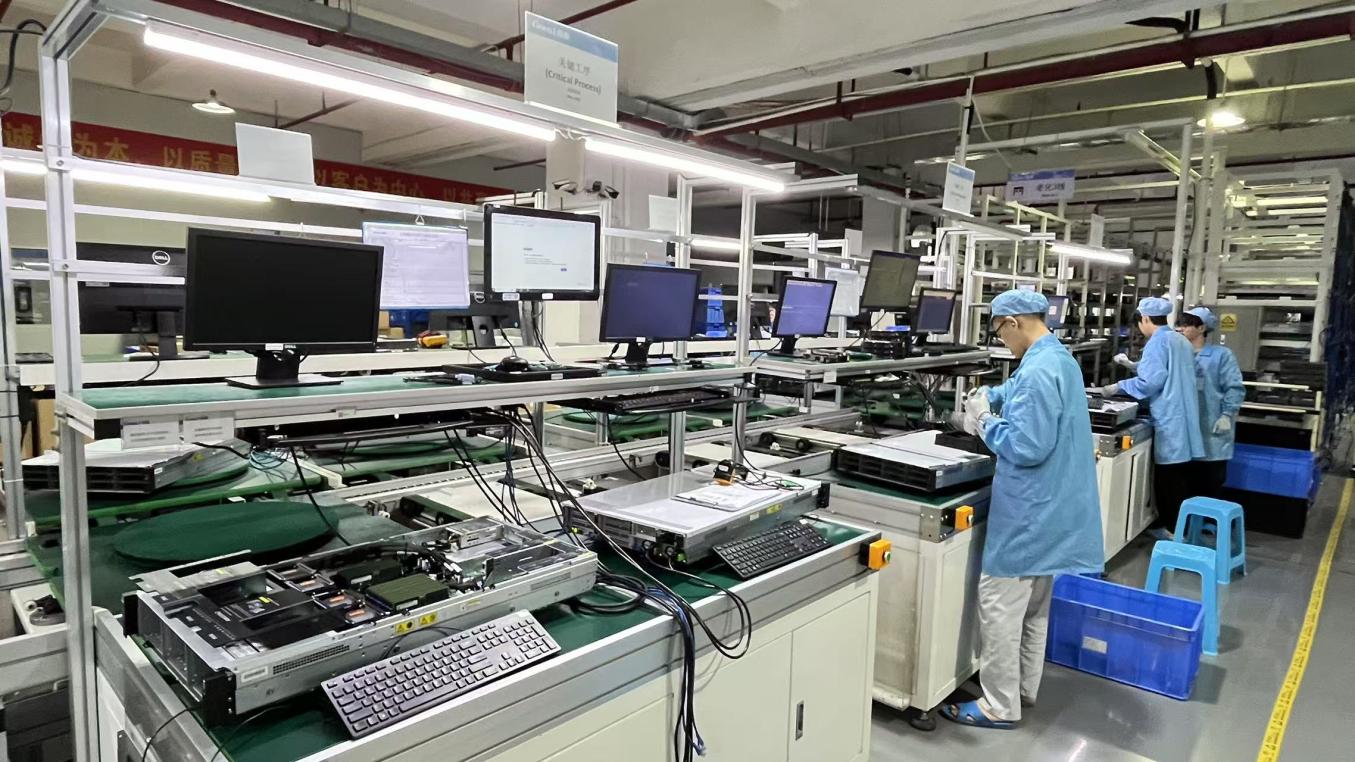
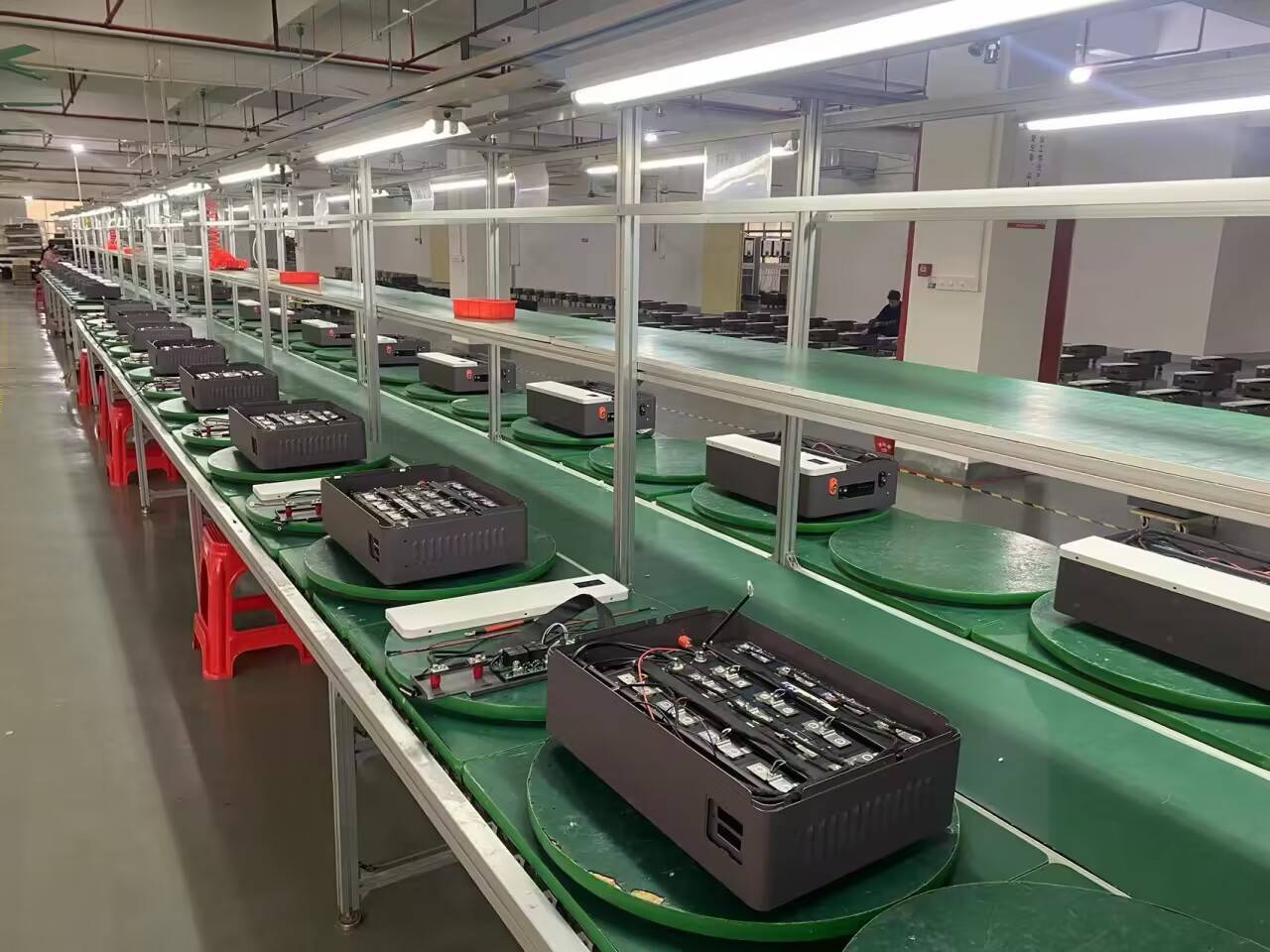
Operating a highly specialized cleanroom production facility with a building area of approximately 320㎡, OptiLinker leverages over 12 years of specialized optical industry experience. We implement a rigorous quality verification workflow, utilizing 100% incoming material inspection, Automated Optical Inspection (AOI), Bit Error Rate (BER) testing, eye diagram analysis, and comprehensive high/low-temperature chamber cycling tests to verify that every module functions flawlessly under volatile climates.
Our global footprint is sustained by strong supply networks with approximately 850 strategic partners. This ensures a stable component pipeline for micro-optics, laser diodes, and digital diagnostic ICs, maintaining rapid lead times even for custom production runs.
Providing customizable structural solutions for critical regional implementations.
Industrial-grade transceivers engineered with multi-vendor compatibility firmware.
Full legacy compatibility for legacy infrastructure nodes and next-generation switches.
Essential insights for procurement managers and network engineers deploying optical transceivers in the Caribbean.
Our modules are constructed using specialized high-grade gold-plated edge connectors and custom anti-corrosion optical component seals. OptiLinker implements strict hermetic sealing procedures on our TOSA (Transmitter Optical Sub-Assembly) and ROSA (Receiver Optical Sub-Assembly) units. This prevents condensation and salt accumulation from degrading laser coupling performance over prolonged deployments in tropical coastal zones.
Yes. OptiLinker maintains an extensive library of host firmware structures. We program every batch of EEPROMs individually to match the specific encryption requirements of target host equipment like Cisco, Ubiquiti, Mikrotik, Juniper, and Huawei. Simply notify our engineering division of your active hardware environment prior to shipping, and we will code the modules for seamless plug-and-play operation.
For standard inventory orders, our dispatch lead time is 3–5 working days. For bulk OEM orders requiring custom EEPROM programming and specific labels, production and validation typically require 7–10 days. We partner with air freight services (DHL, FedEx, UPS) to ensure arrival at V.C. Bird International Airport within 5–7 transit days.
DDM (or DOM - Digital Optical Monitoring) allows network engineers to remotely monitor real-time diagnostic parameters of the SFP modules. Key values include optical TX power, optical RX power, transceiver temperature, internal supply voltage, and laser bias current. This is critical for predicting link degradation over fiber runs before a total connection failure occurs.
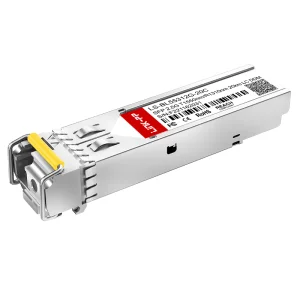
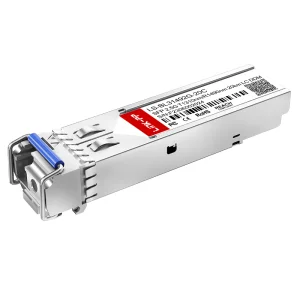
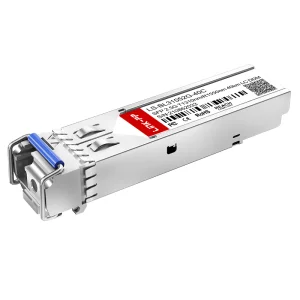
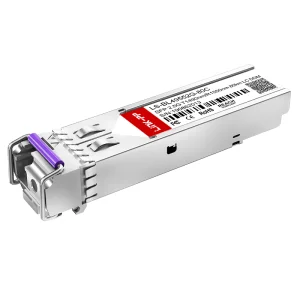
Absolutely. Standard SFPs use duplex fibers (one to transmit, one to receive). Bidi transceivers use Wavelength Division Multiplexing (WDM) to transmit and receive at different wavelengths (e.g., 1310nm-TX/1550nm-RX) over a single physical fiber core. This halves the fiber optic infrastructure requirements, saving significant capital costs when upgrading networks between communities like Liberta, Bolans, and Codrington.
Contact our technical support desk today to discuss customized wavelengths, distance ranges, pricing options, and compatibility standards for your optical network modules.
Contact Our Engineering Team