OptiLinker
OptiLinker
OptiLinker
These high-reliability modules are engineered specifically to comply with Geneva's strict physical-layer signal compliance and ultra-low latency configurations.
As one of the world's most critical financial and diplomatic hubs, Geneva requires highly reliable and high-performance network structures. The demand for bandwidth in Switzerland, particularly in the Geneva-Lausanne-Zurich economic corridors, has skyrocketed. This growth is driven by international institutions, financial groups, private banking houses, and advanced scientific institutions like CERN (European Organization for Nuclear Research).
In this demanding ecosystem, the transition from legacy 10G networks to modern 25G/32G SFP28 architectures represents a strategic shift. Modern fiber infrastructure deployments must adhere to strict environmental standards, low-latency requirements, and Swiss federal regulations. Key data hubs in the canton of Geneva, including carrier-neutral spaces and private bank operations, rely heavily on optical transceivers. These components must offer the lowest possible failure rates and full compatibility with major switching vendors.
Globally, the 25G/32G SFP28 optical interface is the primary pathway for high-density edge connectivity. 25G Ethernet provides a direct upgrade path from 10G, offering 2.5 times the bandwidth over a single lane without requiring a complete redesign of existing structured cabling. This translates to reduced power consumption and lower cooling demands, which helps lower the overall Total Cost of Ownership (TCO) for enterprise operations.
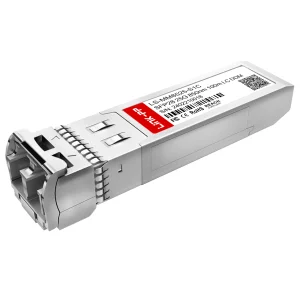
Simultaneously, storage area networks (SAN) utilize the 32G Fibre Channel (FC) standard. This configuration allows financial nodes to transfer bulk database logs rapidly with zero-packet-drop reliability. OptiLinker's dual-rate and single-rate transceivers bridges these protocol demands, providing a robust solution for diverse network architectures.
| Transceiver Type | Wavelength (nm) | Fiber Type | Max Distance | Typical Application Scenario |
|---|---|---|---|---|
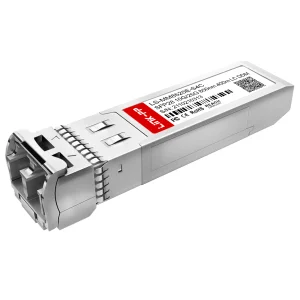
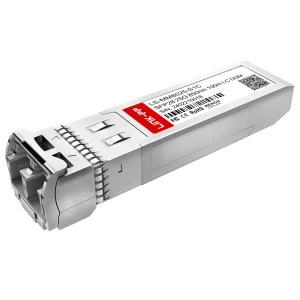
| SFP28 SR (Short Range) | 850nm | MMF (OM3/OM4) | 70m / 100m | Intra-Rack Switch Connections |
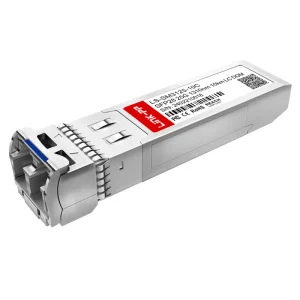
| SFP28 LR (Long Range) | 1310nm | SMF (G.652) | 10km | Metro Campus & Enterprise DCI |
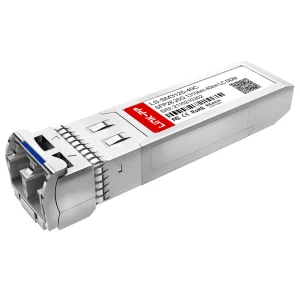
| SFP28 ER (Extended Range) | 1310nm / 1550nm | SMF (G.652) | 40km | Long-haul Intercity Ring Networks |
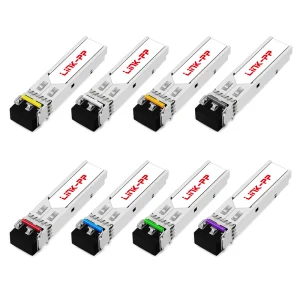
| SFP28 CWDM/DWDM | Grid Wavelengths | SMF (G.652) | 10km / 30km | Wavelength Division Multiplexing |
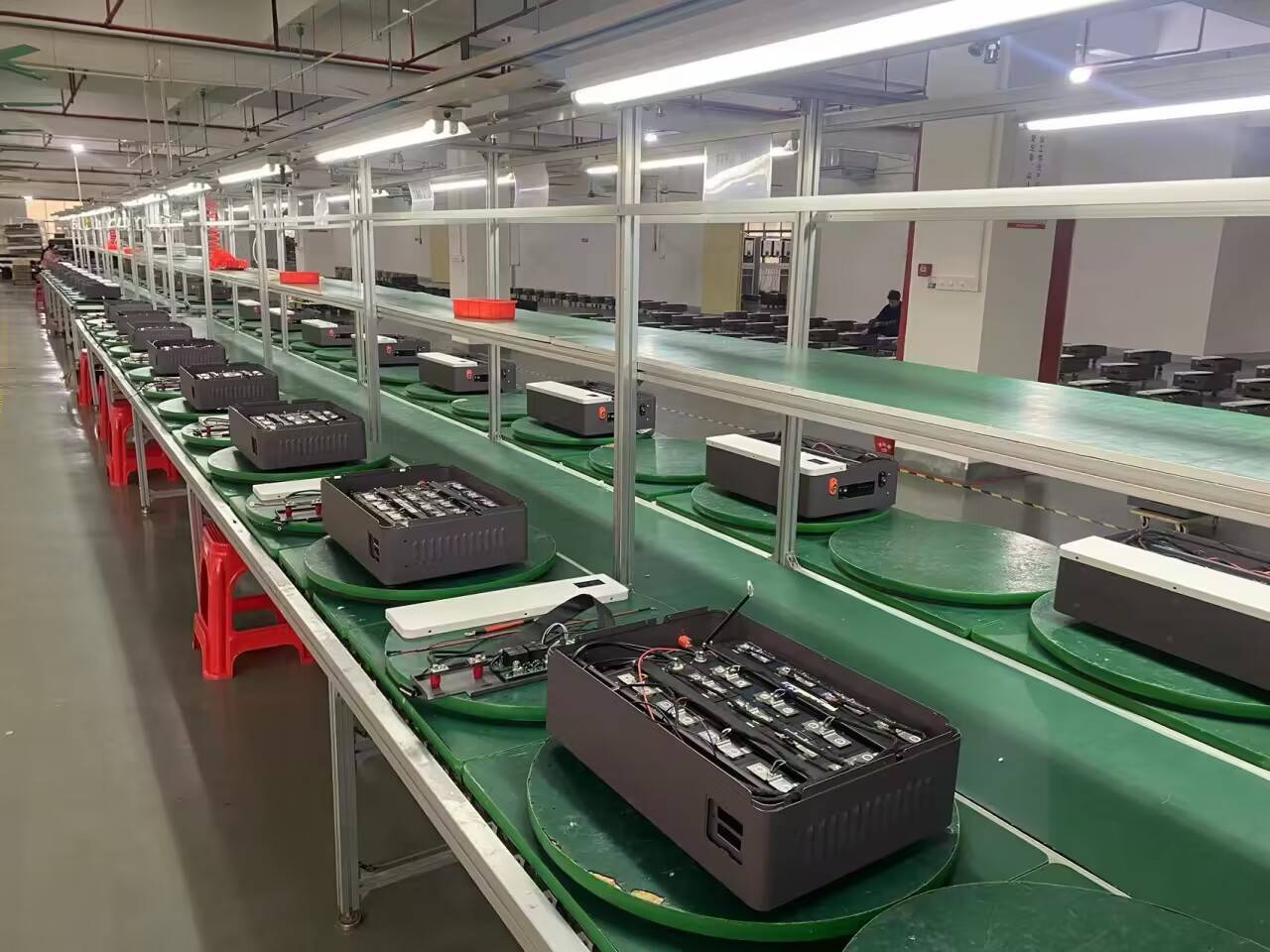
OptiLinker Optoelectronics Co., Ltd. (OptiLinker) is a leading professional optical transceiver manufacturer. We specialize in designing and manufacturing high-speed, high-density optical communication modules. Since our founding in 2016, we have built on 12 years of industry experience and 8 years of export expertise. Today, we deliver reliable, high-performance network equipment to system integrators and telecommunications operators worldwide.
Our quality assurance system is built around meticulous testing protocols. We operate a modern production facility and maintain strict quality control standards, including 100% incoming material inspection, Automated Optical Inspection (AOI), and comprehensive optical performance validation. Our quality control team includes 35 dedicated QC professionals who monitor every step of production. This includes Bit Error Rate (BER) testing, eye diagram analysis, and environmental cycling tests from -40°C to +85°C.

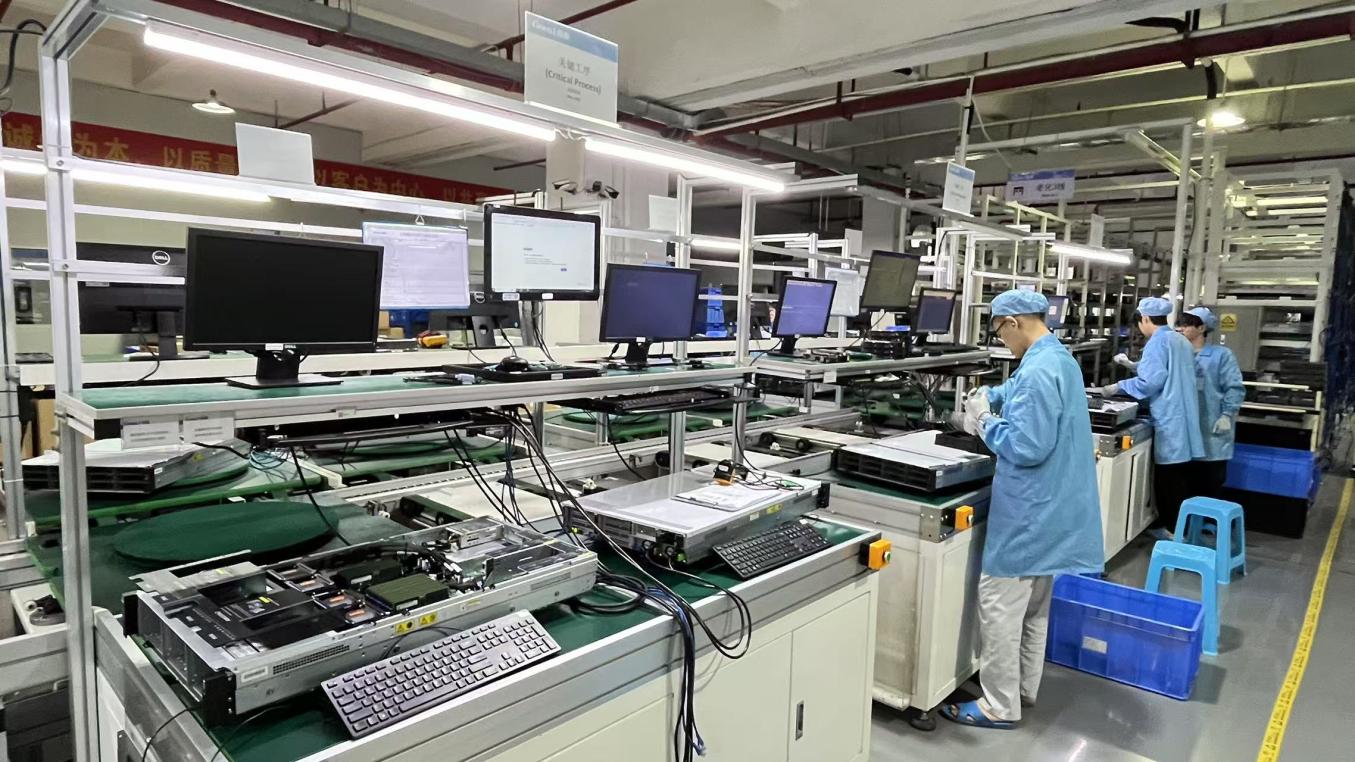
Our R&D team consists of 60 optical engineers who focus on custom designs, signal integrity optimization, and firmware programming. We offer extensive customization options, including custom wavelengths, transmission distances, packaging form factors, and device compatibility programming. This ensures seamless integration with equipment from major global vendors.
Operating in the Geneva and broader Swiss markets requires compliance with strict data sovereignty and hardware safety standards. The Swiss Federal Act on Data Protection (FADP) and EU General Data Protection Regulation (GDPR) influence how infrastructure is deployed. Every optical link must prevent signal leakage and secure data transmission.
Geneva's banking sector demands ultra-low latency and zero packet loss. Our 32G SFP28 Fibre Channel modules provide reliable storage networks with minimal jitter. This ensures secure database replication for Swiss financial operations.
Institutions like CERN handle massive, multi-terabit scientific data transfers. Our high-density CWDM/DWDM SFP28 transceivers enable high-capacity data transmission over existing dark fiber networks, optimizing bandwidth efficiency without adding infrastructure costs.
While 25G and 32G SFP28 transceivers are currently the standard for edge connections, the industry is transitioning to higher-density formats. Modern data centers in Switzerland are planning upgrades to 50G SFP56, 100G DSFP, and QSFP-DD form factors. OptiLinker is helping drive this transition by designing transceivers with backward compatibility, allowing operators to scale up to 100G speeds smoothly.
OptiLinker is also investing in Silicon Photonics and Co-Packaged Optics (CPO) development. These new approaches help reduce power consumption and heat output, making them critical for supporting green energy initiatives and reducing the environmental footprint of Swiss data centers.
From short-range multi-mode options to long-distance single-mode coherent networks, choose the right optical transceivers for your infrastructure projects.
Find answers to common technical and logistics questions about deploying OptiLinker SFP28 transceivers in the Swiss market.
Our engineering team programs and tests each transceiver module to match the exact EEPROM configurations required by specific host hardware, such as Cisco, Juniper, Arista, and Mellanox. We test compatibility using actual switches in our testing lab to prevent diagnostic code issues or port lockouts during deployment.
All modules undergo 100% incoming component inspection, Automated Optical Inspection (AOI) for soldering quality, and optical testing. This includes checking the Bit Error Rate (BER), analyzing eye diagrams, and conducting high-and-low temperature cycling tests. These measures help ensure stable performance in mission-critical environments.
Yes, our R&D team can customize transceivers for specific needs. We offer wavelength tuning (CWDM/DWDM grid), custom link power budgets for longer distances (up to 40km or 80km), and customized firmware code. This supports specialized telco and scientific research applications.
For standard in-stock configurations, we ship within 3-5 business days via express air freight (DHL, FedEx, or UPS). Custom configurations or large volume orders typically require 2-3 weeks for manufacturing, programming, and quality assurance.
Connect with our technical support team for compatible optical transceivers, samples, and direct bulk pricing customized for your project.
Request Samples & Direct Pricing