OptiLinker
OptiLinker
OptiLinker
Precision engineered connectors designed for high-density, high-bandwidth communication interfaces in harsh industrial environments.
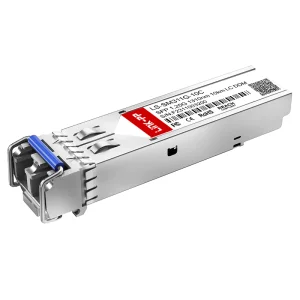
An analysis of electrical, thermal, and optical signal integrity across industrial Ethernet nodes and high-frequency optical transceivers.
The industrial Ethernet landscape is undergoing a massive transformation. As Industry 4.0 implementations shift from simple telemetry to ultra-high-definition visual inspection, real-time edge processing, and multi-gigabit Ethernet networks, the underlying physical layer must adapt. Standard commercial-grade RJ45 connectors are entirely inadequate for the mechanical stresses, electromagnetic interference (EMI), and thermal challenges of the modern factory floor. Industrial-grade RJ45 connectors and optical transceivers must deliver uninterrupted signal integrity over decades of service.
OptiLinker Optoelectronics Co., Ltd. (OptiLinker) has emerged as a premier optical transceiver manufacturer and system interconnect solution provider under the brand OptiLinker (www.optilinkertrans.com). Established in 2016 and leveraging over 12 years of industry engineering experience and 8 years of international export pedigree, OptiLinker bridging the gap between copper-based industrial RJ45 magnetics and high-speed fiber optic networking infrastructure.
"Precision interconnect technology is not merely about physical mating; it is about controlling insertion loss, minimizing return loss, protecting against electrostatic discharge, and shielding the core system from destructive physical elements. OptiLinker's philosophy is rooted in material physics and automated manufacturing verification."
Industrial settings are plagued by high-voltage motors, variable frequency drives (VFDs), and heavy machinery that create vast electromagnetic fields. A standard RJ45 connector acts as an antenna for high-frequency noise, which degrades the Signal-to-Noise Ratio (SNR) and causes packet dropouts. OptiLinker's Industrial RJ45 range incorporates advanced shielding architectures:
With the rise of IP-cameras, remote sensors, and industrial Wi-Fi access points, Power over Ethernet (PoE) has become ubiquitous. Delivering up to 30W (IEEE 802.3at) or even 90W (IEEE 802.3bt) over tiny twisted-pair copper lines presents massive thermal challenges. As current flows, contact resistance generates heat.
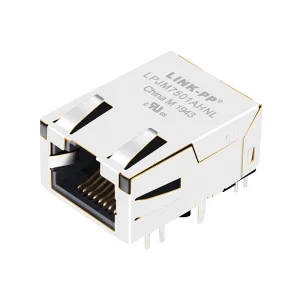
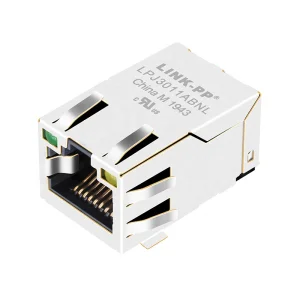
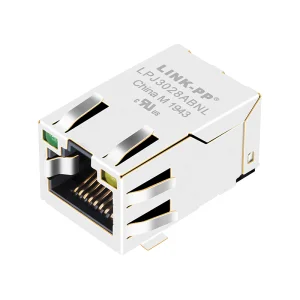
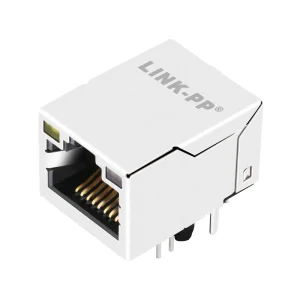
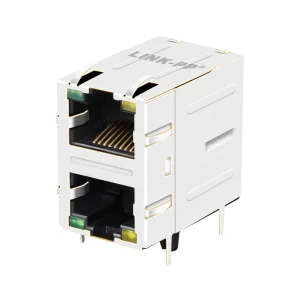
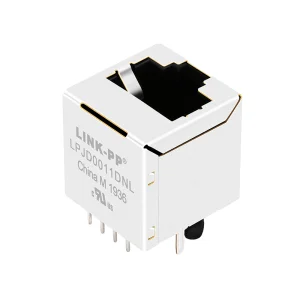
OptiLinker's connectors employ heavy-gauge copper alloy pins with gold plating up to 50 micro-inches (50u"). This dramatically lowers contact resistance and prevents localized thermal runaway. Additionally, our Tab Up Magnetic Female RJ45 Jack 10G Base-t POE 30W utilizes high-Tg FR-4 internal PCBs and high-temperature plastic housings (such as LCP or Nylon 9T) rated for continuous operation from -40°C to +85°C, ensuring that continuous heat generation does not lead to physical deformation or mechanical failure of the latching mechanisms.
How OptiLinker coordinates a massive network of component suppliers to deliver rapid custom prototyping and unparalleled scale.
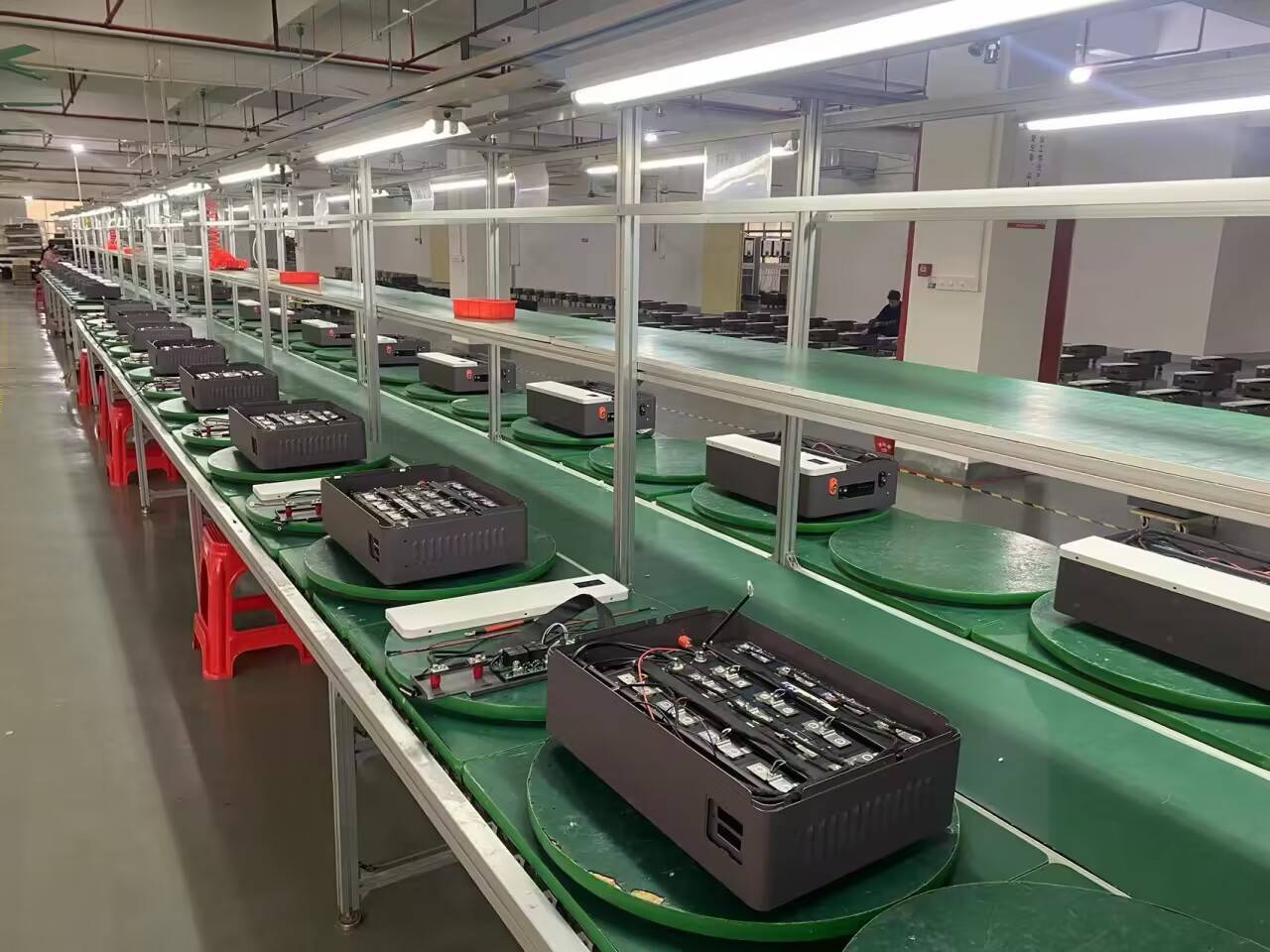
Our robust supply chain network ensures instant access to raw materials, specialty plastics, custom metal stampings, and advanced semiconductor wafers.
Supported by 60 optical and hardware engineers, we customize wavelengths, transmission distance, package styles, and device compatibility profiles.
Continuous investment in R&D allows us to launch over 120 new products annually, keeping pace with changing protocols (from Fast Ethernet to 100G/400G optical networking).
China's manufacturing dominance is no longer driven solely by low-cost labor; it is powered by unparalleled infrastructure density, supply chain clustering, and rapid technology scaling. From our modern development facility, OptiLinker utilizes regional logistics pipelines and integrated toolmaking systems to reduce the timeline between design concept and mass production. This speed-to-market allows global networks to scale bandwidth seamlessly.
Historically, copper Ethernet (RJ45) and fiber optic communications (SFP/SFP+) existed in separate silos. Today, high-density edge computing and remote terminal units (RTUs) require unified network cards that interface between long-haul optical trunks and local copper terminal blocks. OptiLinker specializes in this hybrid convergence ecosystem, manufacturing both high-end RJ45 jacks with integrated magnetics and advanced, low-latency SFP modules.
Looking to the future, our development path focuses on three key vectors:
| Interface Style | Key Specifications | Core Application | Environmental Resistance |
|---|---|---|---|
| Tab Up Magnetic RJ45 | 10G Base-T, PoE 30W, Integrated LEDs | IP Cameras, Industrial Switch Ports | IP20 (Standard), -40°C to +85°C |
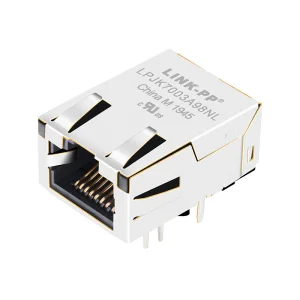
| Low Profile RJ45 Shielded | 5G Base-T, High EMI suppression | Compact Embedded IoT Controllers | High Density Board-Level Shielding |
| BiDi SFP Transceiver | 1.25G/2.5G, Single-Core Fiber, 20km | Substation Control, Fiber-to-the-Factory | Industrial Temperature Class (-40°C to 85°C) |
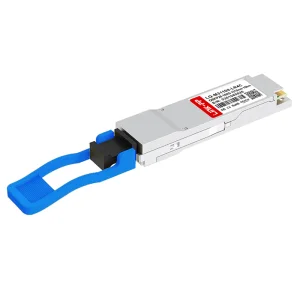
| 100G QSFP28 Module | 100GBASE-PLR4, 1310nm, 10km, DDM | Enterprise Core Network, Hyperscale Cloud Nodes | Fully Hermetic Optoelectronic Engine |
An inside look at OptiLinker’s rigorous physical, electrical, and optical test protocols engineered to assure absolute system uptime.
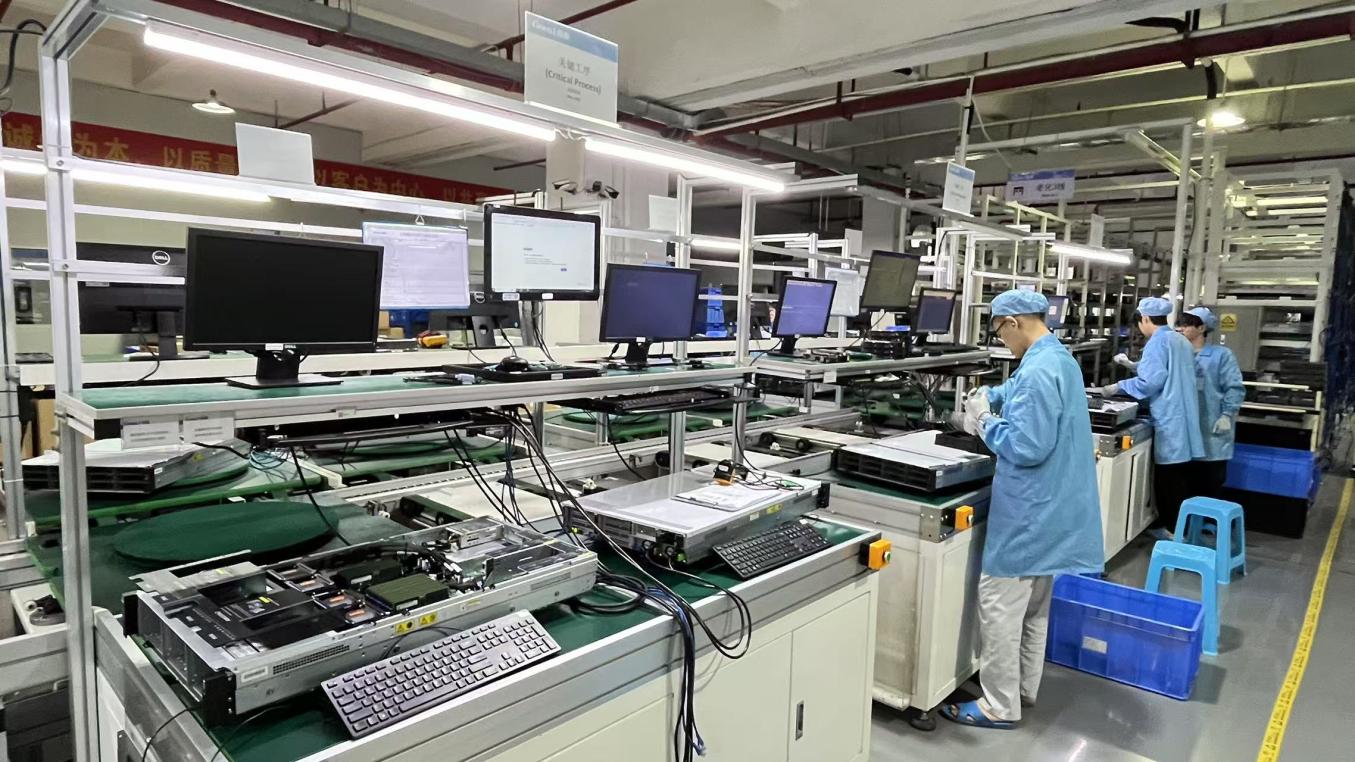
A single connection failure can stop a factory assembly line, resulting in massive operational losses. For this reason, OptiLinker implements a zero-defect quality control system backed by a dedicated team of 35 QC professionals. Our facilities operate with state-of-the-art testing systems:
High-precision Automated Optical Inspection identifies solder bridges, alignment errors, and physical imperfections on internal PCB modules down to the micron scale.
Bit Error Rate (BER) analysis and oscilloscope eye diagram measurements verify high-speed signal integrity, ensuring margins match or exceed OEM specifications.
Simulating extreme conditions from -40°C to +85°C ensures that physical expansions/contractions do not alter contact resistance or optical alignment over time.
Our incoming inspection matches chemical ratings for flame resistance (UL 94V-0 compliant plastics) and RoHS/REACH compliance. Furthermore, our optical components undergo device compatibility programming and coding to guarantee plug-and-play execution with top-tier hardware systems.
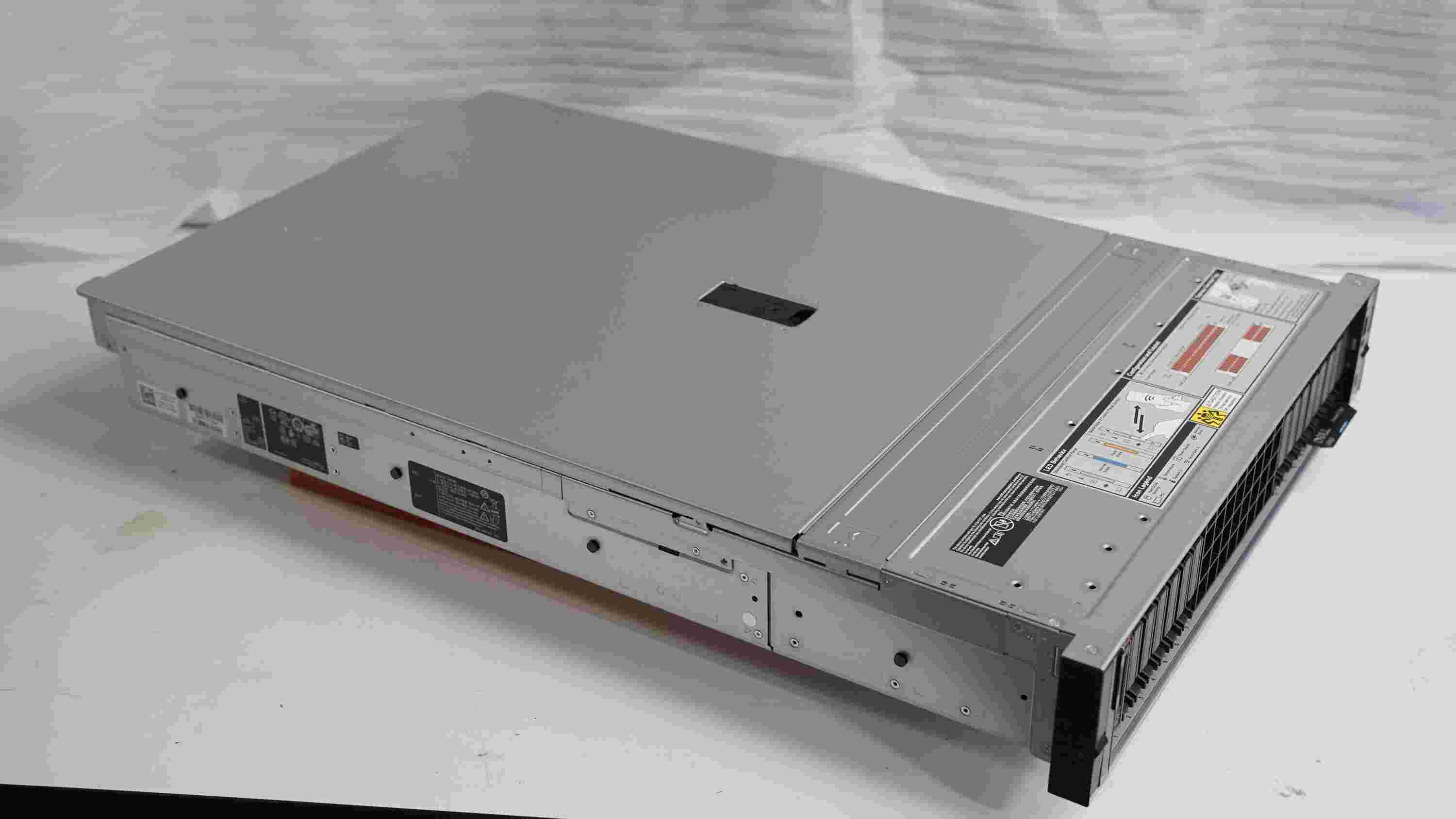

Expert insights addressing common procurement, technical integration, and system installation questions from global hardware designers.
Industrial RJ45 connectors feature enhanced mechanical protection, shielding, and higher-grade materials. Unlike commercial connectors, they utilize thick gold plating (up to 50u") to lower contact resistance, high-temperature LCP/Nylon housings to resist thermal degradation from PoE, and full brass shielding shell overlays to block electromagnetic interference (EMI). They also typically integrate magnetic modules directly inside the jack for high physical isolation.
Yes. OptiLinker’s team of 60 optical engineers specializes in firmware customization and compatibility programming. We write custom EEPROM coding scripts to ensure our optical transceivers—including the GLC-LH-SMD compatible and 10G/100G modules—interface seamlessly with switches, routers, and firewalls from major manufacturers without triggering firmware rejection errors.
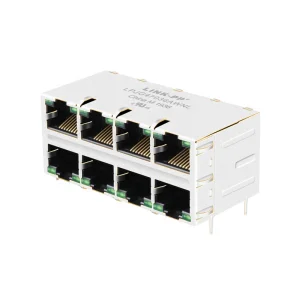
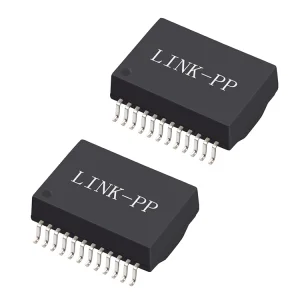
Integrated Magnetic Connector Modules (ICMs) save PCB board space and simplify circuit traces. Crucially, they contain passive transformers and common-mode chokes that filter out high-frequency noise and prevent common-mode voltage from damaging the sensitive PHY controller chip. They also provide electrical isolation up to 1500V, ensuring safety against voltage spikes.
We employ a 35-person quality control team enforcing a 100% incoming material inspection, Automated Optical Inspection (AOI) for PCB tracing integrity, full optical parameter tests (including eye diagrams and BER analysis), and high/low temperature chambers to cycle products through -40°C to +85°C.
Supported by our structured network of 850 supply chain partners and clean production facility in China, OptiLinker manages an annual export revenue of USD 12 million. Standard product lines like the 10/100/1000 Base-T low profile connectors are kept in buffer stock, while custom ODM orders typically ship in 3 to 5 weeks depending on component specifications.
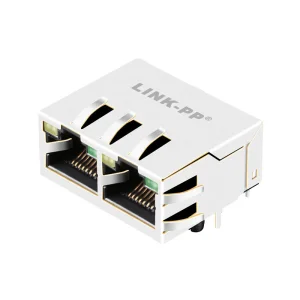
SMT (Surface Mount Technology) RJ45 jacks, such as the J3011G21DNL, allow for pick-and-place automated PCB assembly, which reduces production costs and increases manufacturing speed. However, because industrial environments involve significant physical force during plugging and unplugging, SMT jacks are typically fortified with robust metal tabs or locating posts that snap into the board to prevent physical trace tearing.
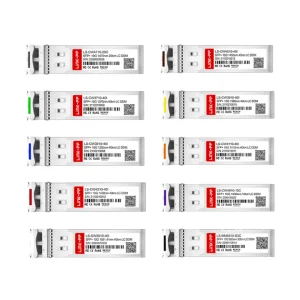
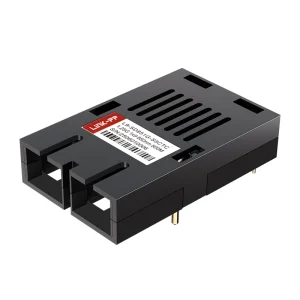
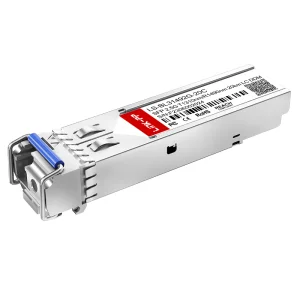
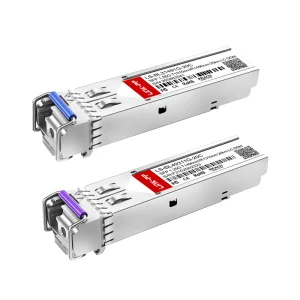
BiDi SFP modules use Wavelength Division Multiplexing (WDM) to transmit and receive data on different wavelengths over a single strand of fiber (SMF). This effectively doubles the fiber capacity of the physical cable plant, cutting fiber installation and trenching costs in half for long-haul networks (up to 20km).
Direct manufacturer access to high-precision SMT RJ45 jacks, transformer modules, and next-generation 100G optical transceivers.
Leverage our 12+ years of engineering design capability, 850-partner supply chain, and dedicated 35-person quality control division.
Inquire Optical Solutions & Pricing