Bangladesh Telecom Infrastructure: The Legacy and Transition to STM-1/STM-4
Bangladesh is undergoing a seismic digital transformation under the government’s Smart Bangladesh 2041 master plan. Telecom operators, railway communications, electrical distribution systems, and public sector networks are pushing for reliable connections. As fiber deployment accelerates in hubs like Dhaka, Chittagong, Gazipur, and Narayanganj, ensuring physical layer reliability is paramount. In this network architecture, 155M (STM-1/OC-3) and 622M (STM-4/OC-12) SFP transceiver modules remain critical components.
While hyper-scale data centers upgrade to 100G, 400G, and higher capacities, legacy Synchronous Digital Hierarchy (SDH) and Plesiochronous Digital Hierarchy (PDH) systems still form the bedrock of the country's access networks. Utilities like the Power Grid Company of Bangladesh (PGCB) rely on STM-1 (155 Mbps) optical networks for teleprotection and SCADA data transmission across long distances. Similarly, Bangladesh Railway utilizes optical links configured with 155M and 622M transceivers to run signaling systems along vital transit routes. Finding a reliable supplier who can deliver industrial-grade, compatible transceivers with localized support is essential to prevent network downtime.
Understanding the Bangladesh Power & Transport Sectors: SCADA networks operate under high electromagnetic interference (EMI). Standard consumer transceivers degrade quickly under these conditions. OptiLinker’s 155M and 622M industrial SFP modules are designed to resist EMI and maintain stable signal integrity over optical links up to 80km.
Technical Architecture: 155M & 622M SFP Fiber Modules
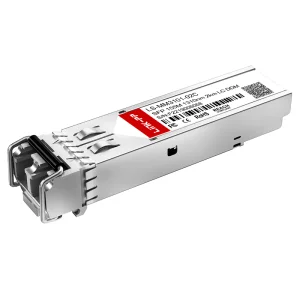
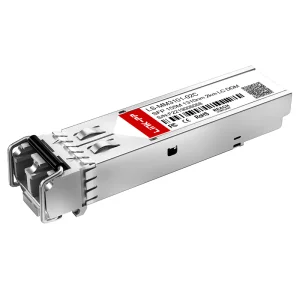
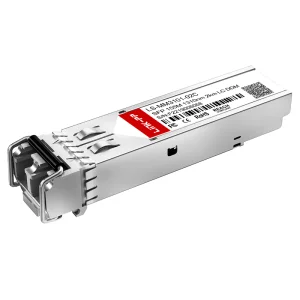
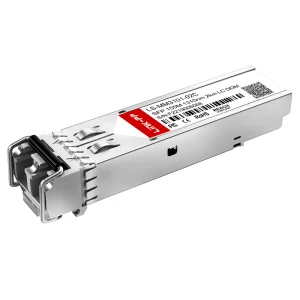
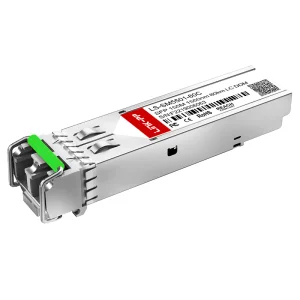
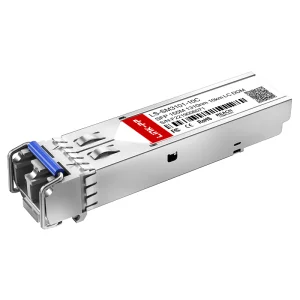
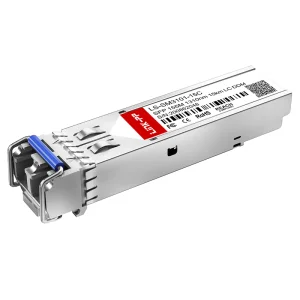
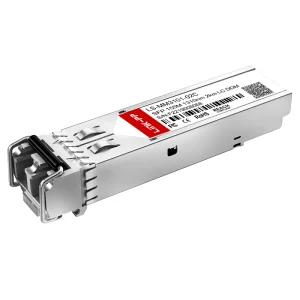
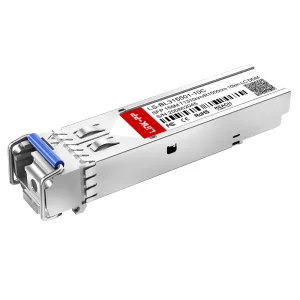
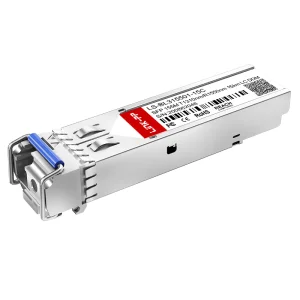
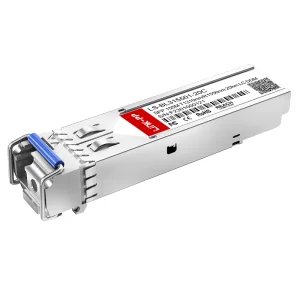
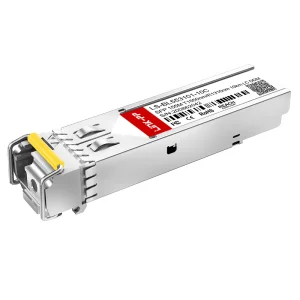
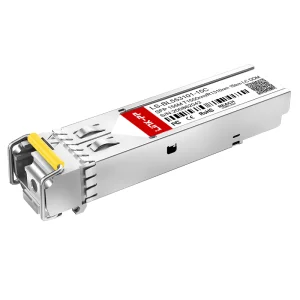
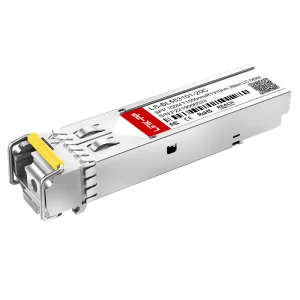
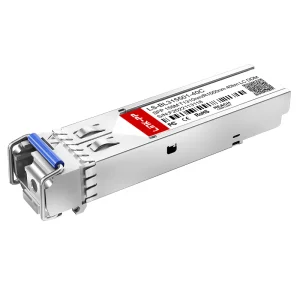
OptiLinker’s portfolio of 155M and 622M SFP transceivers supports a wide variety of configurations to meet diverse deployment requirements:
- Multimode (MMF) Options: Working over 1310nm wavelengths, our modules support transmission distances of up to 2km, making them perfect for short-haul enterprise LANs and localized sub-station loops.
- Single Mode (SMF) Options: Employing 1310nm and 1550nm laser transmitters, these transceivers span distances of 10km, 15km, 20km, 40km, and up to 80km. This is vital for connecting distant municipal nodes throughout rural districts of Bangladesh.
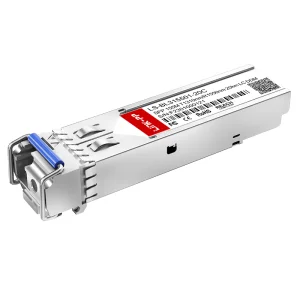
- BiDi (Bidirectional) Technology: BiDi transceivers use Wavelength Division Multiplexing (WDM) to transmit and receive signals over a single strand of fiber (using pairs like 1310nm-TX/1550nm-RX and vice-versa). This technology effectively doubles the fiber capacity of existing deployments without laying new cables, helping local ISPs control operational costs.
| Specification / Feature |
155M SFP Modules (STM-1/OC-3) |
622M SFP Modules (STM-4/OC-12) |
| Data Rate |
155 Mbps (Fast Ethernet Compatible) |
622 Mbps |
| Typical Wavelengths |
1310nm / 1550nm / BiDi (1310Tx/1550Rx) |
1310nm / 1550nm / BiDi (1310Tx/1490Rx) |
| Transmission Medium |
MMF (OM1/OM2) & SMF (G.652/G.657) |
Single Mode Fiber (SMF) |
| Distance Reach |
2km, 10km, 20km, 40km, 80km |
15km, 40km, 80km |
| Connector Interface |
Duplex LC / Simplex LC (BiDi models) |
Duplex LC / Simplex LC |
| DDM / DOM Support |
Available (Real-time monitoring) |
Available (Optical power diagnostic) |
Designed for Tough Environments: Industrial Temperature Resilience
Bangladesh presents a challenging environment for active network components. High relative humidity (often exceeding 85% during monsoon season) combined with peak summer temperatures reaching above 40°C in industrial corridors like Gazipur can cause standard network hardware to fail prematurely. Thermal expansion, laser diode degradation, and optical path misalignment are common issues in cheap, unbranded optical modules.
OptiLinker addresses these pain points directly. Our industrial-grade transceivers are engineered to support Industrial Operating Temperatures (-40°C to 85°C), compared to standard commercial models that only support 0°C to 70°C. They feature rugged zinc-alloy housings, integrated Digital Diagnostic Monitoring (DDM/DOM), and optimized transceiver chipsets to prevent drift over time. This makes them ideal for outdoor cabinets, roadside utility installations, and unventilated railway signaling shelters across Bangladesh.
High Temperature Tolerant
Designed with a wide operating window from -40°C to 85°C to withstand extreme hot and humid monsoons in South Asia.
Real-time DDM/DOM
Monitor transceivers remotely for optical output power, receiver sensitivity, operating temperature, and supply voltage.
Multi-Vendor Compatibility
Programmed to ensure compatibility with major equipment brands, including Moxa, Hirschmann, Cisco, and Allied Telesis.
OptiLinker's Manufacturing Excellence & E-E-A-T Profile
OptiLinker Optoelectronics Co., Ltd. (OptiLinker) is a leading optical transceiver manufacturer under the brand OptiLinker (www.optilinkertrans.com). We specialize in developing high-speed, reliable optical modules for global data centers, metropolitan telecommunication infrastructures, and industrial Ethernet frameworks.
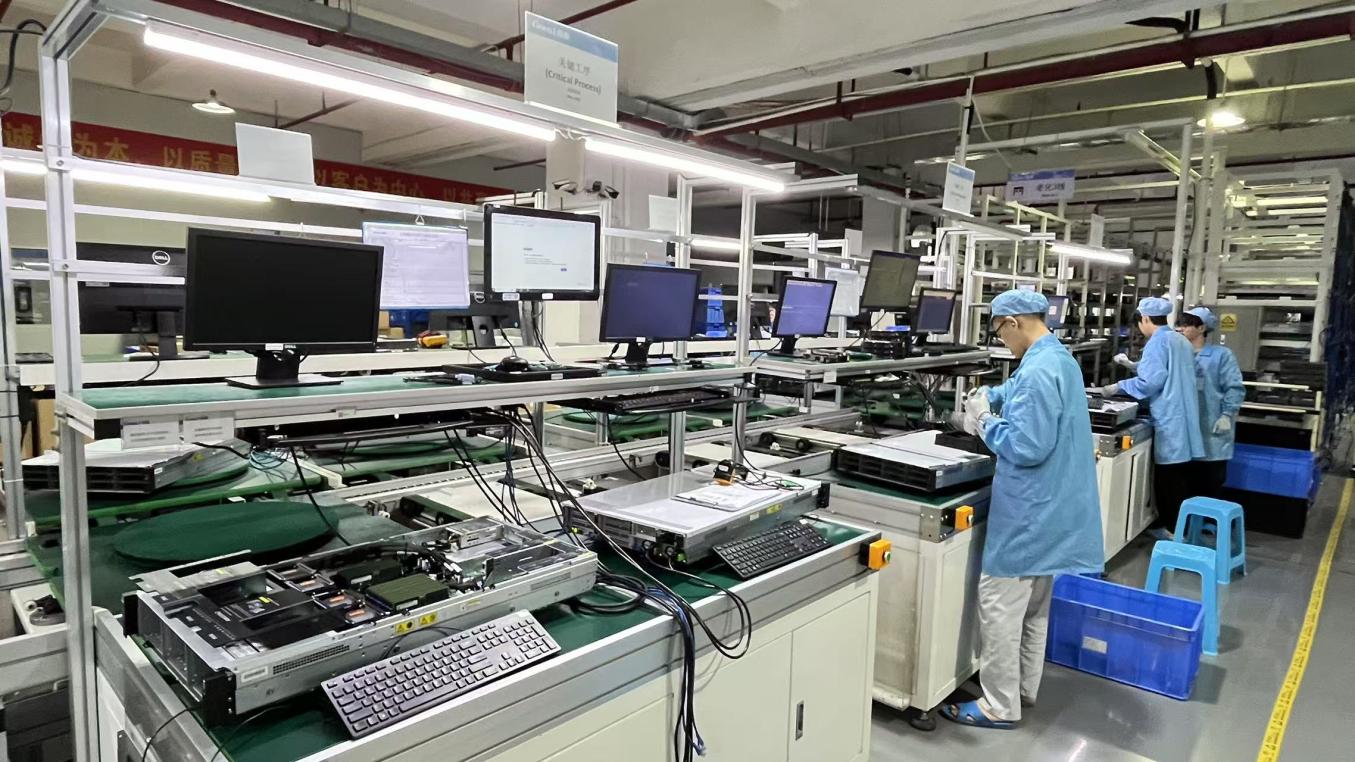
Founded in 2016, we bring 12 years of industry experience and 8 years of export experience to our partners. Our specialized production cleanroom spans approximately 320㎡. Designed for high efficiency and precise quality control, this facility houses high-speed optical testing equipment and automated diagnostic arrays. In the past year, we generated USD 12 million in export revenue, supplying clients in North America, Europe, Southeast Asia (including Bangladesh), and the Middle East.
Our quality assurance process is managed by a team of 35 dedicated QC professionals. They perform 100% incoming material inspections, Automated Optical Inspections (AOI), and complete optical performance evaluations on every batch. Each transceiver undergoes rigorous testing, including bit-error-rate (BER) testing, eye diagram analysis, and temperature cycling in environmental chambers. This guarantees stable, drift-free performance even under harsh industrial conditions.
With an engineering team of 60 experienced optical specialists, we offer customization options for wavelength selection, reach, firmware coding, and device compatibility. This deep expertise allowed us to launch 120 new products last year alone, keeping pace with evolving global standards.
Procurement Guide for Bangladesh System Integrators
Importing telecom components into Bangladesh requires careful attention to regulatory and logistics details. When purchasing 155M or 622M optical modules, buyers should consider the following:
- Letter of Credit (L/C) Compliance: Most trade in Bangladesh is conducted via Letters of Credit. OptiLinker has years of experience managing L/C terms and ensuring all documentation matches banking requirements in Dhaka.
- Customs Documentation & HS Codes: Optical transceivers fall under HS Code 8517.62. We provide detailed commercial invoices, packing lists, certificates of origin, and compliance certifications (CE, FCC, RoHS) to streamline customs clearance.
- Compatibility Tuning: Older switches and SDH multiplexers from brands like Moxa, Hirschmann, Cisco, and Huawei can be highly sensitive to generic transceivers. Our engineering team can pre-program your SFPs with vendor-specific firmware codes before shipping to guarantee plug-and-play compatibility.
Frequently Asked Questions (FAQ)
1. Can I use a 155M SFP module in a Gigabit SFP port?
It depends on the host switch. Many modern Gigabit SFP ports support multi-rate configuration and can auto-negotiate down to 100Mbps/155Mbps. However, some switches require manual command-line configuration to force the port speed to 100Mbps, while others do not support Fast Ethernet speeds at all. We recommend checking your hardware specifications or consulting our technical team.
2. What is the benefit of using BiDi 155M SFP modules in Bangladesh?
BiDi (bidirectional) modules allow you to transmit and receive data over a single fiber strand by using two different wavelengths (e.g., 1310nm and 1550nm). In regions where laying new fiber optic cable is expensive or physically restricted, BiDi modules double your existing fiber capacity, saving significant installation costs.
3. Do these modules support Moxa and Hirschmann switches used in utility grids?
Yes. OptiLinker specialize in custom compatibility coding. We regularly program our SFP modules to match the EEPROM signatures of Moxa, Hirschmann, Cisco, Juniper, Huawei, and other major telecom/industrial equipment brands to ensure seamless performance.
4. What quality tests do these transceivers undergo before export to Bangladesh?
Our QC team of 35 professionals conducts 100% incoming component inspection, automated optical testing (AOI), eye-diagram verification, Bit Error Rate (BER) analysis, and high-low temperature cycling tests in specialized chambers to guarantee reliability.
5. What are the typical lead times and shipping options for Dhaka/Chittagong?
Standard orders are processed quickly through our network of over 850 supply chain partners. Shipping is usually handled via major express carriers (DHL, FedEx, UPS) or air freight, arriving in Dhaka or Chittagong within 5 to 7 business days after production.
 OptiLinker