OptiLinker
OptiLinker
OptiLinker
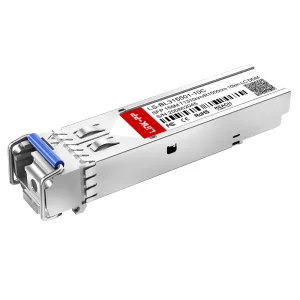
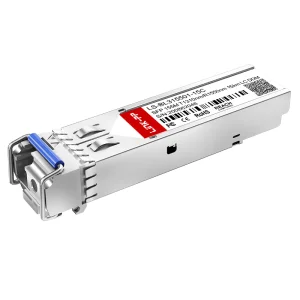
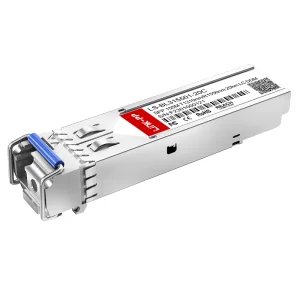
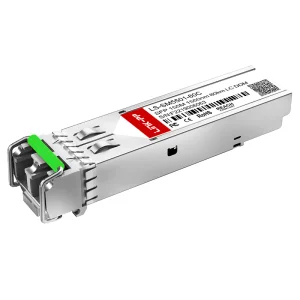
Highly optimized 155M SFP transceivers engineered to perform seamlessly with legacy switches, SCADA systems, and railway automation nodes across Greater Lima.
As the economic and administrative center of Peru, the Metropolitan Area of Lima and Callao represents over 45% of the nation's industrial output. The digitalization of Lima's infrastructure is accelerating, driven by massive public-private investments in metropolitan transport, maritime shipping, and electrical grid modernisation. Key projects such as the expansion of the **Port of Callao**, the development of the **Chancay Megaport** just north of Lima, and the rollout of **Lima Metro Lines 2 and 4** demand highly robust optical communication backbones.
While high-speed 100G and 400G optical interfaces scale up in cloud data centers, legacy and medium-speed transceivers operating at **155 Mbps (STM-1/OC-3)** and **622 Mbps (STM-4/OC-12)** remain critical. These interfaces are the operational foundation of remote industrial communications, including:
Deploying optical modules in Lima requires high-reliability engineering. The unique coastal environment of Lima—combining **high relative humidity exceeding 95%**, airborne marine salinity from Callao, and urban dust—creates challenging conditions. Substandard optical transceivers rapidly fail due to optical facet corrosion, moisture ingress, or thermal stress. Consequently, local engineering firms and telco operators demand compliance with international ruggedization standards.
"Maintaining stable communications in Lima's industrial zones requires components designed for aggressive environmental factors. Our compatible SFP modules are customized with enhanced optical sub-assemblies (OSA) to resist dust-fog degradation and salinity corrosion, guaranteeing 99.999% uptime for critical infrastructure."
SFP (Small Form-factor Pluggable) transceivers operating at 155M and 622M continue to evolve, despite their legacy origin. The core focus of modernization is not raw speed, but **compatibility, diagnostics, and power efficiency**.
Digital Diagnostic Monitoring enables network administrators to monitor real-time parameters such as optical Tx/Rx power, temperature, and supply voltage from central offices in San Isidro or Miraflores, preventing unplanned link downtime.
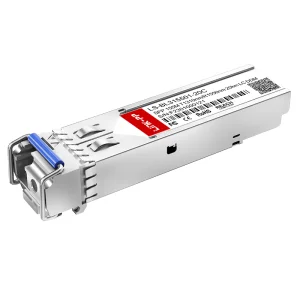
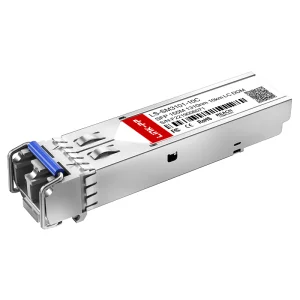
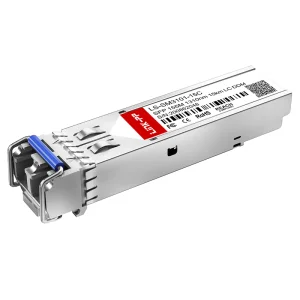
BiDi (Bidirectional) SFP modules transmit and receive over a single optical fiber using WDM (typically 1310nm/1550nm or 1310nm/1490nm). This doubles fiber capacity without the capital expense of laying new cables through metropolitan Lima.
Modern networks are rarely homogenous. Custom-coded EEPROMs ensure that a single optical module can interface seamlessly with Moxa, Hirschmann, Cisco, Huawei, or Allied Telesis switches without generating system compatibility alerts.
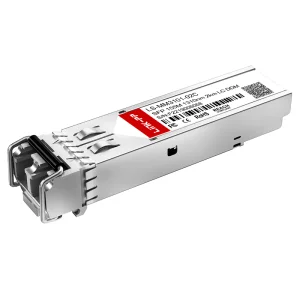
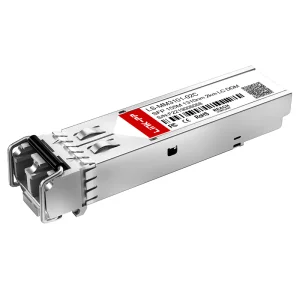
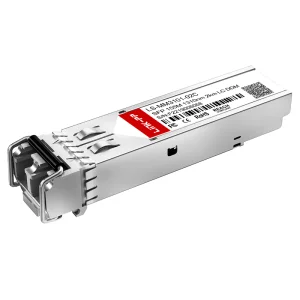
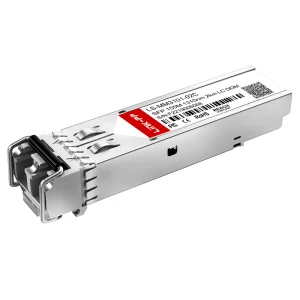
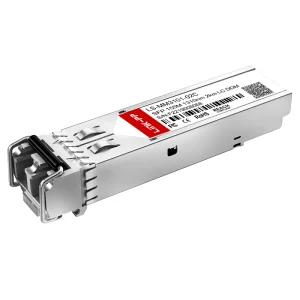
For instance, our compatible **155M 1310nm 2km MMF** and **BiDi 20km/40km SMF** modules feature low-power transimpedance amplifiers (TIAs) and laser drivers. By limiting power consumption to **under 0.8W per module**, they lower the heat load inside sealed IP67-rated enclosure boxes placed on transmission poles along Lima’s highway networks.
Modern rail transportation relies on safety-critical signaling networks. Using our **Hirschmann SFP-FAST-MM/LC-EEC Compatible modules**, local integration teams have maintained reliable fiber ring topologies connecting train control centers with passenger information systems. These systems require extended temperature ranges (-40°C to 85°C) to withstand localized heat buildup in underground and elevated passenger terminals.
The maritime terminals managed by DP World and APM Terminals in Callao utilize heavy automated machinery, crane control networks, and high-definition IP camera arrays. To bridge the gap between ship-to-shore cranes and control buildings, **100BASE-FX and 100BASE-LX SFP modules** provide robust, EMI-immune connections over multi-mode and single-mode fibers. The optical core is sealed against moisture and salt spray, preventing optical scattering.
Substations located in the mountainous peripheries of Lima (e.g., Chosica, Ate-Vitarte) experience severe climatic variation. By implementing single-mode BiDi SFP transceivers, local electricity distributors operate high-voltage protection relays using IEC 60870-5-104 and IEC 61850 protocols. A long-reach **100BASE-ZX 80km SFP** allows direct communication between remote hydro stations in the Andes and dispatch centers in metropolitan Lima without intermediate optical repeaters.
Combining high-speed automated manufacturing with rigorous performance testing to deliver telecom-grade optical transceivers worldwide.
Founded in **2016**, **OptiLinker Optoelectronics Co., Ltd. (OptiLinker)** is a leading manufacturer and exporter specializing in high-speed and legacy optical communication modules. Operating from a highly optimized 320㎡ facility, our engineering teams possess over **12 years of industry experience** and **8 years of direct export operations**.
In the last fiscal year, OptiLinker generated an **annual export revenue of approximately USD 12 million**, supplying mission-critical optical infrastructure components to telecommunications providers and industrial integrators in North America, Europe, Southeast Asia, and the Middle East. Our product development pipeline is highly agile, launching **120 new products** last year alone to meet evolving network architectures.



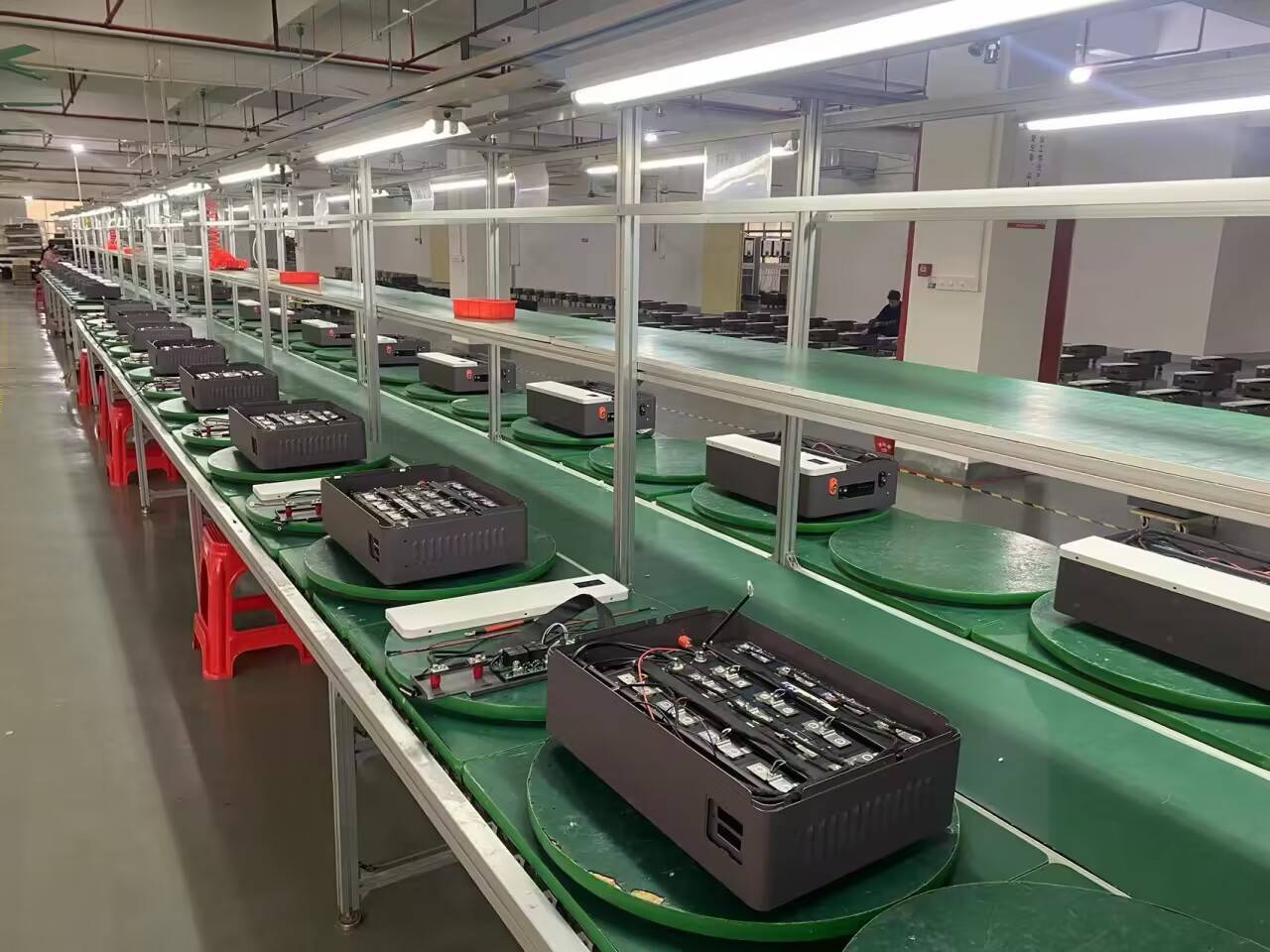
Quality assurance at OptiLinker is driven by a team of **35 dedicated QC professionals**. Every transceiver undergoes a strict production routing:
Supported by a robust ecosystem of **850 global supply chain partners**, OptiLinker secures continuous access to raw semiconductor substrates and optical components. This enables us to maintain stable production capacities and short lead times even during global supply chain disruptions.
Exhaustive range of single-mode, multi-mode, and bidirectional transceivers compatible with Moxa, Hirschmann, and other major industrial switch vendors.
Importing optical equipment into Peru requires navigating strict regulatory frameworks, specifically under **MTC (Ministerio de Transportes y Comunicaciones)** and **SUNAT (Superintendencia Nacional de Aduanas y de Administración Tributaria)**. OptiLinker provides complete commercial documentation, including Certificate of Origin (often saving duties via trade agreements), detailed HS Code classification (typically **8517.62**), and CE/FCC/RoHS declarations of conformity to expedite custom clearance at the **Aduana Marítima del Callao** or the **Jorge Chávez International Airport (LIM)**.
We supply complete engineering datasheets and test reports required by telecommunications importers in Peru to secure MTC homologation certificates for telecommunication transmitters and transceivers.
Leveraging partnerships with major couriers (DHL, FedEx, UPS) and maritime forwarders, we support both express air freight for urgent infrastructure repairs and consolidated ocean shipping to Lima port terminals.
Furthermore, to ensure long-term reliability for public utility networks, OptiLinker guarantees product compatibility via remote diagnostics. In the event of a firmware mismatch with local hardware, our engineers can supply customized firmware loads via SFP programmers, allowing local technicians to upgrade the internal EEPROM table on-site in Lima.
Technical support and logistics guidance for engineers and purchasing managers in the Peruvian market.