OptiLinker
OptiLinker
OptiLinker
Optimized for high-speed local area networks, long-haul backbones, and server aggregation in Victoria's enterprise cluster.
Analyzing the architecture of high-speed data transmission in the Western Indian Ocean's leading hub.
The digital economy of Seychelles is undergoing a profound paradigm shift. Driven by government initiatives such as the Seychelles National Digital Economy Strategy and fueled by its strategic connection to high-capacity international submarine cables—including the Seychelles East Africa System (SEAS) landing in Beau Vallon and the DARE1 (Djibouti African Regional Express 1) cable network—the country’s domestic transport backbone is demanding high-density optical upgrades. Historically reliant on copper or low-bandwidth 1G links, domestic data centers, private financial networks, and telecommunications providers in Victoria and Eden Island are aggressively migrating to 10G SFP+ and 16G Fiber Channel (FC) infrastructures.
As the regional blue economy deepens its reliance on IoT sensor tracking for maritime traffic, advanced hotel-wide GPON networks for luxury resorts on Praslin and La Digue, and secure cloud environments for offshore banking entities, optical transport modules must operate reliably under challenging environmental factors. The high ambient relative humidity (often exceeding 85%), elevated salt-mist levels, and consistent tropical temperatures of the region put significant strain on active and passive optical hardware. Standard modules frequently experience premature degradation of their laser assemblies and corrosion on their contacts, leading to high packet-drop rates and system failures.
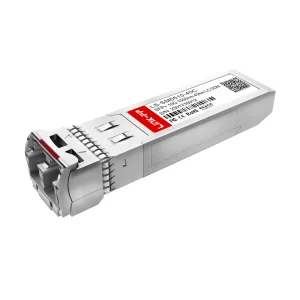
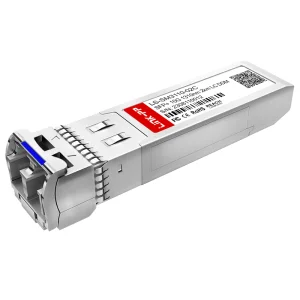
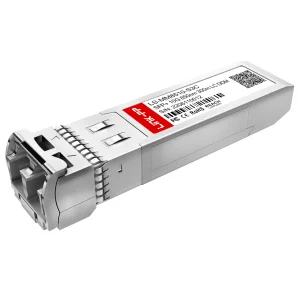
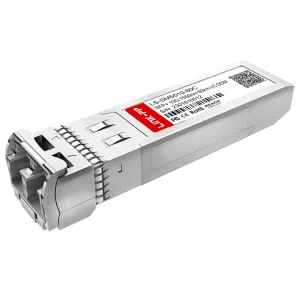
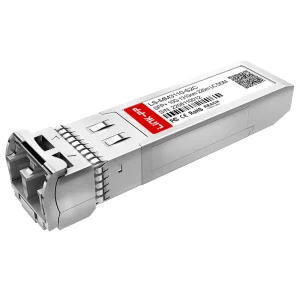
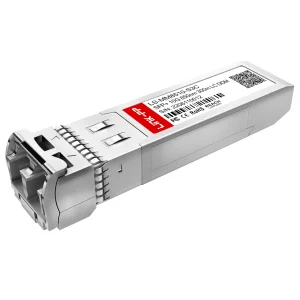
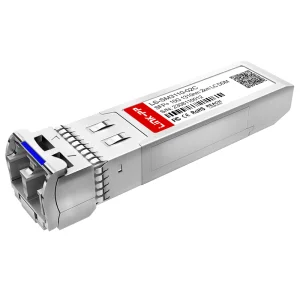
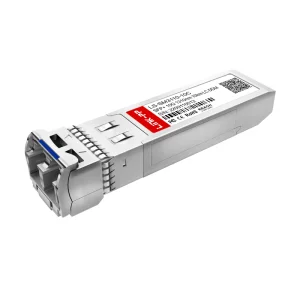
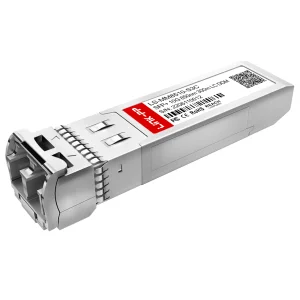
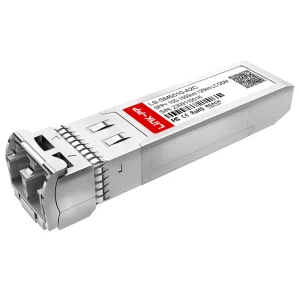
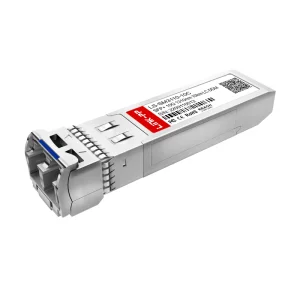
OptiLinker's specialized 10G/16G SFP+ modules are engineered specifically to counter these issues. Equipped with premium hermetically sealed TO-can optical sub-assemblies (TOSA/ROSA) and 30 micro-inch gold-plated electrical fingers, our optical modules provide exceptional long-term protection against atmospheric corrosion. By maintaining a high extinction ratio and extremely low jitter even under varying temperature ranges, we support the unique performance requirements of major local ISPs like Cable & Wireless Seychelles and Airtel Seychelles, ensuring stable network performance across the islands.
Enabling ultra-low latency server hosting and storage area network (SAN) configurations on Eden Island using low-loss, high-compatibility 10GBASE-SR and 16G Fiber Channel modules.
Providing long-reach 10G single-mode modules (up to 80km and 120km) to link regional central offices (CO) across mountainous terrains and inter-island microwave-optical endpoints.
Facilitating optical distribution network (ODN) links for remote tourist destinations and harbor sensor grids that require high dust, heat, and moisture resistance.
Comprehensive engineering specifications guiding high-performance 10G/16G deployments.
The global optical communications sector relies on standards defined by the SFF Committee (Multi-Source Agreements - MSA) to ensure mechanical, electrical, and firmware compatibility across diverse network switch vendors. SFP+ (Small Form-factor Pluggable Plus) is the industry standard for 10Gbps and 16Gbps transmissions. While 10G SFP+ targets Ethernet and OTN infrastructures, 16G SFP+ is optimized for Fiber Channel protocols (14.025 Gbps line rate) in high-speed storage environments. Crucial standards include SFF-8431 (electrical interface specifications), SFF-8432 (mechanical outline dimensions), and SFF-8472 (diagnostic monitoring interface).
A key technological component in today's modules is **Digital Optical Monitoring (DOM)**, also known as Digital Diagnostic Monitoring (DDM). DDM allows network administrators to track operational parameters in real time. This includes TOSA temperature, laser bias current, optical output power, received optical power (RSSI), and transceiver supply voltage. Analyzing these metrics helps engineers diagnose signal degradation before link failure occurs. In tropical environments, managing receiver power (Rx Power) is critical; high relative humidity and temperatures can accelerate cable degradation, resulting in increased optical return loss (ORL).
| Transceiver Class | Wavelength (nm) | Fiber Type | Connector Type | Max Transmission Distance | TX Power Range (dBm) | RX Sensitivity (dBm) | Optical Budget (dB) |
|---|---|---|---|---|---|---|---|
| 10GBASE-SR SFP+ | 850nm | Multi-mode (OM3/OM4) | Duplex LC | 300m / 400m | -6.0 to -1.0 | < -11.1 | 5.1 |
| 10GBASE-LR SFP+ | 1310nm | Single-mode (G.652) | Duplex LC | 10km | -8.2 to +0.5 | < -14.4 | 6.2 |
| 10GBASE-ER SFP+ | 1550nm | Single-mode (G.652) | Duplex LC | 40km | -4.7 to +4.0 | < -15.8 | 11.1 |
| 10GBASE-ZR SFP+ | 1550nm | Single-mode (G.652) | Duplex LC | 80km | 0.0 to +4.0 | < -24.0 | 24.0 |
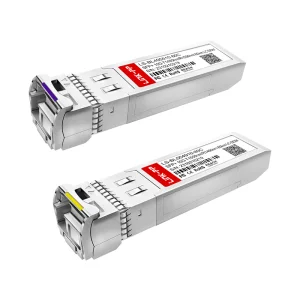
| 10G BiDi SFP+ | 1270nm-TX / 1330nm-RX | Single-mode (Simplex G.652) | Simplex LC | 10km / 20km / 40km / 80km | Varies by reach | Varies by reach | Up to 24.0 |
| 16G Fiber Channel SFP+ | 850nm / 1310nm | Multi-mode / Single-mode | Duplex LC | Up to 10km | -5.0 to +0.5 | < -12.0 | 7.0 |
A look into our state-of-the-art production processes, quality controls, and custom engineering capabilities.
OptiLinker Optoelectronics Co., Ltd. (OptiLinker) is an industry-leading optical transceiver manufacturer and custom hardware provider. Under the global registered brand OptiLinker, we deliver high-density communication modules to enterprise datacenters, public utility telecom carriers, and IT system integrators worldwide. Founded in 2016 and backed by over 12 years of industry experience, we combine deep engineering knowledge with 8 years of international export operations.
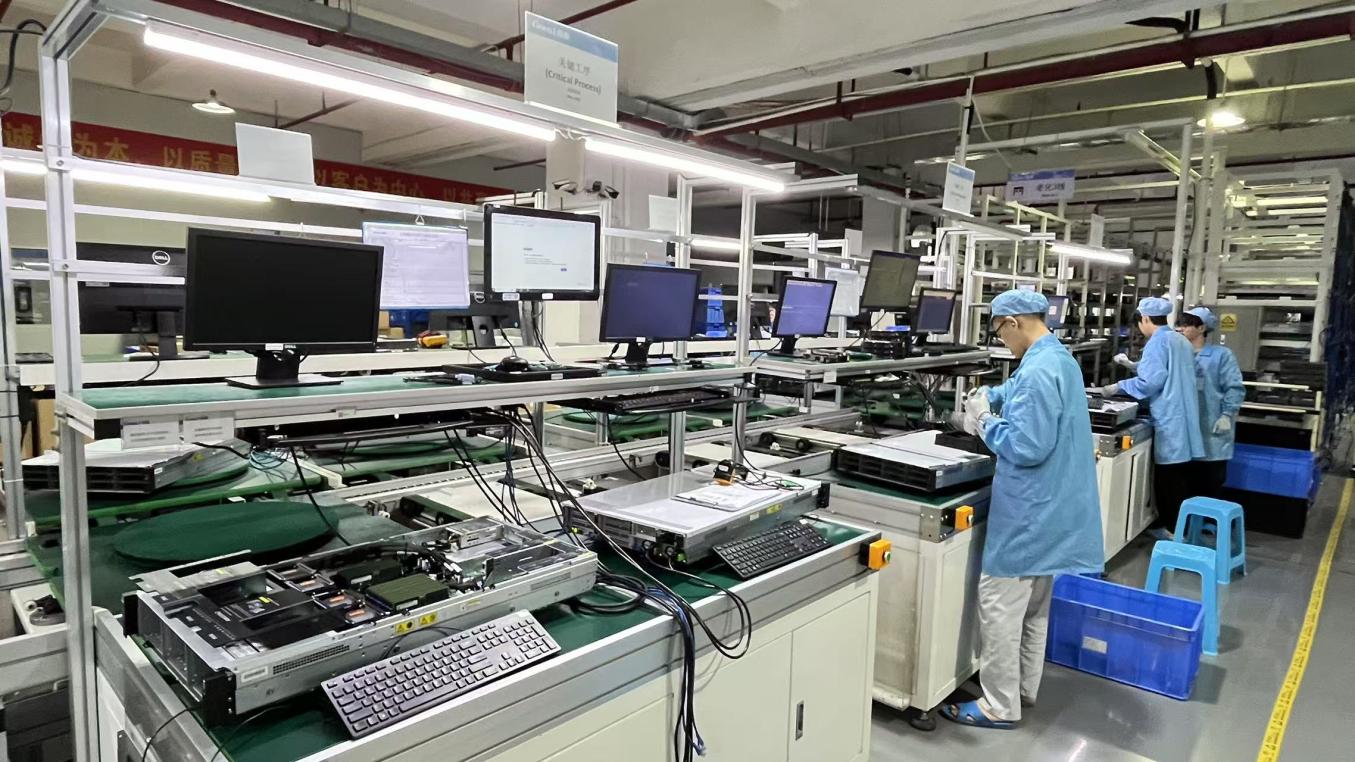
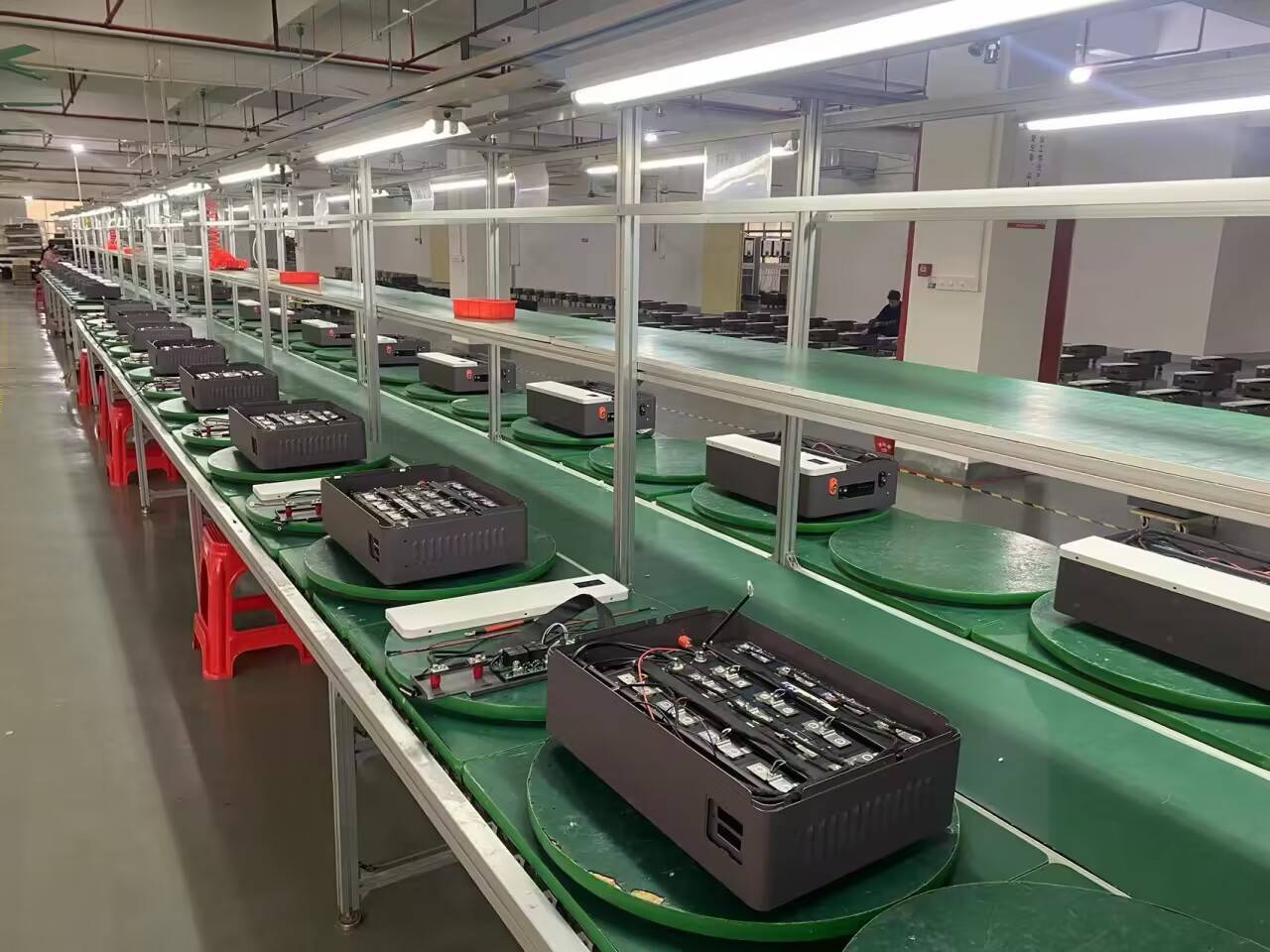
OptiLinker's main operations are housed in a modern testing and assembly facility with an initial building footprint of approximately 320㎡. Designed for efficiency, this facility is optimized for final testing, hardware customization, EEPROM code programming, and multi-vendor compatibility validation. In the past fiscal year, our international division generated USD 12 million in export revenue, serving network expansion projects in North America, Europe, Southeast Asia, and the Middle East.
To ensure high quality, we implement a strict testing pipeline: 100% incoming material inspection, AOI (Automated Optical Inspection) of laser mounts, and rigorous optical parameter checks. Our quality control team includes 35 dedicated QC professionals. They oversee testing protocols such as bit-error-rate (BER) testing, eye diagram mask validation, and thermal cycling chambers. This ensures that every module shipped maintains stable signal integrity, even in hot and humid coastal climates.


How we ensure rapid delivery, custom engineering, and reliable network deployment in the region.
Purchasing optical transceivers for projects in Seychelles requires a vendor who understands the logistics and compatibility challenges of island nations. OptiLinker utilizes its global supply chain network of 850 partners to secure high-quality components and ensure steady production, preventing delivery bottlenecks. We provide reliable air freight shipping to Seychelles International Airport (SEZ) in Pointe Larue, using partners like DHL and FedEx to ensure your modules arrive securely.
On the technical front, compatibility issues can halt a project. Switch manufacturers often lock their ports to third-party modules. OptiLinker's engineering team of 60 optical specialists addresses this through custom EEPROM coding. We match the firmware of our transceivers to replicate the signatures of major brands, including Cisco, HP, Juniper, Huawei, Mikrotik, and Ubiquiti. This ensures error-free, plug-and-play installation on your local network switches, firewalls, and routers.
Browse our full range of 10G/16G optical transceivers, designed to meet your specific networking needs.
Strategic engineering insights for planning next-generation transmission backbones.
While 10G SFP+ and 16G Fiber Channel remain key standards for local aggregation and enterprise links, regional digital growth will soon require larger capacities. As high-speed streaming, secure cloud databases, and cloud services expand, network backbones will face increased load. Moving to 25G SFP28 and 100G QSFP28 configurations provides a reliable upgrade path, allowing operators to increase capacity while maintaining existing footprint designs.
The transition from 10G to 25G is simplified by SFP28’s identical mechanical dimensions to SFP+. This compatibility allows network engineers to reuse existing fiber cabling and infrastructure, reducing upgrade costs. OptiLinker is already assisting international partners with this transition. We offer highly compatible 25G and 100G modules designed for seamless integration, helping operators future-proof their network architectures.
Detailed technical guidance on optical parameters, compatibility, and environmental performance.
High humidity and salt spray can cause corrosion on exposed metal contacts and accelerate component degradation. OptiLinker modules address this by utilizing hermetically sealed optical sub-assemblies (TOSA/ROSA) and thick gold plating on electrical contacts. These protections prevent oxidation and ensure stable connectivity in harsh coastal conditions.
Digital Diagnostic Monitoring (DDM/DOM) provides real-time access to key operating parameters, including laser bias current, transmitter power, receiver optical power, temperature, and voltage. Monitoring these metrics allows network administrators to proactively identify signal degradation or fiber damage before a link failure occurs.
Yes. Our engineering team customizes the EEPROM firmware on each transceiver to match the requirements of specific host switches. This ensures full compatibility, enabling the modules to initialize without generating port lockouts or compatibility warnings.
Standard modules are usually processed and shipped from our inventory within 3 to 5 business days. Delivery via air freight to Seychelles International Airport (SEZ) generally takes 5 to 7 business days, depending on carrier schedules and customs clearance.