OptiLinker
OptiLinker
OptiLinker
Direct manufacturer supply of high-performance connectors, transceivers, and integrated optical components engineered for high-density networks.
Navigating the transition toward high-density C+L band amplification, distributed Raman architecture, and enterprise OEM sourcing dynamics.
In modern telecommunication networks, data center interconnects (DCI), and broadband CATV/FTTH backbones, the Optical Fiber Amplifier (OFA) serves as the fundamental engine of lightwave transmission. By directly amplifying optical signals without requiring optical-to-electrical-to-optical (O-E-O) conversion, fiber amplifiers eliminate signal regeneration bottlenecks, enabling ultra-long distance DWDM (Dense Wavelength Division Multiplexing) transmission across thousands of kilometers.
As global internet traffic expands at an unprecedented CAGR—fueled by AI cluster training networks, 400G/800G optical links, cloud hyperscaling, and 5G deployment—procurement managers, system architects, and network infrastructure operators face mounting pressure to identify top trusted optical fiber amplifier factories capable of supplying high-reliability, compliant, and cost-optimized active optical nodes.
Core Technical Insight: Direct optical amplification removes the bandwidth speed ceiling imposed by electronic transceivers, permitting simultaneous amplification of dozens of DWDM wavelengths across the 1528nm–1565nm C-band and 1570nm–1610nm L-band spectrums with minimal Noise Figure (NF) degradation.
Understanding the physics, gain spectrum, and operational mechanics behind EDFA, Raman, SOA, and YEDFA technologies.
EDFA is the industry benchmark for optical amplification in the 1550nm telecommunication window. Utilizing silica fiber doped with rare-earth Erbium ions ($Er^{3+}$), EDFAs pump optical energy at 980nm or 1480nm to achieve population inversion.
Raman amplifiers utilize Stimulated Raman Scattering (SRS) inside standard single-mode optical fiber (SMF-28), effectively transforming the optical transport fiber itself into an amplifying medium.
Ytterbium-Erbium Co-doped Fiber Amplifiers (YEDFA) deliver massive multi-port output (+37 dBm to +40 dBm) for FTTH PON overlay, while SOAs enable ultra-fast optical switching and integration in 1310nm O-band systems.
| Amplifier Technology | Operational Wavelengths | Typical Gain Range | Noise Figure (NF) | Primary Industry Application |
|---|---|---|---|---|
| EDFA (C-Band) | 1528 nm – 1565 nm | 15 dB – 35 dB | 4.0 dB – 5.5 dB | Metro & Long-Haul DWDM Networks |
| EDFA (L-Band) | 1570 nm – 1610 nm | 15 dB – 30 dB | 5.0 dB – 6.5 dB | Ultra-High-Capacity Spectrum Expansion |
| Distributed Raman | Arbitrary (1280nm – 1620nm) | 10 dB – 20 dB | -2.0 dB to 1.5 dB (Equivalent) | Ultra-Long-Haul & Subsea Link Extensions |
| High-Power YEDFA | 1545 nm – 1565 nm | 27 dBm – 40 dBm Output | 5.0 dB – 6.5 dB | FTTH / CATV Video Signal Distribution |
| SOA (O-Band) | 1260 nm – 1360 nm | 10 dB – 25 dB | 6.0 dB – 8.0 dB | 100G/400G Datacenter Switching & Single-Mode Transceivers |
Why Tier-1 global telecom equipment vendors partner with specialized Chinese optical factories for scalable production.
China holds an undeniable strategic position in rare-earth element extraction and refining. Optical amplifier manufacturing relies heavily on high-purity Erbium ($Er$), Ytterbium ($Yb$), and Neodymium ($Nd$) dopants. Direct access to raw material refining guarantees steady component availability and lower material BOM costs.
Leading Chinese optical factories deploy state-of-the-art automated optical alignment systems, precision polarization maintaining (PM) fiber fusion splicers, and sub-micron laser diode chip packaging machines. This guarantees insertion loss consistency under <0.2 dB across millions of optical junctions.
From micro-optics, isolators, wavelength division multiplexers (WDM), tap couplers, and gain flattening filters (GFF) to finished module assembly, Chinese manufacturing hubs integrate passive component fabrication with active optical driver electronics under a single quality management system.
Stringent compliance engineering ensures seamless interoperability across Cisco, Huawei, Juniper, Ciena, and Nokia infrastructure.
When global telecom procurement managers evaluate an optical fiber amplifier factory, technical specifications must align with strict international compliance frameworks. Key regulatory and reliability certifications include:
Defines optoelectronic device reliability qualification standards including temperature cycling (-40°C to +85°C), damp heat testing, mechanical shock, and accelerated aging endurance tests.
Establishes optical interfaces and multichannel DWDM system parameters, setting mandatory limits for gain flatness, transient overshoot, and maximum allowable dispersion penalty.
Mandates Automatic Power Reduction (APR) and Automatic Laser Shutdown (ALS) safety protocols to instantly deactivate optical output upon fiber cuts, preventing eye injury.
Leading factories offer flexible firmware and physical form factor customization. Key OEM engineering capabilities include:
Deploying advanced optical amplifiers across telecom backhaul, metropolitan networks, CATV distribution, and AI supercomputing centers.
Ultra-large AI LLM cluster training demands 400G and 800G optical links across multiple data center buildings within a metro region (10km – 80km span). Ultra-compact pluggable EDFAs compensate for MUX/DEMUX insertion losses, maintaining high throughput without adding latency.
In FTTH Triple-Play deployments, high-power YEDFA multi-port optical amplifiers (16, 32, or 64 output ports at +20 dBm per port) combine 1550nm broadcast video signals with 1310/1490nm GPON or 1270/1577nm XGS-PON data streams over a single fiber strand.
For cross-country fiber backbones spanning 500km to 2000km, inline EDFAs and counter-propagating Raman amplifiers are deployed every 80km to 100km to periodically restore signal power while preserving optical signal-to-noise ratio (OSNR).
Exploring C+L+S multi-band amplification, Space Division Multiplexing (SDM), and AI-driven autonomous optical gain control.
To double single-fiber channel capacity without laying new subsea or terrestrial optical cables, optical networks are transitioning from pure C-band (4.8 THz) to unified C+L band (12 THz) amplification modules operating in seamless synchronization.
As Multi-Core Fibers (MCF) and Few-Mode Fibers (FMF) exit the lab and enter field deployment, next-generation factories are engineering spatial-multiplexed EDFA arrays capable of amplifying multiple spatial cores simultaneously inside a unified pump casing.
Modern EDFAs feature embedded microcontroller DSP chips running machine-learning transient control algorithms. These modules react in under 10 microseconds to sudden wavelength dropouts, preventing optical power surges that could damage downstream transceivers.
OptiLinker Optoelectronics Co., Ltd. is a premier professional optical transceiver manufacturer and high-speed optical communication solution provider under the registered brand OptiLinker (www.optilinkertrans.com), specializing in enterprise-grade optical modules and active network infrastructure components.
Founded in 2016, OptiLinker operates a modern high-precision production facility with a building area of approximately 320㎡. Backed by continuous technological innovation, the company brings over 12 years of core industry experience and approximately 8 years of international export expertise to global OEM/ODM clients.
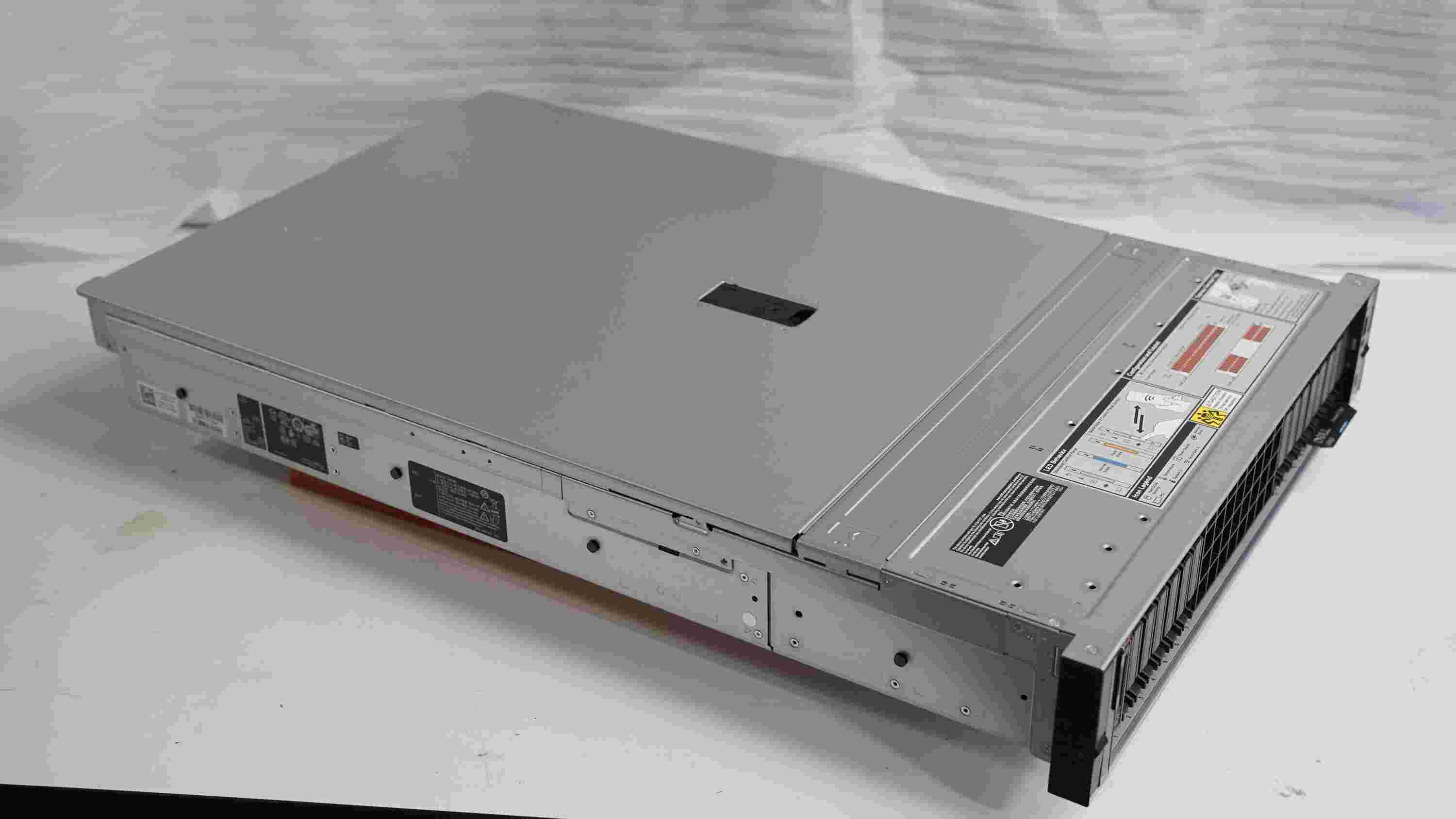


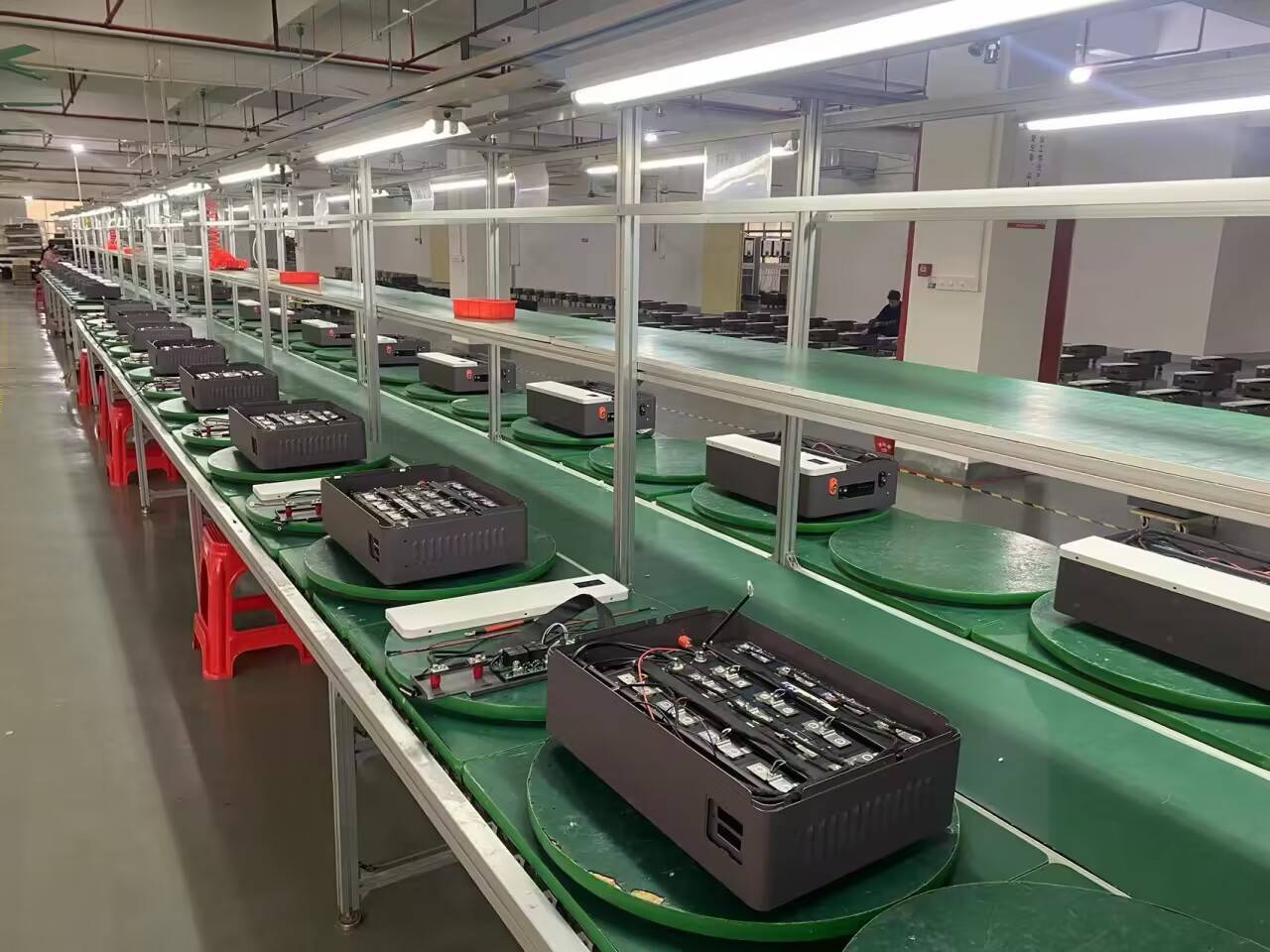
In-depth technical answers addressing optical amplification engineering, OSNR calculation, transient control, and OEM factory partnerships.
A: While all three use erbium-doped fiber, their operational points differ drastically. A Booster EDFA is placed immediately after the optical transmitter to boost signal power before launched into long-distance fiber, featuring high input power (-10 to +6 dBm) and high output power (+17 to +23 dBm). A Pre-Amplifier EDFA is situated right before the optical receiver to enhance sensitivity, operating on extremely low input signals (-40 to -10 dBm) with a low noise figure (<4.5 dB). An Inline EDFA sits periodically along long spans to compensate for fiber attenuation, operating with balanced gain and automatic gain control (AGC) to mitigate OSNR degradation.
A: Erbium-doped fiber naturally exhibits an uneven gain spectrum across the 1530nm–1565nm range, with a prominent gain peak around 1531nm. In a multi-channel DWDM system with cascading amplifiers, non-uniform gain causes power divergence between channels, leading to severe Optical Signal-to-Noise Ratio (OSNR) imbalances where some channels drop out completely. Optical amplifier factories utilize Gain Flattening Filters (GFF)—precision dielectric thin-film or fiber Bragg grating components—to equalize gain across all wavelengths within ±0.5 dB tolerances.
A: In dynamic optical networks where wavelengths are dynamically routed, added, or dropped due to network reconfigurations or fiber cuts, the total optical input power entering an amplifier changes abruptly. Without active transient gain control, the optical power per remaining channel would surge or plummet, causing non-linear bit errors or damaging sensitive receiver photo-diodes. Advanced EDFAs employ fast-response DSP feedback loops operating under 10 microseconds to lock amplifier gain constant.
A: Combining a counter-propagating Raman amplifier with a lump-sum EDFA creates a Hybrid Amplification Architecture. Because Raman amplification occurs inside the span fiber itself before the signal reaches the amplifier node, it effectively boosts optical signal power deep within the span, raising the effective OSNR by 3 to 7 dB. This enables span length extensions from 80km to over 140km without requiring intermediate electronic regeneration sites.
A: Procurement managers should request: 1) Customized target gain and saturated output power specs, 2) Firmware register mapping matching existing NMS software, 3) Specific mechanical footprints (such as MSA pluggables, 1U rackmount, or custom PCB module size), 4) Operating temperature qualification (Standard Commercial 0°C to +70°C vs Industrial -40°C to +85°C), and 5) Integrated optical VOA (Variable Optical Attenuator) options for dynamic power tuning.
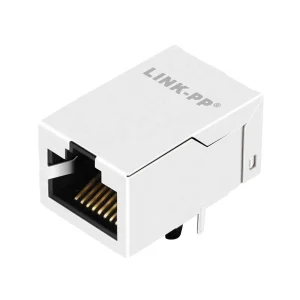
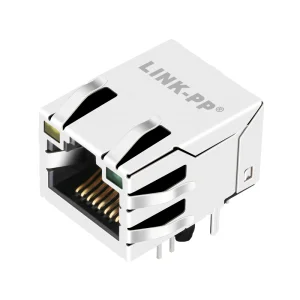
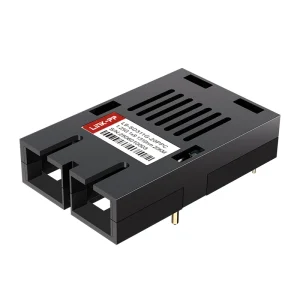
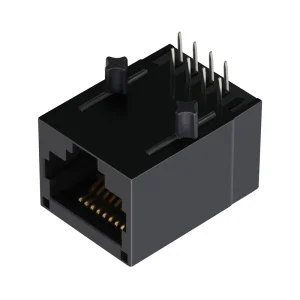
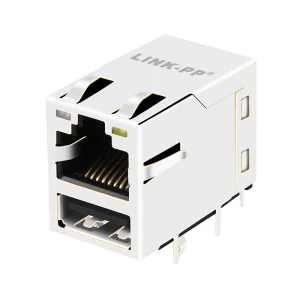
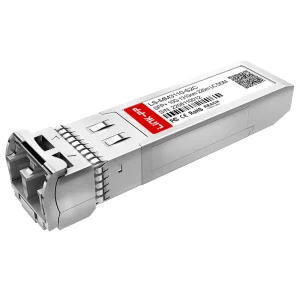
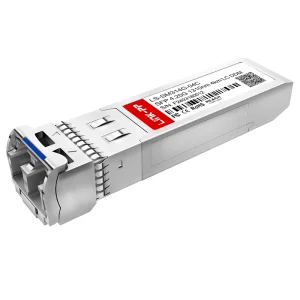
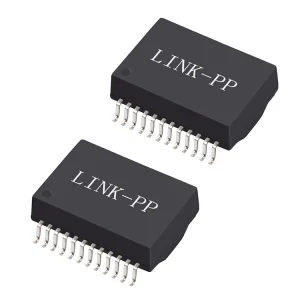
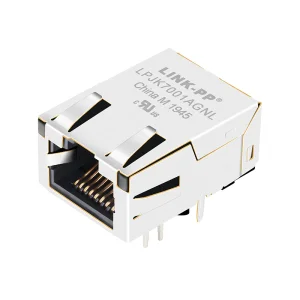
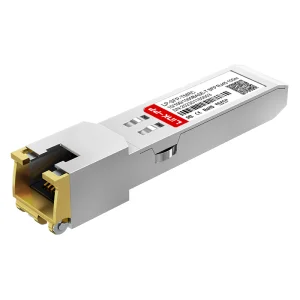
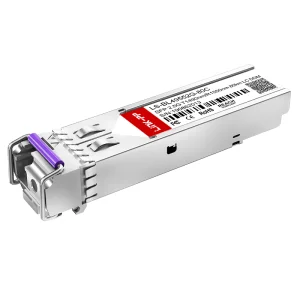
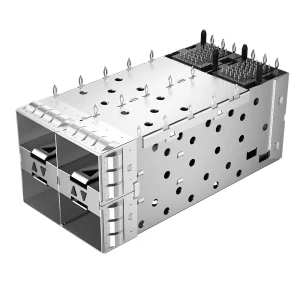
Complete portfolio of optical transceivers, LAN magnetics, and specialized network interface modules manufactured to Telcordia standards.