OptiLinker OptiLinker

Custom OEM Industrial Ethernet Connector Supplier & Exporters

High-reliability connectivity architectures for next-generation automated environments, IIoT platforms, and high-performance telecom infrastructure.

The Global Landscape of Industrial Ethernet Connectivity

In the era of Industry 4.0, smart manufacturing, and the Industrial Internet of Things (IIoT), legacy communication technologies such as standard Fieldbuses are systematically yielding to high-speed Industrial Ethernet networks. Global industrial landscapes demand unprecedented data throughput rates, minimal latencies, and high resilience to environmental hazards, electrical noise, and physical stress.

Unlike commercial Ethernet configurations designed for controlled office environments, industrial infrastructure requires heavy-duty interconnect systems. From automotive robotic assembly lines to offshore wind turbines, network engineers rely on robust connectors to maintain physical layer link stability under conditions characterized by continuous vibration, thermal cycling (-40°C to +85°C), and electromagnetic interference (EMI).

As a leading custom OEM Industrial Ethernet connector supplier, we bridge the gap between physical durability and signal integrity. Our engineering focus centers on developing electromagnetic shielding, optimized pin layouts, and integrated magnetics (MagJacks) that prevent packet loss and suppress common-mode noise on the factory floor, ensuring seamless communication across critical network nodes.
12+

Years Exp

$12M

Annual Export

850+

Supply Partners

60+

R&D Engineers

OptiLinker Optoelectronics Co., Ltd. (OptiLinker) leverages 12 years of industry experience and 8 years of export expertise, delivering top-tier high-speed optical transceivers and robust connector interfaces to global digital infrastructure developers.

Technological Trends & Next-Gen Interconnect Roadmap

Navigating the transition toward high-density fiber-optic integration, Single Pair Ethernet (SPE), and ultra-fast edge computing nodes.

Multi-Gigabit Migration

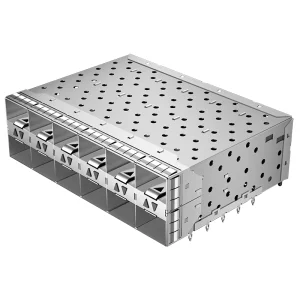
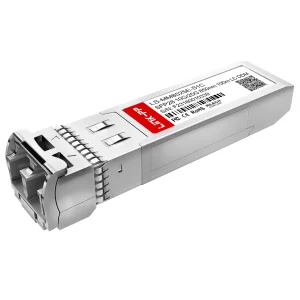
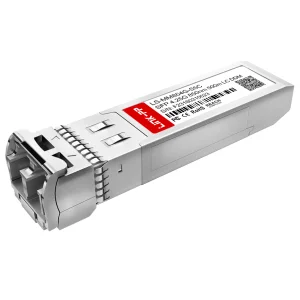
Modern sensor arrays, high-resolution machine vision cameras, and optical sorters require high-speed data pipelines. We design SFP28 and SFP+ cages capable of supporting data rates from 10Gbps to 25Gbps per port, enabling low-latency communication at the factory edge.

Integrated Magnetic Jack Designs

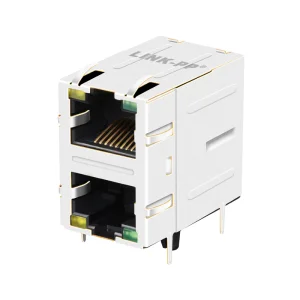
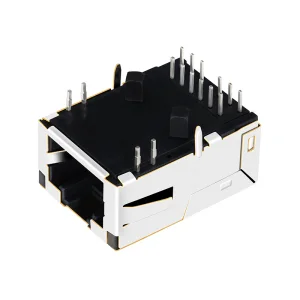
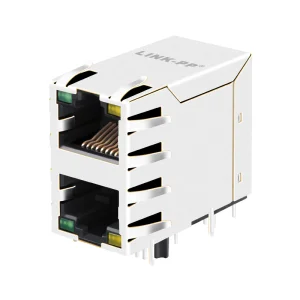
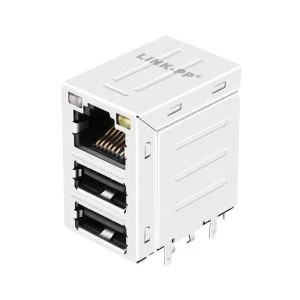
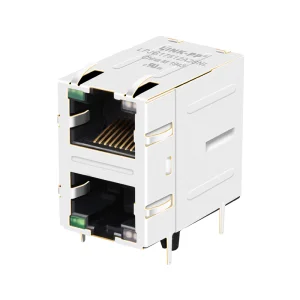
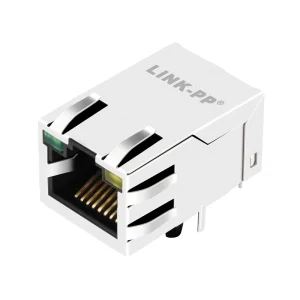
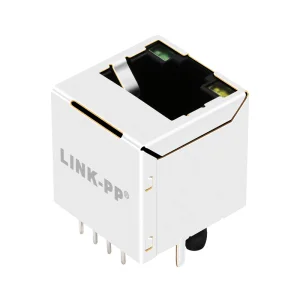
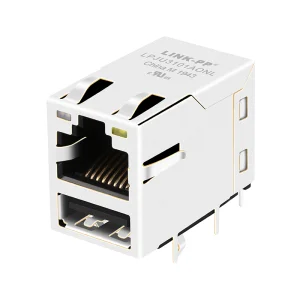
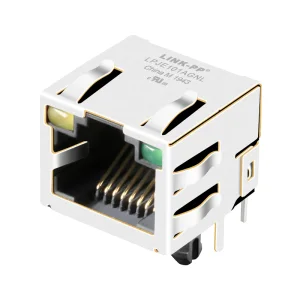
Our RJ45 connectors integrate isolation transformers and common-mode chokes directly into the shield housing. This compact layout saves motherboard space, isolates systems from ground loops, and protects PHY chips from high-voltage transients.

SPE & TSN Standardization

Single Pair Ethernet (IEEE 802.3cg) enables data transmission and Power over Data Line (PoDL) over a single twisted pair up to 1,000 meters. Our development pipeline incorporates SPE connector standards alongside TSN (Time-Sensitive Networking) compatibility.

Custom OEM/ODM Engineering & Manufacturing Capabilities

At the core of our business model is the capacity to deliver highly custom physical interconnects and optical modules that align with specialized client requirements. We support hardware personalization across multiple parameters:

  • Wavelength Tuning & Optical Distance: Custom wavelength configurations (e.g., BiDi 1330nm/1270nm, 1490nm/1550nm) and reaching distances up to 80km over Single Mode Fiber (SMF).
  • Integrated Magnetics & LED Layouts: Configurable transformer schematics within modular RJ45 jacks to support distinct PHY chip designs and visual diagnostic LED colors.
  • Mechanical Form Factor Adaptation: Stacked multi-port architectures (2x1, 2x6, 2x8), vertical mount styles, and right-angle low-profile designs to solve spatial constraints.
  • Firmware Coding & Compatibility: In-house firmware compilation to guarantee seamless compatibility with systems from major brands including Cisco, Arista, Juniper, and Huawei.

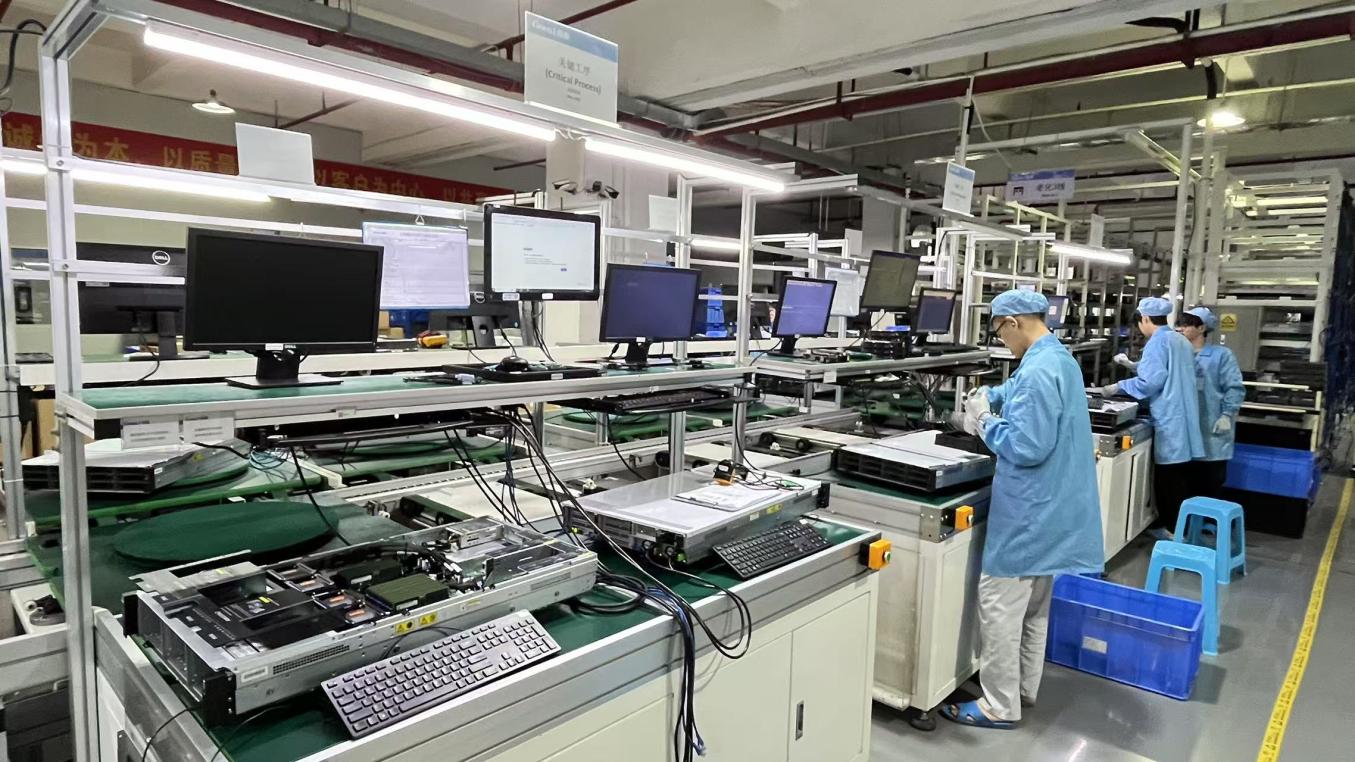
Our quality assurance program is backed by a dedicated team of 35 QC professionals. Every batch is subjected to 100% incoming material inspection, automated optical inspection (AOI), full optical performance testing, Bit Error Rate (BER) analysis, and thermal shock cycling in simulated extreme industrial states.

OptiLinker Optoelectronics Profile

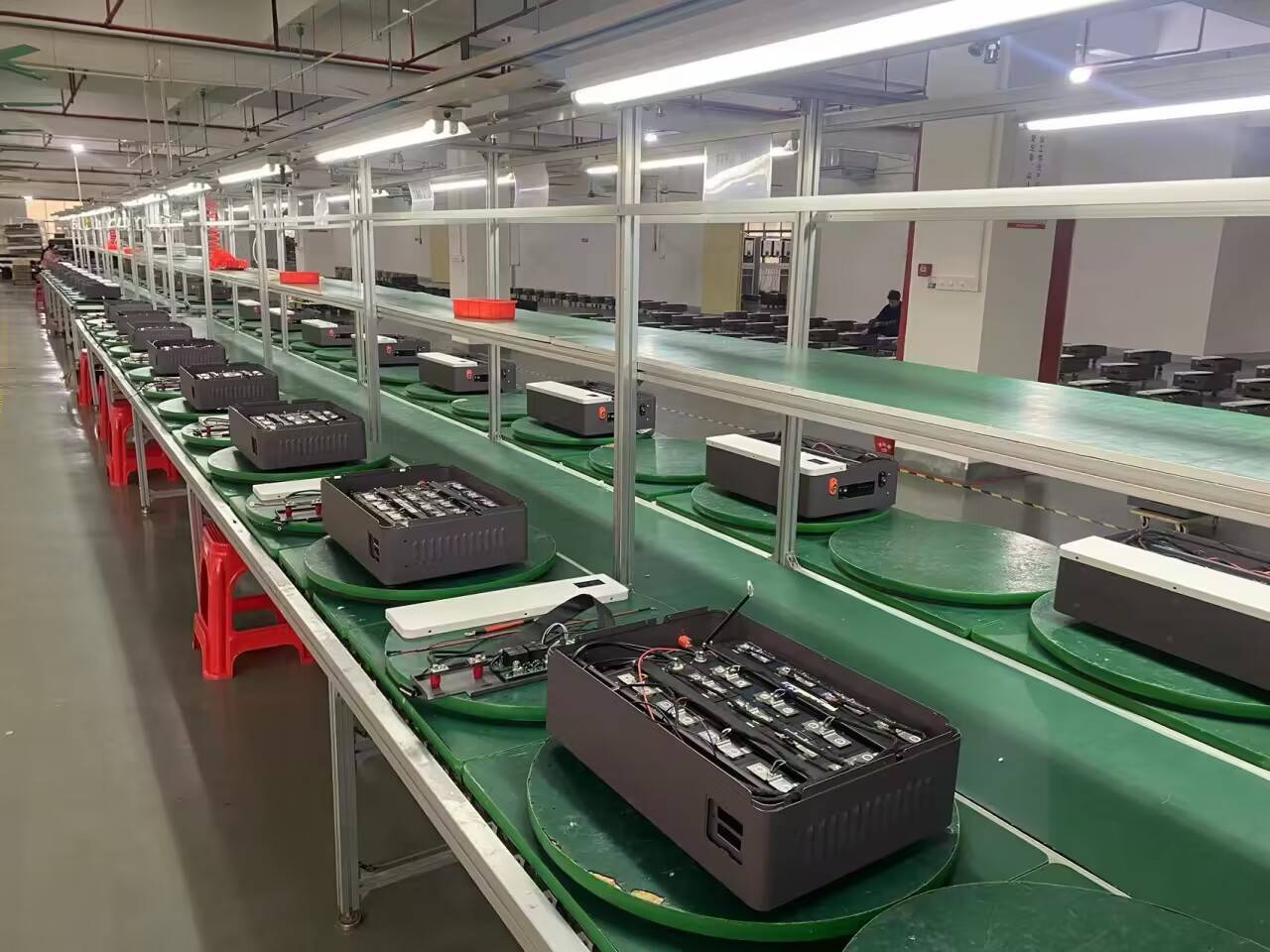
Founded in 2016, OptiLinker operates a modern production facility designed for precision optical assembly. With over 12 years of industry experience, our company has built a reliable global footprint, exporting high-performance communication systems to North America, Europe, Southeast Asia, and the Middle East.

Our engineering division employs 60 experienced optical and mechanical engineers. They focus on signal integrity, high-speed electrical traces, thermal modeling, and mechanical wear mitigation, keeping us at the forefront of the digital transformation.

Localized Application Scenarios

How our heavy-duty connectors and optical modules secure communication links in distinct global sectors.

Smart Factories & Robotics

Automated automotive lines rely on high-flex cabling and connectors that withstand continuous rotational and linear mechanical stresses. Our shielded RJ45 Stacked Connectors prevent EMI noise from robotic servo drives from corrupting sensor and control data packets.

Edge Computing & Telecom

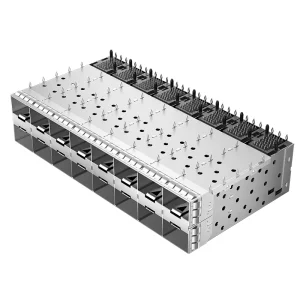
With data traffic shifting closer to the user, regional edge nodes in urban and remote areas demand high thermal stability. Our SFP28 multi-port press-fit cages provide advanced ventilation and low contact resistance, enabling stable 25Gbps optical throughput.

Grid Automation & Renewables

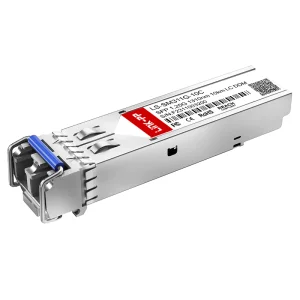
Wind farms and solar installations generate high levels of electromagnetic noise and operate in broad temperature swings. OptiLinker's Industrial SMF Transceiver Modules enable noise-free optical isolation over several kilometers to link remote substations with central control rooms.

Technical Q&A / Frequently Asked Questions

Deep-dive architectural insights for hardware designers, procurement specialists, and network architects.

Why are integrated magnetics (MagJacks) crucial for Industrial Ethernet RJ45 sockets?

Integrated magnetics protect delicate Ethernet PHY transceivers from voltage spikes, static charges, and common-mode noise. By housing the isolation transformer, common-mode choke, and resistors inside the metal shield of the RJ45 jack, designers save PCB space, improve signal integrity, and minimize electromagnetic interference (EMI) that can cause packet drops.

What is the difference between a press-fit connector cage and a traditional through-hole solder cage?

Press-fit connectors feature compliant pins that form a gas-tight mechanical and electrical connection with the PCB vias when pressed into place, eliminating the need for wave or reflow soldering. This process avoids thermal stress on the PCB, simplifies production, and reduces assembly steps, making it ideal for multi-port high-speed SFP28/SFP+ cage layouts.

How does OptiLinker ensure optical transceiver compatibility across different switch manufacturers?

OptiLinker operates a dedicated device compatibility lab where our R&D engineers customize the EEPROM firmware code of our transceivers. We program and test our modules with switch configurations from Cisco, Juniper, Arista, and other major brands, ensuring seamless plug-and-play operation and avoiding vendor-lockout issues.

What are the typical deployment limits for BiDi (Bidirectional) SFP modules?

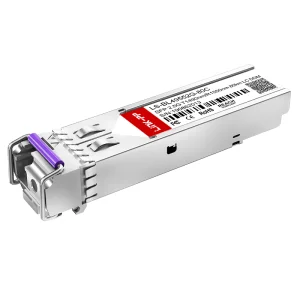
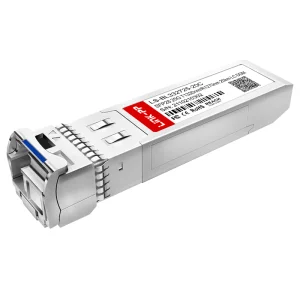
BiDi SFP transceivers transmit and receive data over a single fiber optic core using different wavelengths (for example, 1330nm-TX/1270nm-RX or 1490nm-TX/1550nm-RX). This technique doubles fiber capacity and simplifies installation. Our custom industrial-grade BiDi SFP transceivers support transmission distances up to 80km over Single Mode Fiber (SMF).

What QC protocols are used to verify signal integrity before shipment?

Every single batch undergoes a series of physical and electrical checks. This includes 100% incoming material validation, automated optical inspection (AOI) of solder joints, eye-diagram testing to verify pulse shapes, Bit Error Rate (BER) testing to ensure error-free transmission, and high-low temperature cycling to confirm performance under extreme operating conditions.