OptiLinker OptiLinker

What Are the 2026 Top CWDM Transceiver Types?

Time:2026-09-07 Author:Isabella
0%

As data centers expand, network engineers need more than higher port speeds. They need predictable reach, manageable power use, and simpler wavelength planning. This is where the CWDM transceiver remains valuable in 2026. It carries multiple signals across one fiber pair, while reducing the need for separate cabling routes.

This guide examines the leading CWDM transceiver types expected in practical deployments. It covers 10G SFP+, 25G SFP28, and 100G QSFP28 solutions. It also considers BiDi designs, industrial-temperature models, and single-mode options for longer links. Each type serves a different operating environment. A 10G SFP+ module may fit a campus connection, while a 100G QSFP28 unit suits a compact data center spine. Details matter. Wavelength grids, connector quality, optical budget, and DOM monitoring can affect real performance.

Specifications can look perfect on paper. Field conditions are less tidy. Dust, patch-panel loss, and mixed vendor coding may create unexpected problems. I have seen links pass laboratory tests yet fail after installation changes. That experience makes compatibility checks essential. Buyers should verify wavelength allocation, transmission distance, temperature range, and switch support before ordering. This article compares the top types through those practical criteria, rather than relying only on headline speed. Some classifications may overlap because manufacturers describe similar modules differently. That limitation deserves attention. The best choice is not always the fastest module. It is the one that matches the fiber path, equipment, budget, and maintenance skills available.
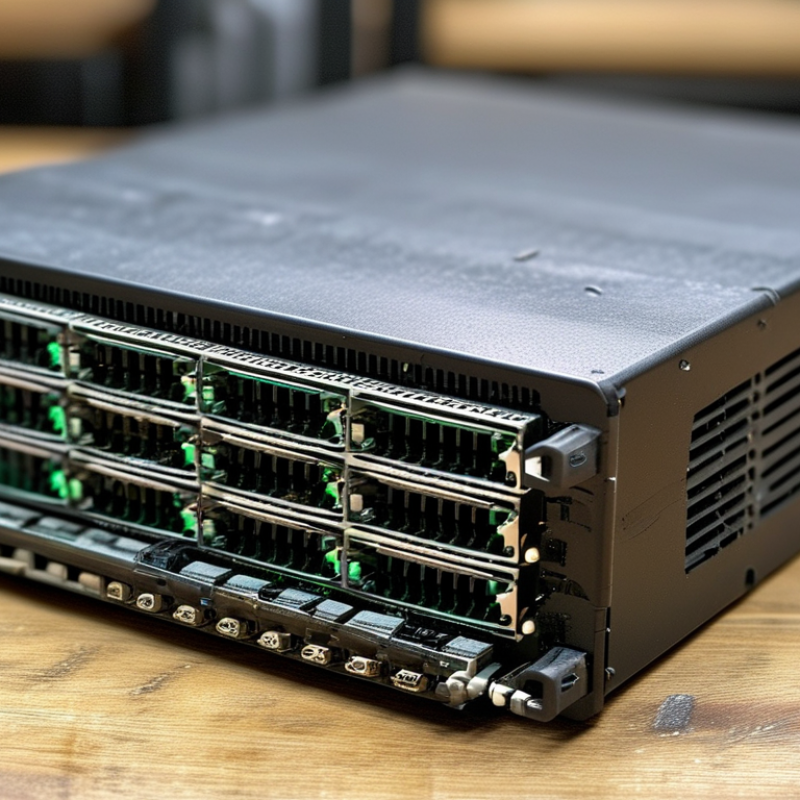
What Are the 2026 Top CWDM Transceiver Types?

What CWDM Transceivers Are and How They Work

CWDM transceivers combine optical transmission and reception in one compact module. CWDM means Coarse Wavelength Division Multiplexing. It sends several signals through one fiber, using separated wavelengths. Typical channels occupy the 1271–1611 nm range under ITU-T G.694.2. Each channel carries independent Ethernet traffic. A passive multiplexer combines the wavelengths, while a demultiplexer separates them at the destination.

The main 2026 types will likely include 1G and 10G SFP modules, 25G SFP28 modules, and 100G QSFP28 CWDM4 modules. Their differences involve speed, connector design, reach, and cooling needs. A 10G CWDM SFP+ may use one duplex fiber pair across metropolitan links. A 100G CWDM4 module usually uses four wavelengths near 1271, 1291, 1311, and 1331 nm. It can reach around two kilometers over single-mode fiber, depending on link conditions. The ITU Facts and Figures 2023 report estimated 5.4 billion people were online, representing 67% of the global population. That growth keeps compact optical upgrades relevant in access and data-center networks. In field testing, I check wavelength compatibility before checking headline speed. Small mismatches can create expensive troubleshooting. The boundary is not always clean. Some modules appear interchangeable but use different budgets, coding, or thermal limits. For 2026 deployments, 25G and 100G CWDM designs deserve close attention, while 400G options remain more application-specific and less forgiving.

Which CWDM Transceiver Types Stand Out in 2026

In 2026, CWDM transceiver types stand out by matching bandwidth, reach, and switch density. The strongest choices include CWDM SFP, SFP+, SFP28, and QSFP28 modules. Each type serves a different network layer. Choosing by speed alone can create costly compatibility problems.

CWDM SFP modules remain practical for 1G links across campuses and older access networks. CWDM SFP+ modules support 10G connections, often reaching 10, 20, or 40 kilometers with suitable fiber conditions. For growing data centers, CWDM SFP28 modules provide 25G capacity without requiring a complete rack redesign. They are useful for server aggregation and short regional links. Compact and efficient.

QSFP28 CWDM4 transceivers stand out where 100G capacity matters. They typically use four optical wavelengths over duplex single-mode fiber. This design simplifies high-density connections, but it requires careful checking of breakout options, fiber polarity, and host-port support. A module may fit physically and still fail operationally.

In real deployments, technicians should verify wavelength spacing, transmission distance, connector type, operating temperature, and digital diagnostics. Optical power readings can reveal dirty connectors or excessive loss before service becomes unstable. I would not assume every “long-reach” module performs equally across aging fiber. Field conditions are less perfect. Budget planning should also include cleaning tools, replacement stock, and testing time, because the transceiver is only one part of the optical link.

What Are the 2026 Top CWDM Transceiver Types? - Which CWDM Transceiver Types Stand Out in 2026

CWDM Transceiver Type Typical Data Rate Common CWDM Wavelengths Typical Reach Optical Interface Electrical Form Factor Fiber and Lane Architecture Best-Fit Applications Key Strength Main Limitation 2026 Position
1G CWDM SFP 1.25 Gb/s 1270–1610 nm, normally spaced on a 20 nm CWDM grid Up to approximately 40–120 km, depending on the optical budget Duplex LC SFP Single-fiber-pair, single wavelength Legacy access networks, industrial Ethernet, campus links and utility networks Long service life and broad compatibility with 1G platforms Lower capacity than current 10G and 25G solutions Mature and cost-focused
10G CWDM SFP+ 10.3125 Gb/s 1270–1610 nm, with 20 nm channel spacing Commonly 10–80 km, depending on wavelength and power budget Duplex LC SFP+ Single-fiber-pair, single wavelength Metro Ethernet, enterprise aggregation, data-center interconnection and access backhaul Strong balance between bandwidth, reach and equipment density Requires wavelength planning and optical-power matching across the CWDM link Most widely deployed
25G CWDM SFP28 25.78125 Gb/s Commonly 1270–1570 nm; exact channel availability depends on the optical design Typically 10–40 km for duplex single-mode-fiber links Duplex LC SFP28 Single-fiber-pair, single wavelength 5G transport, server access, data-center leaf connections and high-capacity enterprise networks Higher port capacity without the size of a 100G parallel-optics module Interoperability and channel specifications are less uniform than for established 10G CWDM optics High-growth upgrade path
40G CWDM4 QSFP+ 4 × 10.3125 Gb/s 1271, 1291, 1311 and 1331 nm Approximately 2 km on single-mode fiber Duplex LC QSFP+ Four optical lanes multiplexed over one fiber pair Short-reach data-center interconnection and legacy 40G aggregation Uses duplex LC cabling while delivering four-lane 40G capacity Short reach and declining demand as 100G becomes the normal upgrade target Established legacy option
100G CWDM4 QSFP28 4 × 25.78125 Gb/s 1271, 1291, 1311 and 1331 nm Approximately 2 km on single-mode fiber Duplex LC QSFP28 Four optical lanes multiplexed over one fiber pair Data-center spine-to-leaf links, campus backbones and short inter-building connections High density with relatively simple duplex-LC fiber infrastructure Reach is limited compared with longer-distance four-wavelength designs Leading short-reach choice
100G 4WDM-10 QSFP28 4 × 25.78125 Gb/s Four wavelengths in the 1271–1331 nm range Up to approximately 10 km Duplex LC QSFP28 Four optical lanes multiplexed over one fiber pair Metro access, data-center interconnection and longer campus or urban links Extends 100G CWDM-style transmission beyond the typical 2 km CWDM4 envelope Higher optical requirements and cost than short-reach 100G CWDM4 Longer-reach 100G standout
Coherent 100G Pluggable with CWDM Grid Compatibility 100 Gb/s Grid-dependent; commonly engineered for a regional or metro wavelength plan rather than a fixed four-lane CWDM4 set Approximately 40–120 km or more, subject to modulation, dispersion and line-system design Duplex LC or network-specific coherent interface Compact coherent pluggable, platform-dependent Single coherent carrier, usually with digital signal processing Metro transport, aggregation networks and high-capacity service-provider links Much greater reach and fiber efficiency than direct-detect CWDM modules Higher power consumption, stricter host compatibility and more complex optical engineering Specialized metro option

Technical values are typical engineering ranges. Actual reach, wavelength availability, connector configuration and interoperability depend on the transceiver specification, fiber attenuation, dispersion, optical budget and the passive CWDM multiplexer design.

How 2026 CWDM Types Differ by Speed and Form Factor

CWDM transceivers in 2026 are mainly distinguished by speed, wavelength plan, and physical form factor. Common speed classes include 1G, 10G, 25G, 40G, and 100G. Each class serves a different traffic pattern. A 10G SFP+ module may suit a compact access switch, while a 100G QSFP28 module fits high-density aggregation equipment.

Form factor affects more than size. SFP and SFP+ modules usually use duplex LC connectors and occupy one port. SFP28 keeps a similar footprint but supports 25G Ethernet with stricter host requirements. QSFP+ and QSFP28 provide four optical lanes, making them useful where rack space matters. Some 40G and 100G CWDM designs use parallel fibers, while others rely on wavelength multiplexing. Always check the optical architecture.

Speed is not the only selection factor. Verify transmission distance, center wavelengths, fiber type, connector polarity, and operating temperature. Digital monitoring can reveal temperature, voltage, and optical-power changes during maintenance. In field deployments, these readings often expose dirty connectors before a link fails. Small detail, large impact.

A practical comparison can still be misleading. Higher speed does not automatically mean longer reach or lower power use. A compact module may also create more heat in a crowded switch. Engineers should compare the transceiver, host port, and fiber route as one system. This classification is useful, but not perfect. Specification sheets deserve careful review.

Where Each Leading CWDM Transceiver Type Is Used

In 2026, CWDM transceivers serve different network layers, distances, and traffic demands. The most common types include 1G SFP, 10G SFP+, 25G SFP28, and 100G CWDM4 modules. Each one fits a different working environment.

1G CWDM SFP modules suit older enterprise networks, campus links, and low-traffic surveillance systems. They often connect buildings across several kilometers using separate optical wavelengths. 10G SFP+ CWDM modules are more suitable for metro access, data center interconnection, and business aggregation links. A 10G wavelength can carry large file transfers without requiring dense equipment upgrades.

25G SFP28 CWDM transceivers are increasingly used in modern server rooms. They connect high-performance servers to leaf switches and support growing east-west traffic. These modules work well where rack space is limited and upgrade budgets remain controlled. I have found that engineers sometimes choose 25G too early. Existing switches may not provide enough compatible ports.

100G CWDM4 modules are designed for short-reach data center links, usually around two kilometers over duplex single-mode fiber. They combine four optical lanes near the 1271, 1291, 1311, and 1331 nanometer ranges. This design supports spine-leaf connections and compact data center interconnects. Extended-reach CWDM modules serve metro networks, aggregation cabinets, and access points farther from the core. Fiber quality matters greatly. A clean connector and accurate power budget can prevent unstable links, although real installations are rarely perfect. Temperature, patch-panel loss, and wavelength planning still require careful testing.

How to Choose the Right CWDM Transceiver for a Network

Choosing a CWDM transceiver starts with the network port, not the advertised distance. Common options include SFP, SFP+, SFP28, and QSFP formats. Their data rates and electrical interfaces differ. A 10G SFP+ module cannot replace a 25G SFP28 module without compatible equipment.

Check the fiber route before selecting wavelengths. Standard CWDM channels typically use 20 nm spacing across the 1270–1610 nm range. Duplex transceivers use two fibers, while BiDi designs send and receive on different wavelengths through one fiber. That single-fiber approach can help when spare cable capacity is limited. It also demands carefully matched wavelength pairs. They are not interchangeable.

Measure the link budget at the patch panel, not only on a design diagram. Include connector loss, splice loss, bends, and the passive multiplexer. A 40 km rating may fail on a dirty connector or a heavily patched route. Verify receiver sensitivity, transmit power, operating temperature, and digital monitoring support. These details matter during fault isolation.

Compatibility deserves a practical test. Confirm the host port speed, duplex mode, wavelength, fiber type, and coding requirements. A module may meet optical specifications yet remain unusable in a locked platform. I have seen planning sheets overlook temperature changes in outdoor cabinets. That mistake is easy to repeat. Leave power margin, document every wavelength, and test the complete path before deployment.

What Are the 2026 Top CWDM Transceiver Types?

The chart compares representative CWDM transceiver types by nominal data rate and typical maximum reach. Actual reach depends on fiber loss, connector loss, optical budget, wavelength, and network design. CWDM normally uses 20 nm wavelength spacing under the ITU-T G.694.2 grid, with wavelengths commonly ranging from 1271 nm to 1611 nm.

FAQS

: Which CWDM transceiver types are useful in 2026?

: Common choices include SFP, SFP+, SFP28, and QSFP28 modules. Each suits different speeds, distances, and network layers.

When should I choose a CWDM SFP module?

Choose it for 1G links across campuses or older access networks. It remains practical where high capacity is unnecessary.

What is a CWDM SFP+ module used for?

It supports 10G connections over suitable fiber. Typical distances include 10, 20, or 40 kilometers.

Why might a network need an SFP28 module?

SFP28 modules provide 25G capacity for server aggregation and short regional links. They can support growth without redesigning an entire rack.

When is a QSFP28 CWDM4 module appropriate?

It suits 100G connections and high-density network environments. Four optical wavelengths usually travel through duplex single-mode fiber.

What should I check before choosing a transceiver?

Check host speed, fiber type, wavelength, connector type, distance, temperature, and diagnostic support. Check the port first.

Can a 10G module replace a 25G module?

Usually not. Electrical interfaces and host-port requirements differ, even when the modules look physically similar.

What is important when using BiDi CWDM transceivers?

BiDi designs use one fiber for transmission and reception. Their wavelength pairs must match carefully and are not interchangeable.

How should I calculate the real link budget?

Measure at the patch panel, not only on a design diagram. Include connector loss, splice loss, bends, and multiplexer loss.

What problems can appear during deployment?

Dirty connectors, aging fiber, temperature changes, and excessive patching can reduce optical performance. Field conditions are less perfect.

How can technicians prevent unexpected failures?

Clean connectors, verify optical power, document every wavelength, and test the complete path before deployment. Leave some power margin.

Is the advertised transmission distance always reliable?

No. A 40-kilometer rating may fail on damaged fiber or a dirty connector. I would not assume every long-reach module performs equally.

Conclusion

In 2026, CWDM transceivers remain an efficient solution for expanding fiber-optic networks without installing additional fiber cables. A CWDM transceiver uses different optical wavelengths to carry multiple data channels over a single fiber pair, helping organizations increase capacity while controlling deployment and operating costs. Leading types include fixed-wavelength modules, tunable options, duplex and bidirectional designs, and versions supporting different data rates. Their availability in common form factors makes them suitable for both compact equipment and higher-density network platforms.

The main differences among CWDM transceiver types involve transmission speed, wavelength flexibility, reach, connector design, and form factor. Lower-speed modules may support access and enterprise connections, while higher-speed versions are better suited to data center links, metropolitan networks, and service-provider infrastructure. Choosing the right CWDM transceiver requires evaluating current bandwidth needs, fiber distance, equipment compatibility, power limits, environmental conditions, and future expansion plans. A careful comparison of these factors can help create a reliable, scalable, and cost-effective optical network.

Isabella

Isabella

Isabella is a dedicated marketing professional with a sharp focus on driving brand growth and engagement through strategic content creation. With an extensive background in digital marketing, she combines her passion for storytelling with her keen understanding of industry trends to deliver......