 OptiLinker
Optical transceivers turn electrical signals into light and back again, connecting switches, servers, and fiber links. The right module depends on more than its connector. Data rate, transmission distance, fiber type, wavelength, and equipment compatibility all shape the choice. A short multimode link inside a server room has different needs from a long single-mode connection between buildings. Small details matter.
This guide explores common optical transceiver types, including SFP, SFP+, QSFP, and longer-reach models, and explains what influences their prices. Optical transceiver cost can range from modest to substantial, but a price alone says little about whether a module suits a network. Brand, reach, speed, coding, temperature rating, and warranty may all affect the final figure. So can supply conditions and the specific switch or router involved.
Check the specifications carefully. A module that fits physically may still lack the required compatibility or performance. A low purchase price can also hide extra costs, such as replacement parts, testing, or downtime after a mismatch. Yet the most expensive option is not automatically the safest choice. Real-world needs are sometimes less tidy than product tables suggest. This overview offers a practical way to compare types and costs, while recognizing that prices change and exact requirements vary. Verify current vendor documentation before buying, especially for critical links.
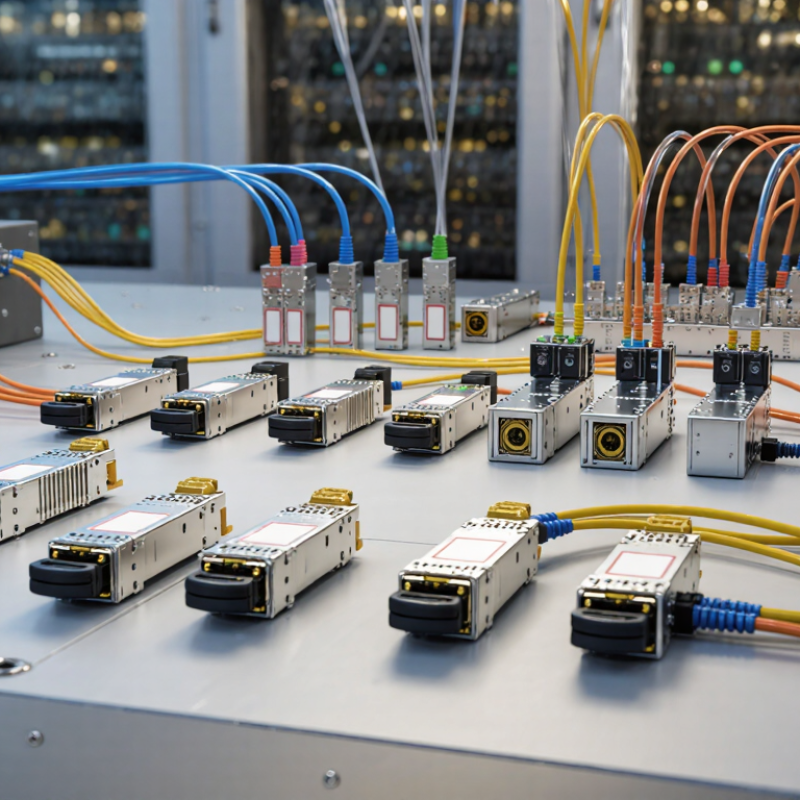
An optical transceiver converts electrical signals into light and back. Its form factor must match the switch port, power limits, and cooling design. SFP-style modules suit lower lane counts, while QSFP-DD and OSFP formats accommodate higher-speed interfaces. The package alone does not guarantee compatibility. Check the port specification and module coding before ordering; otherwise, a physically fitting optic may still fail to link.
Wavelength and fiber type determine reach. IEEE 802.3 specifies 100GBASE-SR4 for up to 100 meters over OM4 multimode fiber, while 100GBASE-LR4 reaches 10 kilometers over single-mode fiber. Distance matters. The Ethernet Alliance’s 2024 Ethernet Roadmap tracks 800GbE and 1.6TbE interface development, but newer speeds do not make older cabling suitable automatically. Multimode links commonly use short-wavelength optics; single-mode links use longer wavelengths for greater reach. Connector cleanliness and fiber polarity can also affect results, even when the wavelength is right. Prices vary with speed, reach, and optical complexity, so compare the required link budget—not just the module’s headline rate. One detail is easy to overlook: longer reach often costs more, but not every installation needs it.
| Transceiver type | Form factor | Data rate | Typical wavelength | Fiber and connector | Typical reach | Estimated price per module (USD) |
|---|---|---|---|---|---|---|
| 10GBASE-SR | SFP+ | 10 Gb/s | 850 nm | Multimode fiber (OM3/OM4); duplex LC | Up to 300 m on OM3; 400 m on OM4 | $10–$35 |
| 10GBASE-LR | SFP+ | 10 Gb/s | 1310 nm | Single-mode fiber (OS2); duplex LC | Up to 10 km | $20–$70 |
| 10GBASE-ER | SFP+ | 10 Gb/s | 1550 nm | Single-mode fiber (OS2); duplex LC | Up to 40 km | $80–$250 |
| 25GBASE-SR | SFP28 | 25 Gb/s | 850 nm | Multimode fiber (OM3/OM4); duplex LC | Up to 70 m on OM3; 100 m on OM4 | $20–$65 |
| 25GBASE-LR | SFP28 | 25 Gb/s | 1310 nm | Single-mode fiber (OS2); duplex LC | Up to 10 km | $45–$150 |
| 40GBASE-SR4 | QSFP+ | 40 Gb/s | 850 nm | Multimode fiber (OM3/OM4); MPO-12 | Up to 100 m on OM3; 150 m on OM4 | $40–$130 |
| 40GBASE-LR4 | QSFP+ | 40 Gb/s | Four wavelengths, approximately 1271–1331 nm | Single-mode fiber (OS2); duplex LC | Up to 10 km | $100–$350 |
| 100GBASE-SR4 | QSFP28 | 100 Gb/s | 850 nm | Multimode fiber (OM3/OM4); MPO-12 | Up to 70 m on OM3; 100 m on OM4 | $50–$180 |
| 100GBASE-CWDM4 | QSFP28 | 100 Gb/s | Four wavelengths, approximately 1271–1331 nm | Single-mode fiber (OS2); duplex LC | Up to 2 km | $100–$400 |
| 100GBASE-LR4 | QSFP28 | 100 Gb/s | Four wavelengths, approximately 1295–1310 nm | Single-mode fiber (OS2); duplex LC | Up to 10 km | $150–$600 |
| 400GBASE-DR4 | QSFP-DD or OSFP | 400 Gb/s | 1310 nm, parallel optics | Single-mode fiber (OS2); MPO-12 | Up to 500 m | $500–$1,800 |
| 400GBASE-FR4 | QSFP-DD or OSFP | 400 Gb/s | Four wavelengths, approximately 1271–1331 nm | Single-mode fiber (OS2); duplex LC | Up to 2 km | $1,200–$4,000 |
Prices are indicative per-module USD estimates for standard commercial optics and can vary with supplier, compatibility requirements, reach, quantity, and market conditions. Confirm transceiver support and fiber polarity with the host equipment and cabling specifications before purchase.
It supports links up to 300 meters over OM3 multimode fiber. Check the cable markings.
It is designed for links up to 10 kilometers over single-mode fiber. It uses four optical wavelengths.
No. A rated distance assumes specified conditions. Dirty connectors, tight bends, or aging fiber can still cause trouble.
SFP+ typically supports 10 Gb/s, QSFP28 supports 100 Gb/s, and QSFP-DD can reach 400 Gb/s. Match both ends.
Confirm the port speed, fiber type, connector, wavelength, distance, and equipment coding requirements. Check the documentation.
Reach, data rate, optics, connector design, compatibility, stock, and warranty terms all affect cost. Prices change quickly.
Not always. A low-cost module may not work with the host equipment or link. A bargain can become a delay.
Clean and inspect both connector ends. Record fiber type and measured length, then verify optical power at both ends. Specifications alone are not enough.
Optical transceivers convert electrical signals into light and back, with their form factor, wavelength, and fiber type determining where they can be used. Reach varies by module and setup: common IEEE 802.3 benchmarks include 10GBASE-SR over up to 300 meters and 100GBASE-LR4 over up to 10 kilometers. SFP+ modules typically serve 10-gigabit links, QSFP28 supports higher-density 100-gigabit applications, and QSFP-DD enables data rates up to 400 gigabits per second.
The optical transceiver cost depends on more than data rate. Indicative prices range from about $10–$100 for 10G SFP+ modules to roughly $300–$3,000 for 400G QSFP-DD modules. Longer reach, more complex optics, fiber requirements, device compatibility, and manufacturer coding can all affect the final price. Comparing these factors with the required speed and distance helps identify a suitable module without paying for capabilities a link does not need.
