 OptiLinker
OptiLinker
OptiLinker
In today's fast-evolving telecommunications market, making informed decisions about QSFP transceivers is crucial. These devices play a pivotal role in enhancing network performance and capacity. With the global demand for data transmission increasing significantly, the QSFP transceiver market is projected to grow by 15% annually, according to a recent report by ResearchAndMarkets. This figure highlights the pressing need for businesses to understand their sourcing options.
Industry expert Dr. Alice Chen emphasizes, "Choosing the right QSFP transceiver can drastically improve your network's efficiency." Her insights underscore the importance of selecting reliable suppliers and understanding technical specifications. Companies face challenges with compatibility, performance, and cost-effectiveness. These factors can lead to critical errors if not properly addressed.
Sourcing QSFP transceivers requires careful consideration. Companies often overlook key attributes like data rates and distances. Additionally, some may fall into the trap of choosing the lowest-cost option, ignoring long-term value. This approach can lead to inefficiencies and increased expenses. As the market continues to mature, a structured buying guide becomes essential for navigating these complex choices effectively.
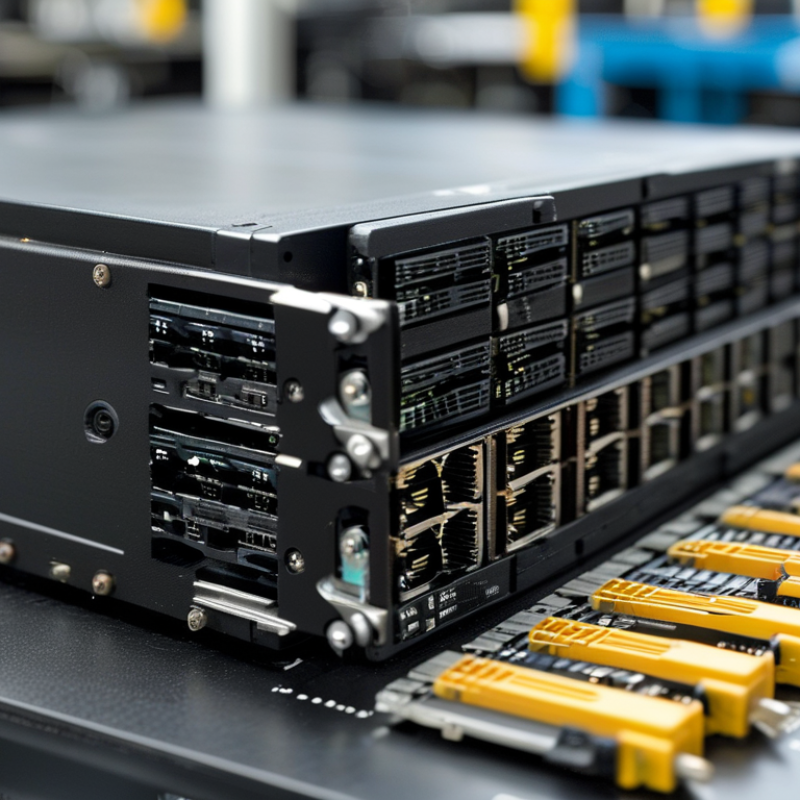
When exploring QSFP transceivers, understanding their applications is crucial. QSFP, or Quad Small Form-factor Pluggable, is widely used in data centers and networking environments. These transceivers support high-speed data transmission over optical fiber and copper cables. Common applications include linking switches and routers within large networks. They often connect devices across long distances while maintaining signal integrity.
Tips: Always check compatibility with your existing systems. Some models may have specific requirements that could impact performance.
Moreover, QSFP transceivers come in various types, such as QSFP+, QSFP28, and QSFP-DD, each designed for different data rates. For instance, QSFP+ typically supports up to 40G, while QSFP28 can handle 100G connections. Assessing your bandwidth needs will guide the selection process.
Tips: Consider future scalability when purchasing. Investing in higher-capacity transceivers can save costs later.
Due to their versatility, QSFP transceivers offer a lot of benefits. However, not all suppliers guarantee quality. Researching credible sources is essential to avoid poor-performing products. Look for transparency in specifications and performance reports.
| Specification | Description | Application |
|---|---|---|
| QSFP+ 40G | Supports 40 Gbps data transmission over multimode fiber, with a range of up to 150m. | Data centers, high-performance computing, enterprise networks. |
| QSFP28 100G | Enables 100 Gbps connectivity, compatible with both multimode and single-mode fibers. | Cloud services, financial services, large scale data processing. |
| QSFP-DD 200G | Supports up to 200 Gbps, backward compatible with QSFP28 modules. | Next generation data centers, high-density networks. |
| QSFP28 CWDM4 | Single-mode fiber module that uses CWDM technology to achieve 100G over long distances (up to 2km). | Telecommunications, long-haul data transmission. |
| QSFP+ AOC | Active optical cable for 40G connectivity, ideal for short distances. | Data centers, server interconnections. |
: QSFP transceivers support high-speed data transmission in data centers and networking environments. They link switches and routers.
Common types include QSFP+, QSFP28, and QSFP-DD. Each type supports different data rates for various applications.
Assess your bandwidth needs and consider your infrastructure capacity. This helps in selecting compatible models.
Incompatibility can lead to delays and added costs. Always check if the transceiver fits well with your existing hardware.
Transceivers generate heat during operation. Proper thermal management features are crucial to maintaining performance.
Research manufacturers and look for transparency in specifications. Avoid suppliers with poor performance records.
Yes, higher-capacity transceivers can offer future scalability. This investment may save costs over time.
Certification ensures products meet industry standards. This can significantly enhance reliability in high-demand settings.
Knowledgeable support is vital for troubleshooting. Effective assistance can prevent issues during installation and operation.
Cheaper options may compromise quality. Long-term costs can exceed initial savings if they fail unexpectedly.
The article "Top QSFP Transceiver Buying Guide for Global Sourcing Needs" provides a comprehensive overview of QSFP transceivers and their vital role in modern data communication. It begins by explaining the various applications of QSFP transceivers, highlighting their importance in high-speed networking and data centers. Key features to consider while purchasing QSFP transceivers are discussed, including data rates, transmission distances, and form factor design.
Additionally, the guide emphasizes the need to evaluate the compatibility of QSFP transceivers with existing systems to ensure seamless integration. It further outlines effective global sourcing strategies that can help organizations find the best transceiver options for their needs. By understanding these elements, buyers can make informed decisions that enhance their networking infrastructure while satisfying sourcing requirements.
