 OptiLinker
China’s optical transceiver market is moving from standard 10G and 25G modules toward 400G, 800G, and emerging 1.6T solutions. This shift is changing procurement decisions for data centers, telecom operators, and network integrators worldwide. The central question is practical: what does an optical transceiver price really include?
Industry forecasts provide useful context. LightCounting’s Optical Communications Market Forecast links strong demand to AI clusters, cloud expansion, and higher-speed data center interconnects. Dell’Oro Group’s Ethernet Switch reports also identify 400G and 800G deployments as important growth areas in high-capacity networks. These reports show market direction, but they do not reveal every supplier’s factory quotation. Real prices still depend on wavelength, transmission distance, packaging, chipset origin, temperature range, coding, and testing standards.
A 400G DR4 module may look inexpensive on a supplier page, yet a qualified version with traceable test records can cost more. A 10-kilometer 400G FR4 module is not priced like a short-reach 400G SR8 model. Small details matter. Buyers should compare optical components, DSP design, connector type, production volume, warranty terms, and delivery conditions. Public data can guide the benchmark, but direct verification remains essential.
This guide examines China’s optical transceiver pricing through a buyer-focused lens. It combines market reports, technical specifications, supplier experience, and practical quotation factors. Some figures will remain approximate because exchange rates, component costs, and order quantities change quickly. That limitation deserves attention. A reliable purchasing decision should never depend on one advertised price.
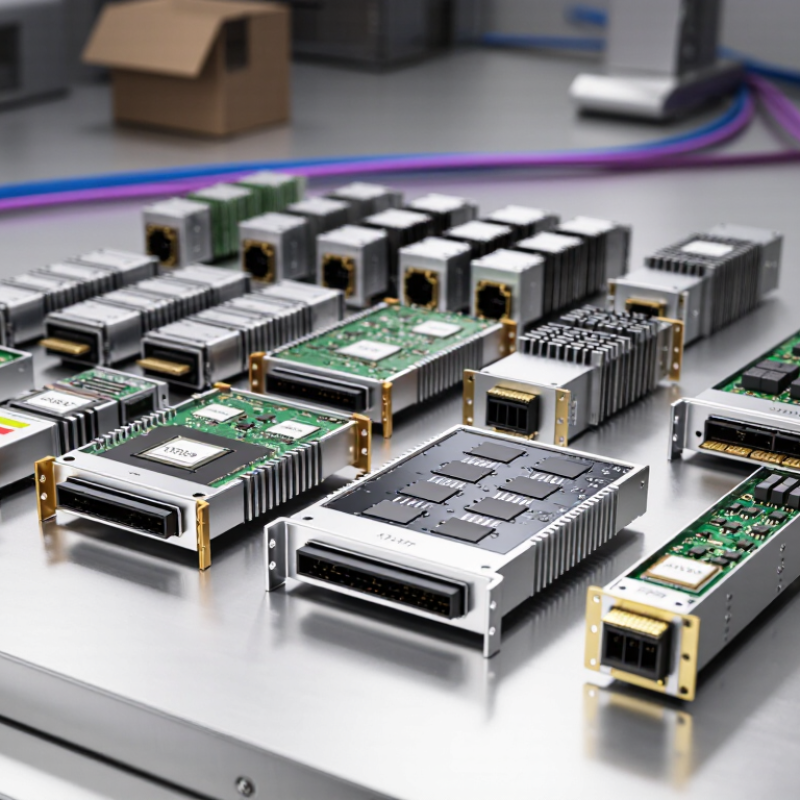
Ethernet speed labels describe link capacity, not a guarantee that every optical transceiver will work in every port. A 10GbE connection commonly uses one optical lane, while higher rates may combine several lanes inside the module. At 40GbE and 100GbE, lane count and signaling methods vary by specification. Check the switch port’s supported interface before comparing prices.
The progression continues through 200GbE, 400GbE, and 800GbE. Some 800GbE designs use eight 100-gigabit lanes; others use four 200-gigabit lanes. The optical format, fiber type, wavelength, and reach all affect module choice. A short data-center link may use multimode fiber, while longer spans often require single-mode fiber. Small details matter.
I have seen buyers focus on the headline rate and overlook host compatibility or power limits. That can turn an apparently economical module into an expensive mismatch. Confirm connector type, lane mapping, and link distance against both ends of the connection. Also check whether a planned breakout, such as one high-speed port feeding several lower-speed links, is supported. Specifications are not always easy to compare, and published reach figures assume suitable cabling and installation. A careful price comparison starts with the complete link, not the transceiver alone.
A practical comparison of common Ethernet optical transceiver options, typical form factors, reach classes, and indicative price ranges.
| Ethernet Rate | Common Form Factor | Typical Optical Options | Typical Maximum Reach | Common Use | Indicative China-Origin Wholesale Price (USD/unit) |
|---|---|---|---|---|---|
| 10GbE | SFP+ | SR, 850 nm; LR, 1310 nm | Up to 300 m over OM3 multimode fiber (SR); up to 10 km over single-mode fiber (LR) | Server access, storage links, and campus aggregation | $5–$30 |
| 25GbE | SFP28 | SR, 850 nm; LR, 1310 nm | Up to 100 m over OM4 multimode fiber (SR); up to 10 km over single-mode fiber (LR) | High-density server and data-center access | $8–$45 |
| 40GbE | QSFP+ | SR4, 850 nm; LR4, 1310 nm | Up to 100 m over OM3 multimode fiber (SR4); up to 10 km over single-mode fiber (LR4) | Data-center aggregation and legacy high-speed uplinks | $20–$100 |
| 100GbE | QSFP28 | SR4, 850 nm; LR4, 1310 nm; CWDM4 | Typically 70–100 m over multimode fiber (SR4); up to 10 km for LR4 or CWDM4 variants | Leaf-spine links, core switches, and data-center interconnects | $25–$220 |
| 200GbE | QSFP56 | SR4, 850 nm; DR4, 1310 nm; FR4 | Reach depends on optical type; DR4 is commonly specified for up to 500 m over single-mode fiber, while FR4 variants can reach up to 2 km | High-capacity data-center switching and spine links | $80–$450 |
| 400GbE | QSFP-DD or OSFP | DR4, 1310 nm; FR4; SR8, 850 nm | DR4: up to 500 m over single-mode fiber; FR4: commonly up to 2 km; SR8 reach depends on multimode fiber grade | Data-center spine, AI clusters, and high-capacity interconnects | $150–$1,000 |
| 800GbE | QSFP-DD800 or OSFP | DR8, 1310 nm; 2×FR4; SR8 | DR8: typically up to 500 m over single-mode fiber; reach for other variants depends on optical design | Large-scale cloud, AI, and high-performance computing networks | $600–$3,000 |
Price and compatibility note: Price ranges are indicative estimates for generic, standards-based modules and are not live quotations. Actual pricing varies with optical type, reach, component availability, order volume, testing requirements, and market conditions. Confirm host-port compatibility, supported fiber type, connector, and link budget before purchase. Reach figures are representative of common optical variants; check the applicable IEEE specification and module datasheet for the exact configuration.
Match the form factor, capacity, reach, fiber type, connector, and host-port support. Check power and cooling too. Small details matter.
SFP28 commonly supports 25G over one lane. For a 10-meter rack link, a compatible direct-attach cable may cost less than an optical module. Verify the port first.
It commonly uses four 25G lanes. Optical versions support longer links, but fiber type, wavelength, and distance affect the specifications and price.
Designs may use eight 50G lanes or four 100G lanes. Confirm the switch’s lane configuration, power limits, and cooling. Crowded chassis can run warm.
100G LR4 supports links up to 10 km over duplex single-mode fiber. 400G DR4 supports up to 500 m over parallel single-mode fiber. More reach is not automatically better value.
A typical MPO-12 connection uses eight fibers. Check connector compatibility and the installed fiber runs before requesting quotes.
Request exact speed, fiber type, connector, reach, host support, test records, and warranty terms in writing. “Compatible” is not specific enough.
Test samples in the intended switch. Check link stability and record temperature, voltage, and optical power readings under load. One sample is not proof. I may be overcautious, but batch differences deserve attention.
This guide helps global buyers understand how optical transceivers are specified and priced in China. It explains Ethernet speeds from 10GbE to 800GbE and connects common module form factors with their capacities, including SFP28 for 25G, QSFP28 for 100G, and QSFP-DD for 400G. It also clarifies how reach requirements affect module selection, comparing examples such as 100G LR4 for links up to 10 km and 400G DR4 for links up to 500 m.
Rather than comparing headline figures alone, buyers can evaluate optical transceiver price by considering speed, transmission distance, and laser type together. The guide also highlights the importance of checking equipment compatibility, digital optical monitoring (DOM) support, warranty terms, and sample testing. Taking these factors into account makes it easier to assess total cost, confirm suitability for a network, and make a more informed purchasing decision.
