OptiLinker OptiLinker

2026 Top DWDM Transceiver Suppliers for Global Buyers

Time:2026-09-12 Author:Madeline
0%

The 2026 Top DWDM Transceiver Suppliers for Global Buyers guide examines a market shaped by rising bandwidth demand, tighter power budgets, and faster network upgrades. A DWDM transceiver combines wavelength control, optical transmission, and digital monitoring in one compact module. It can support long-haul links, data center interconnection, and metropolitan networks. Small specifications matter. Reach, channel spacing, FEC support, thermal limits, and connector type can change the total project cost.

Andrew Lord, BT’s Head of Optical Research, has stated, “The future of networking is optical.” His observation remains highly relevant as cloud platforms and artificial intelligence workloads increase traffic across international routes. Yet, buying decisions should not rely on impressive speed claims alone. Buyers need verified test reports, interoperability records, warranty terms, and practical technical support. A 400G module may look attractive, but it may perform poorly in an older line system. That detail is easy to miss.

This guide evaluates leading suppliers through product depth, manufacturing consistency, compliance documentation, customization capability, and global delivery experience. It also considers real installation concerns, including fiber loss, cabinet temperature, power consumption, and replacement availability. Supplier rankings are useful, but never permanent. Regional service quality can change. Public information may also be incomplete. For that reason, procurement teams should request current datasheets, sample testing, and clear acceptance criteria before placing large orders. Reliable sourcing is not only about choosing a famous brand. It is about matching the right DWDM transceiver to the network’s actual conditions.
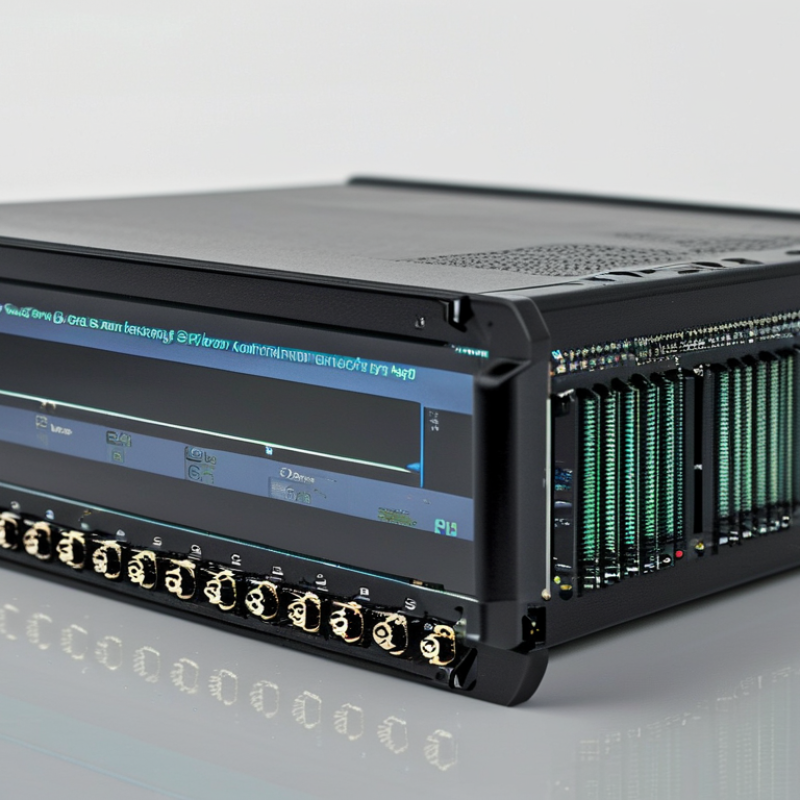
2026 Top DWDM Transceiver Suppliers for Global Buyers

DWDM Transceivers Defined: ITU-T G.694.1 Grids and Optical Reach

DWDM transceivers convert client data into tightly spaced optical channels for long-distance transport. Their channel plan usually follows the ITU-T G.694.1 frequency grid. A 50 GHz grid offers fixed channel positions, while 100 GHz spacing provides more spectral margin. Flex-grid designs can allocate bandwidth according to baud rate and modulation needs. The reference frequency is commonly centered near 193.1 THz.

Optical reach is not a simple distance label. It depends on fiber loss, amplifier spacing, dispersion, nonlinear effects, modulation format, baud rate, and forward error correction. A lower-order modulation may travel farther, but it carries less capacity. Higher-order modulation increases throughput and often reduces tolerance to noise. Engineers should check OSNR values, launch power, chromatic dispersion limits, and receiver sensitivity under real line conditions.

A 400G transceiver may perform well across a short regional route but struggle on an aging fiber span with repeated amplification. That difference matters. In supplier evaluations, I would request verified interoperability data, grid compatibility, temperature ratings, and test reports from comparable networks. Laboratory reach figures can look impressive. Field performance is less tidy. My own assessment would remain cautious when a datasheet omits span loss assumptions or FEC details. A careful buyer should match the transceiver’s wavelength plan and reach class with the actual optical path, not just the advertised data rate.

2026 Market Snapshot: 400G Coherent Optics and 800G Network Demand

The 2026 market is being shaped by two connected forces: 400G coherent optics and rapidly rising 800G network demand. The Cisco Annual Internet Report projected global IP traffic at 780 exabytes per month in 2025, compared with 396 exabytes in 2022. That increase is pressuring data centers and metro networks to upgrade capacity without adding excessive power or floor space.

Cignal AI’s 2025 optical applications research identifies 400ZR and 400ZR+ coherent modules as important choices for data-center interconnection. These modules can support links from roughly 80 to 120 kilometers, depending on fiber conditions and design margins. LightCounting’s recent market outlook also expects AI infrastructure to sustain strong optical transceiver demand through the decade. For global buyers, supplier evaluation should include interoperability testing, forward error correction, thermal performance, and realistic reach claims. Not every 800G module fits every chassis.

800G demand is moving beyond laboratory demonstrations. High-density clusters increasingly require 2×400G or native 800G connections between switches, accelerators, and spine networks. Omdia’s 2025 optical networking analysis points to accelerated adoption as bandwidth requirements rise. Yet forecasts can age badly. Buyers should verify port availability, power consumption, firmware support, and delivery capacity with measured samples, not brochures alone. The overlooked detail is often heat. A small thermal mismatch can reduce stability inside a fully loaded rack.

The chart compares two major optical networking demand tiers without using supplier or brand data. 400G coherent optics are widely used for high-capacity metro, regional, and long-haul DWDM links, while 800G optics represent the next step in data-center and high-capacity network connectivity.

Metric: Nominal optical or Ethernet line rate in gigabits per second. Values reflect standardized market product categories, not company shipments or market share.

Top Global Suppliers: 400ZR, 800ZR, and 80-Channel C-Band Solutions

2026 Top DWDM Transceiver Suppliers for Global Buyers

Top Global Suppliers: 400ZR, 800ZR, and 80-Channel C-Band Solutions

For global buyers, DWDM transceiver selection now starts with network intent, not a product list. 400ZR modules suit coherent links near 400 Gb/s, especially data-center interconnects with tight power limits. In practical reviews, buyers should inspect optical reach, baud rate, host interface, and thermal behavior. A module that passes a desk test may struggle inside a crowded chassis. Small details matter.

800ZR solutions target higher-capacity routes, but they demand careful planning around signal quality, power, and dispersion. Suppliers should provide measured performance, interoperability records, and clear operating limits. Ask for test conditions. A credible supplier can explain whether results came from a controlled lab, a live network, or both. This distinction is often missed. It should not be.

For 80-channel C-band systems, channel spacing, amplifier planning, and wavelength stability become daily engineering concerns. Buyers should compare grid compatibility, FEC support, DOM reporting, and replacement procedures across regions. I have found that documentation quality often predicts deployment speed better than impressive peak specifications. That is not a perfect rule. Some suppliers publish excellent data yet offer slow technical responses after shipment. Request samples, burn-in evidence, and a realistic escalation path before approving volume orders. Regional compliance records and secure packaging also deserve attention.

Supplier Comparison: Standards, Telcordia Testing, Warranty, and Compatibility

For global buyers, a DWDM transceiver supplier should be compared by evidence, not catalogue speed. LightCounting’s 2024 market forecast places optical transceiver revenue near USD 11.7 billion in 2023, with continued growth toward 2028. That expansion increases supplier choice, but also increases qualification risk. Ask whether each module follows applicable ITU-T DWDM recommendations, including channel spacing, optical power, and wavelength tolerances. “Standards compliant” is too vague.

Telcordia testing reveals practical durability. Request reports covering temperature cycling, damp heat, vibration, optical aging, and connector reliability under relevant GR-63 and GR-326 procedures. A laboratory certificate is useful. The test conditions matter more. Check sample size, failure limits, test duration, and whether the report covers the exact transceiver family. Some suppliers provide platform-level data instead of module-level evidence. That gap deserves scrutiny.

Compatibility must be verified on the actual network. Confirm line rate, modulation, dispersion tolerance, FEC behavior, tunable range, management protocol, and host-platform coding. Interoperability claims should include test logs, not only declarations. Warranty terms should state coverage length, advance replacement timing, return analysis, and firmware support. Two years is common, but service quality varies widely. One detail is easy to miss. A five-year warranty has limited value if replacement stock is unavailable. I would also request a small pilot shipment, because published specifications rarely expose every alarm, coding, or thermal issue. That is not a perfect method, but it is more reliable than trusting a polished comparison table.

Buyer Checklist: Price, Lead Time, Power Consumption, and Regional Support

2026 Top DWDM Transceiver Suppliers for Global Buyers

A practical supplier review starts with price, but price alone can mislead. Compare the full cost, including optics, testing, shipping, customs handling, and replacement units. Ask for a written quotation with matching specifications, warranty terms, and validity dates. I have seen low offers become expensive after compatibility checks and emergency freight. That mistake is easy to repeat.

Lead time deserves equal attention. Request production timing, test schedules, and realistic shipping windows. A supplier promising seven days should explain stock status and inspection capacity. Confirm whether the quoted date means factory release or delivery to your site. Small wording differences matter. Keep a buffer for customs and local holidays.

Power consumption affects operating budgets, especially in dense data centers. Check typical and maximum wattage at the required reach and temperature range. A lower-power module can reduce cooling demand, but only if link performance remains stable. Regional support is equally practical. Look for engineers who understand local network standards, time zones, language needs, and return procedures. Ask for sample diagnostic reports and escalation contacts before ordering. My own checklist is still imperfect; field conditions often expose assumptions that laboratory tests miss.

2026 Top DWDM Transceiver Suppliers for Global Buyers - Buyer Checklist: Price, Lead Time, Power Consumption, and Regional Support

Supplier Profile Typical DWDM Product Focus Common Form Factor Typical Data Rate Indicative Price Range
(USD per unit)
Typical Lead Time Typical Power Consumption Regional Support Coverage Buyer Checklist
Tier-1 Network Equipment OEM Channel Coherent DWDM pluggables for carrier and long-haul networks CFP2-DCO, QSFP-DD, OSFP 100G–400G $2,500–$8,000 8–16 weeks 18–32 W Global field service and authorized distribution Confirm equipment interoperability, software licensing, warranty terms, and approved-part requirements.
Specialist Coherent Optics Supplier 100G and 200G coherent DWDM modules for metro and regional networks CFP2-DCO, QSFP56-DD 100G–200G $900–$3,200 4–10 weeks 12–24 W Direct technical support in North America, Europe, and Asia-Pacific Request optical-budget data, modulation options, FEC support, tunability, and interoperability test results.
Multi-Vendor Compatible Optics Supplier Coding-configured DWDM transceivers for mixed network environments SFP+, CFP, CFP2, QSFP28 10G–100G $180–$1,200 2–6 weeks 3.5–8 W Online support with regional logistics hubs Validate EEPROM coding, DOM diagnostics, return policy, sample testing, and switch/router compatibility.
High-Volume Data-Center Optics Supplier 400G coherent and high-capacity DCI DWDM solutions QSFP-DD, OSFP 400G $2,000–$6,500 6–12 weeks 16–28 W Strong support in North America, Europe, and major Asian data-center markets Check thermal design, host-port qualification, line-system compatibility, and sustained-volume allocation.
Regional Telecom Component Distributor Standard DWDM grey and colored optics for metro access networks SFP+, SFP28, QSFP28 10G–100G $120–$900 1–4 weeks from regional stock 1.5–6 W Local inventory and multilingual sales support Confirm wavelength grid, reach, connector type, temperature range, and local import documentation.
Custom and Low-Volume Engineering Supplier Special wavelengths, extended-reach, and application-specific DWDM modules SFP28, QSFP28, CFP2, custom formats 25G–200G $600–$4,000 8–20 weeks 4–18 W Remote engineering support with project-based local partners Define minimum order quantity, qualification samples, customization fees, test reports, and lifecycle commitments.
Refurbished and Surplus Equipment Channel Legacy DWDM modules for maintenance and network extension SFP, XFP, CFP, CFP2 10G–100G $80–$750 2–10 business days 2–12 W Regional warehouse support; limited manufacturer-level engineering Require tested serial records, minimum remaining warranty, optical test results, and clear replacement terms.
Buyer note: Price, lead time, and power figures are indicative 2026 market ranges for comparable DWDM transceiver classes. Actual quotations vary according to wavelength plan, transmission distance, modulation, host-platform qualification, order volume, Incoterms, warranty, and regional inventory.

FAQS

What does a DWDM transceiver do?

It converts client data into tightly spaced optical channels for long-distance transport. The channels share one fiber.

What is the difference between 50 GHz and 100 GHz channel spacing?

A 50 GHz grid provides fixed, closely packed channel positions. A 100 GHz grid offers more spectral margin. Flex-grid designs adjust bandwidth for baud rate and modulation needs.

What reference frequency is commonly used?

The channel plan is commonly centered near 193.1 THz. Actual wavelength plans must match the optical line system.

Does optical reach simply mean distance?

No. Reach depends on fiber loss, amplifier spacing, dispersion, nonlinear effects, modulation, baud rate, and error correction. The advertised distance can mislead.

How does modulation affect reach and capacity?

Lower-order modulation usually travels farther but carries less capacity. Higher-order modulation increases throughput and often tolerates less noise. It is a trade-off.

What should engineers check before selecting a transceiver?

Check OSNR, launch power, chromatic dispersion limits, receiver sensitivity, and actual span loss. Review the complete optical path. Do not rely on data rate alone.

Why can a 400G module struggle on some routes?

A 400G module may work on a short regional route but fail across aging fiber. Repeated amplification can reduce performance. Field conditions are messy.

What evidence should a supplier provide?

Request grid compatibility, temperature ratings, interoperability logs, and module-level test reports. Check sample size, test duration, failure limits, and exact product coverage. A certificate alone is not enough.

What warranty details matter most?

Review coverage length, replacement timing, return analysis, and firmware support. A long warranty has limited value without replacement stock. I would request a small pilot shipment.

Conclusion

This guide presents a practical overview of the 2026 DWDM transceiver market for global buyers. It explains how ITU-T G.694.1 wavelength grids support dense optical networking, while transmission reach depends on modulation, fiber conditions, amplification, and system design. With demand increasing for 400G coherent optics and emerging 800G networks, buyers must evaluate whether solutions support 400ZR, 800ZR, or 80-channel C-band deployments.

The comparison focuses on key supplier capabilities, including standards compliance, Telcordia testing, interoperability, warranty terms, and equipment compatibility. A clear buyer checklist also covers total price, production and delivery lead times, power consumption, installation requirements, and regional technical support. By weighing performance, lifecycle cost, and deployment flexibility together, network operators can select a DWDM transceiver solution that matches current capacity requirements while allowing room for future network expansion.

Madeline

Madeline

Madeline is a dedicated marketing professional with a wealth of expertise in our company's core offerings. With a keen understanding of the industry, she brings a unique perspective to her role, consistently delivering high-quality content that highlights the superior aspects of our products. As......