OptiLinker OptiLinker

2026 Best Optical Transceiver for Global Buyers?

Time:2026-11-15 Author:Madeline
0%

Choosing the best optical transceiver in 2026 means matching the module to the network—not simply buying the highest speed. Global buyers must weigh reach, fiber type, power draw, interoperability, temperature range, and supplier support. A 400G module for a data-center row has different priorities from a long-reach coherent optic linking regional sites. Small details matter: connector type, host-platform compatibility, and actual link budgets can decide whether a deployment works cleanly.

Industry data helps explain the pressure behind these decisions. LightCounting’s market reports track rising demand for high-speed optical modules as cloud and AI infrastructure expand. Cisco’s Annual Internet Report projected 3.6 zettabytes of annual global IP traffic by 2023; that figure is a forecast, not a current measurement, but it shows the scale of anticipated network growth. LightCounting CEO Vladimir Kozlov has highlighted AI-related infrastructure as an important driver of optical-market demand. Buyers should still verify any forecast against their own traffic plans. Reports describe markets, not individual networks.

There is no universal winner. Not quite. A sound shortlist compares tested interoperability, power consumption, warranty terms, and documented performance at the required distance. It also checks whether the vendor publishes clear specifications and supports firmware updates. Some purchasing guides overlook this part. For a global buyer, the best optical transceiver is the one that meets the link budget today and remains supportable across regions and platforms. This guide examines the options, trade-offs, and questions worth asking before an order is placed.
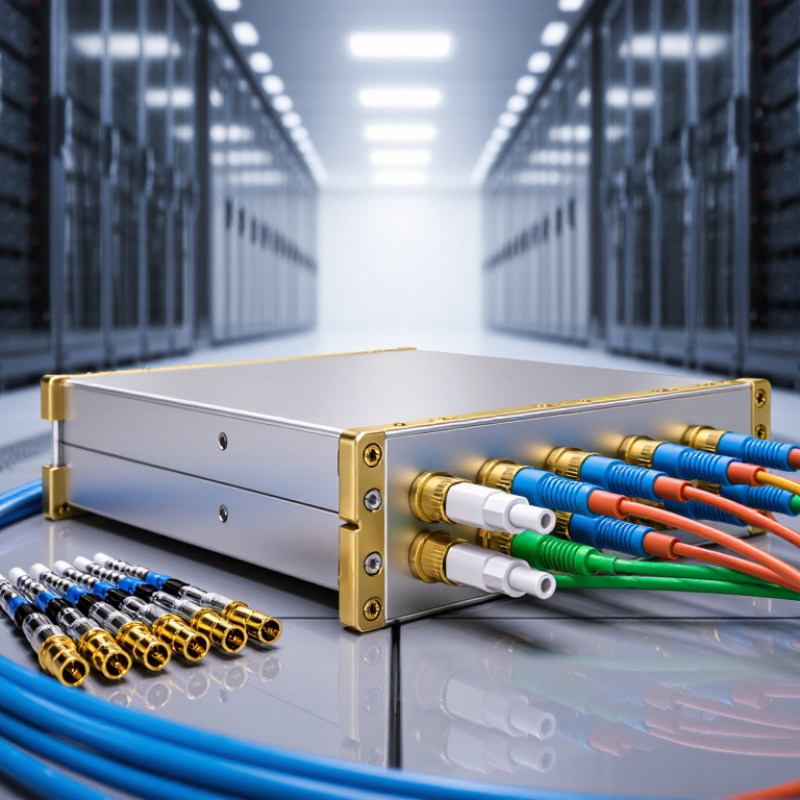
2026 Best Optical Transceiver for Global Buyers?

What Optical Transceivers Are and How They Enable Data Transmission

An optical transceiver converts electrical signals into light for travel through fiber, then converts incoming light back into electrical signals. Inside the module, a transmitter sends light through a laser or other light source, while a receiver detects it with a photodiode. The fiber carries that signal between switches, servers, or network sites. Light moves fast. But the module alone does not determine performance.

Reach, wavelength, data rate, connector type, and fiber quality all matter. A module designed for a short data-center link may not suit a long campus connection. The ITU’s Facts and Figures 2024 estimates that 5.5 billion people used the internet in 2024, or 68 percent of the world’s population. That scale helps explain why networks need dependable, high-capacity links, though internet-user numbers do not directly measure optical-transceiver demand. Buyers should check compatibility and operating conditions, not just headline speed. A specification sheet can make reach look simpler than it is; actual results depend on the complete link and its installation.

Key Transceiver Types, Form Factors, and Performance Specifications

Optical transceivers differ in reach, wavelength, and fiber requirements. Short-reach SR modules typically use multimode fiber inside data centers, while LR modules serve longer links over single-mode fiber. ER options extend reach further, but their optical budgets must match the link design. BiDi modules send and receive signals on different wavelengths through one fiber strand. Useful, but the two ends must be paired correctly. Coherent optics suit high-capacity transport links, where modulation and signal processing matter as much as nominal data rate.

Form factor affects port density, power, and host-device compatibility. SFP+ and SFP28 commonly support lower-speed links; QSFP28, QSFP-DD, and OSFP address higher port capacities. A smaller module is not automatically the better choice. Check the host’s supported interface, lane configuration, and thermal limits before ordering. Compare data rate, reach, wavelength, connector type, transmit power, receiver sensitivity, and digital diagnostics. FEC support can also affect link stability, especially at higher speeds. In real deployments, engineers verify the fiber path and both endpoint specifications rather than trusting a reach label alone. Measurements can still vary with patch panels and aging connectors. That part is easy to overlook.

2026 Best Optical Transceiver for Global Buyers?

A comparison of representative Ethernet optical interfaces, common form factors, and their rated maximum link reach.

Reach values are standard-rated maximums for the specified fiber type, not guarantees for every installation. SR interfaces use multimode fiber; LR and DR interfaces use single-mode fiber. SFP+, SFP28, QSFP28, and QSFP-DD are common form factors, but the same interface may be offered in other form factors. Always verify fiber grade, link budget, and host compatibility.

How to Match a Transceiver to Network Equipment and Deployment Needs

Choosing an optical transceiver starts with the network equipment, not a product label. Check the switch or router port type, supported data rate, lane configuration, and host interface before comparing reach. A 10-kilometer rating cannot help if the port expects a different speed or wavelength. Read the equipment’s compatibility guidance, then confirm the module’s form factor and coding requirements. Small details matter. For a duplex link, match fiber type, wavelength, connector, and polarity at both ends. Single-mode and multimode fiber are not interchangeable, even when their connectors look identical.

Next, map the actual route. Measure cable length, count patch panels, and include each connector in the link budget. Leave margin for aging, bends, and measurement uncertainty; a clean lab link may behave differently in a crowded rack. Check operating temperature, power draw, and airflow, especially in sealed cabinets or outdoor enclosures. Confirm that both ends support the required monitoring data and error-correction settings. Test a sample pair under expected traffic before a large rollout. Compatibility tables can be incomplete, so verify details rather than assuming. Record firmware, port settings, and optical readings during validation, then retest after changes. A cautious pilot takes time, but it may reveal a mismatch before service is affected.

2026 Best Optical Transceiver for Global Buyers? - How to Match a Transceiver to Network Equipment and Deployment Needs
Network rate Common optical standard Typical module form factor Fiber and connector Typical maximum reach Typical deployment Key matching checks
1 GbE 1000BASE-SX SFP Multimode fiber; duplex LC Up to 550 m on OM2 or better; shorter on some older fiber grades Short links within buildings and data rooms Confirm the port supports 1 GbE SFP and check the installed fiber grade and link length.
1 GbE 1000BASE-LX SFP Single-mode fiber; duplex LC Typically up to 10 km on single-mode fiber Campus links and building-to-building connections Use matching optics at both ends; verify fiber type and whether multimode operation requires mode-conditioning patch cords.
10 GbE 10GBASE-SR SFP+ Multimode fiber; duplex LC 300 m on OM3; 400 m on OM4 Data-center and enterprise links over multimode fiber Check that the host port supports 10 GbE SFP+ and that the fiber grade supports the required distance.
10 GbE 10GBASE-LR SFP+ Single-mode fiber; duplex LC Typically up to 10 km Campus, metro-access, and longer building links Confirm single-mode fiber, matching wavelength and standard at both ends, and adequate optical loss budget.
25 GbE 25GBASE-SR SFP28 Multimode fiber; duplex LC 70 m on OM3; 100 m on OM4 Short-reach data-center connections Verify 25 GbE SFP28 support, host configuration, and any platform-specific FEC requirements.
40 GbE 40GBASE-SR4 QSFP+ Multimode fiber; MPO-12 100 m on OM3; 150 m on OM4 High-density data-center switching Check MPO polarity, fiber strand count, connector cleanliness, and whether breakout cabling is required.
100 GbE 100GBASE-LR4 QSFP28 Single-mode fiber; duplex LC Typically up to 10 km Campus and metro links requiring 100 GbE over duplex fiber Confirm QSFP28 port support, link budget, and matching LR4 optics at both ends.
100 GbE 100GBASE-SR4 QSFP28 Multimode fiber; MPO-12 70 m on OM3; 100 m on OM4 Short-reach data-center links and supported breakout designs Validate MPO polarity and cabling layout; confirm the switch supports the intended port speed and breakout mode.
400 GbE 400GBASE-DR4 QSFP-DD or OSFP, depending on equipment Single-mode fiber; MPO-12 Typically up to 500 m High-capacity data-center interconnects and supported breakout applications Check the exact host form factor, port configuration, MPO polarity, and platform support before ordering.
Reach figures are typical standard-based values for compliant cabling and conditions; actual reach depends on fiber quality, connector loss, and the complete link budget. Before purchasing, verify the equipment’s supported speed, module form factor, optical standard, wavelength, fiber type, connector, coding requirements, and operating-temperature range. Use compatible optics at both ends of each link.

Global Compatibility, Standards, and Compliance Factors for Buyers

For global buyers, optical transceiver compatibility starts with the host platform, not the product label. Confirm the exact port speed, supported form factor, wavelength, fiber type, reach, and connector. A 400G module may fit physically but still fail link training or exceed the host’s supported power envelope. Small details matter. Check the platform’s compatibility list and test with the intended switch, fiber, and operating temperature before ordering at scale.

Standards and compliance need equal attention. IEEE 802.3 specifies Ethernet interfaces and link requirements; MSA documents define many module form factors and electrical interfaces. For laser safety, verify applicable IEC 60825-1 requirements and request current test documentation. The ITU’s Facts and Figures 2024 estimates that 5.5 billion people were online, or 68% of the global population, underscoring how widely network infrastructure must interoperate. Yet a global product claim does not guarantee approval in every destination market. Ask suppliers for country-specific conformity records, clear labeling, and traceable serial numbers. I would still validate a sample shipment: paperwork can look complete while a regional plug, label, or customs document is missing.

How to Compare Suppliers, Costs, and Support in the 2026 Market

In 2026, choosing an optical transceiver means comparing more than price and headline speed. Synergy Research Group estimated global cloud infrastructure service spending at about $330 billion in 2024, up 22% year over year. This signals expanding data-center demand, but it is not a direct forecast for transceiver sales. Buyers should still match each module to the actual link: data rate, reach, wavelength, fiber type, host compatibility, and operating temperature. Small details matter.

Compare suppliers using written specifications and test records, not verbal assurances. Ask for interoperability results, failure rates, warranty terms, replacement lead times, and clear return procedures. Calculate total cost across the expected service life, including power use, spare inventory, and downtime risk. A cheaper module may cost more if support is slow or compatibility is uncertain. Even careful buyers can overvalue one clean link test; test representative equipment and cable lengths before ordering at scale.

Tips: Request a sample and test it in the intended switch, with the planned fiber and target distance. Get support response times in writing. Keep one spare on hand. My comparison would still include uncertainty: published figures may not reflect your installation, so validate them against your own environment.

FAQS

What does an optical transceiver do?

It converts electrical signals into light for fiber transmission. A receiver converts incoming light back into electrical signals.

Which details should I check before choosing a transceiver?

Check port speed, form factor, wavelength, fiber type, reach, connector, and host compatibility. Small details matter.

Can single-mode and multimode fiber be used interchangeably?

No. They have different optical characteristics, even when their connectors look identical. Match the fiber type at both ends.

How should I estimate whether a transceiver can reach across a link?

Measure the route and include patch panels and connectors. Allow margin for bends, aging, and measurement uncertainty.

Why might a module fit a port but still fail?

Physical fit does not guarantee supported speed, link training, coding, or power use. Confirm compatibility with the equipment.

What operating conditions should I review?

Check temperature, power draw, and airflow. A sealed cabinet or crowded rack can affect operation.

What should a network test include before a large rollout?

Test a sample pair under expected traffic. Record firmware, port settings, and optical readings, then retest after changes. Test before scaling.

What compliance information should buyers request?

Request current laser-safety documentation, country-specific conformity records, clear labeling, and traceable serial numbers. I would still inspect a sample shipment; paperwork can miss details.

Conclusion

Choosing the best optical transceiver in 2026 starts with understanding how these modules convert electrical signals into optical signals and back to support data transmission across a network. Buyers should compare common transceiver types, form factors, reach, data rates, wavelength, fiber requirements, and power use, then match those specifications to their switches, routers, cabling, and deployment conditions. The right choice depends on both technical compatibility and the demands of the intended network environment.

For global purchasing, it is also important to check interoperability, applicable industry standards, and relevant regional compliance requirements. A thorough supplier comparison should consider more than the initial price: product quality, availability, warranty terms, technical support, and delivery options can all affect long-term value. By assessing these factors together, buyers can select a suitable transceiver solution that meets performance needs while supporting reliable network operation and future growth.

Madeline

Madeline

Madeline is a dedicated marketing professional with a wealth of expertise in our company's core offerings. With a keen understanding of the industry, she brings a unique perspective to her role, consistently delivering high-quality content that highlights the superior aspects of our products. As......