OptiLinker
Choosing the 2026 Best 25G SFP28 Transceiver for Global Buyers requires more than comparing online prices. A reliable decision begins with the network’s real conditions: switch compatibility, fiber type, transmission distance, operating temperature, and replacement availability. One optic may perform perfectly across a 100-meter data-center link but fail to meet the stability demands of a two-kilometer campus connection. Small details matter.
John D’Ambrosia, a respected Ethernet Alliance leader, has described 25GbE as a practical step for networks seeking higher bandwidth without immediately rebuilding their infrastructure. That idea remains useful when evaluating a 25G SFP28 transceiver. Buyers should verify the switch’s supported coding, duplex mode, wavelength, and vendor restrictions before ordering. Digital diagnostics can also reveal temperature, voltage, and optical-power changes during operation. Those readings turn a hidden fault into a visible warning.
The best model is not always the fastest one. It may be the optic with consistent interoperability, accurate documentation, strong quality control, and dependable technical support. Global buyers should also examine warranty terms, factory testing, compliance records, and delivery continuity. A low-cost module can become expensive after repeated link drops or emergency replacement.
There is no universal winner. Even experienced engineers can overlook a connector specification or choose the wrong reach. That is worth admitting. This guide compares leading options through practical testing criteria, verified specifications, and deployment experience. It aims to make the 2026 selection process clearer, while recognizing that local infrastructure and operating conditions still shape the final answer.
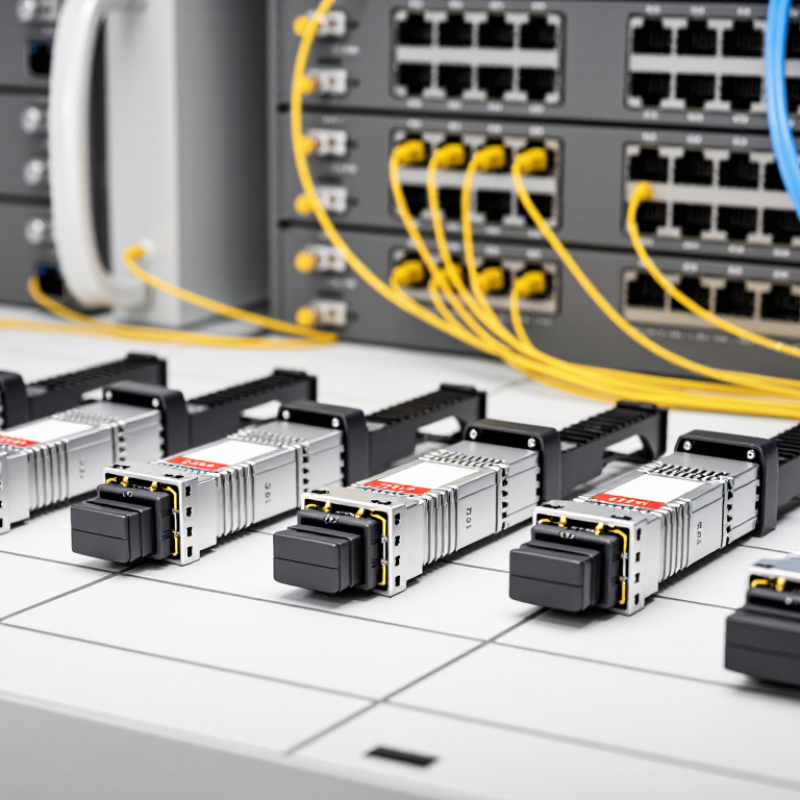
What Is a 25G SFP28 Transceiver?
A 25G SFP28 transceiver is a compact, hot-swappable optical module for 25-gigabit Ethernet links. “SFP28” describes the physical form factor, not a single transmission distance. Most modules use one electrical 25Gb/s lane and connect through a duplex LC interface. Common versions support multimode fiber for short data-center links or single-mode fiber for longer connections.
The design follows 25GbE specifications developed through IEEE 802.3by. Its typical line rate is 25.78125 GBd, which allows efficient server-to-switch connections without using four 10GbE lanes. That matters in dense racks. According to Cisco’s Annual Internet Report, connected devices were forecast to reach 29.3 billion globally by 2023, increasing pressure on network capacity. A transceiver does not solve congestion alone. Cabling, switch ports, optics, and thermal limits must match.
Selection requires practical testing. Check reach, wavelength, fiber type, temperature rating, digital diagnostics, and switch compatibility. For example, a 25GBASE-SR module may reach about 70 meters over OM3 fiber and 100 meters over OM4 fiber, while LR versions commonly reach 10 kilometers over single-mode fiber. Figures vary by standard and installation quality. That is where buyers can make mistakes. A longer-rated optic may still perform poorly with dirty connectors, excessive bends, or weak power margins. LightCounting’s Ethernet optics research also shows continuing demand for higher-speed data-center connectivity, but market forecasts are not substitutes for an on-site link budget.
A 25G SFP28 transceiver connects network equipment through a compact, hot-swappable interface. It converts electrical signals from a switch or server into optical pulses. The receiving side changes those pulses back into data. Most 25G links use duplex LC connectors and separate transmit and receive lanes.
The module normally follows 25GbE standards and can support single-mode or multimode fiber. Single-mode fiber suits longer distances, while multimode fiber works well inside data halls. Distance depends on wavelength, fiber quality, connector loss, and the optical power budget. A longer-rated module cannot fix damaged fiber. That assumption is risky.
During installation, engineers should check host compatibility, coding requirements, speed settings, and forward error correction. A 25G transceiver will not make a 10G-only port operate at 25G. Digital monitoring can report temperature, voltage, laser bias, and optical power. These readings help locate weak links before users notice packet loss. In real cabinets, heat matters. Poor airflow can raise module temperature and shorten service life. Technicians should also clean connectors and verify both ends use matching optical specifications. A clean specification sheet can still mislead. Practical testing remains necessary, especially across mixed equipment and long fiber routes.
| Transceiver Type | IEEE Ethernet Application | Wavelength | Fiber Medium | Typical Reach | Optical Connector | Typical Power | Best-Fit Network Use | Selection Notes |
|---|---|---|---|---|---|---|---|---|
| 25GBASE-SR SFP28 | 25 Gigabit Ethernet | 850 nm | Multimode fiber, OM3/OM4 | Up to 70 m on OM3; up to 100 m on OM4 | Duplex LC | Typically below 1.5 W | Server-to-switch links inside data halls | A cost-effective choice for short, high-density connections. |
| 25GBASE-LR SFP28 | 25 Gigabit Ethernet | 1310 nm | Single-mode fiber | Up to 10 km | Duplex LC | Typically below 2.0 W | Data-center interconnects and campus backbones | Suitable when one transceiver must cover both short and metropolitan links. |
| 25GBASE-ER SFP28 | 25 Gigabit Ethernet | 1310 nm | Single-mode fiber | Up to 30 km, subject to link budget | Duplex LC | Typically below 2.5 W | Long campus, metro-access, and regional links | Verify receiver overload limits and fiber attenuation before deployment. |
| 25G BiDi SFP28, 10 km | 25 Gigabit Ethernet over one fiber | Paired wavelengths, commonly around 1270/1330 nm or 1270/1290 nm | Single-mode fiber, simplex | Up to 10 km | Simplex LC | Typically below 2.0 W | Fiber-constrained campuses and access networks | Both ends must use complementary wavelength versions. |
| 25G BiDi SFP28, 20 km | 25 Gigabit Ethernet over one fiber | Paired wavelengths, commonly around 1270/1330 nm | Single-mode fiber, simplex | Up to 20 km | Simplex LC | Typically below 2.5 W | Extended access and distributed data-center links | Check dispersion, optical budget, and matching wavelength pairs. |
| 25G CWDM SFP28 | 25 Gigabit Ethernet over multiplexed wavelengths | CWDM grid, commonly 1270–1610 nm | Single-mode fiber | Commonly 10–40 km, depending on design | Duplex LC | Typically 1.5–2.5 W | Metro networks with limited fiber pairs | Requires compatible CWDM multiplexers, demultiplexers, and channel planning. |
| 25G DWDM SFP28 | 25 Gigabit Ethernet over dense wavelength networks | C-band DWDM channel grid, commonly near 1550 nm | Single-mode fiber | Often 40–80 km with suitable optical equipment | Duplex LC | Typically 2.0–3.5 W | High-capacity metro and regional transport | Requires channel compatibility and a verified dispersion and power budget. |
| 25G SFP28 DAC, 1 m | Direct-attached 25 Gigabit link | Not applicable; passive copper | Twinax copper cable | Up to approximately 1 m | SFP28-to-SFP28 | Very low; no optical laser | Top-of-rack switch-to-server connections | Lowest-cost and lowest-latency option for very short distances. |
| 25G SFP28 DAC, 3 m | Direct-attached 25 Gigabit link | Not applicable; passive copper | Twinax copper cable | Up to approximately 3 m | SFP28-to-SFP28 | Very low; no optical laser | Adjacent rack and short aisle connections | Cable weight and bend radius should be considered in dense racks. |
| 25G SFP28 AOC, 3–10 m | Active optical 25 Gigabit link | 850 nm internal optics | Multimode optical cable | Commonly 3–10 m; vendor-rated length applies | Fixed SFP28 ends | Typically below 1.5 W per end | Cross-rack links requiring lighter cabling | Lighter than DAC, but the fixed cable length reduces flexibility. |
| 25G SFP28 to 10G SFP+ Dual-Rate | 25G or 10G Ethernet, port-dependent | 850 nm or 1310 nm, depending on optic type | Multimode or single-mode fiber | Typically 70–100 m on OM3/OM4 or up to 10 km on SMF | Duplex LC | Depends on optical variant | Phased upgrades from 10G to 25G | Confirm that the switch port and transceiver firmware support the intended data rate. |
| 25G SFP28 with DOM | 25 Gigabit Ethernet with diagnostics | Varies by optical design | Multimode or single-mode fiber | Varies by optical design | LC or fixed copper connector | Depends on optical design | Networks requiring proactive monitoring | Digital Optical Monitoring can report temperature, voltage, bias current, and transmit/receive power. |
For global buyers in 2026, choosing a 25G SFP28 module requires more than checking the advertised data rate. The practical baseline is 25.78125 Gb/s Ethernet support, compatible host equipment, and correct fiber media. A module designed for multimode fiber may reach 70 or 100 meters, while single-mode versions can support 10, 20, 40, or 80 kilometers. Reach depends on the complete link.
Wavelength is equally important. Common options include 850 nm for short multimode connections and 1310 nm or 1550 nm for longer single-mode links. Check the connector type, transmit and receive power, receiver sensitivity, and maximum power consumption.
Digital optical monitoring can report temperature, voltage, bias current, and optical levels. It helps during installation. It does not replace testing.
Review operating temperature ratings carefully. Standard, extended, and industrial ranges may suit very different locations. Confirm compliance with relevant Ethernet, optical safety, environmental, and regional requirements. Host coding, forward error correction, and EEPROM information can also affect interoperability.
In field checks, a module may pass a short test but fail after several hours under heat. That detail is easy to miss. A clean datasheet is not always complete. Buyers should request test records, lifetime data, warranty terms, and clear replacement procedures. I have learned that low power consumption is useful, but stable performance matters more when a remote link is difficult to access.
Global network growth keeps 25G SFP28 relevant for data centers, cloud access, and enterprise aggregation. The 2023 Annual Internet Report projected 5.3 billion internet users and 29.3 billion connected devices worldwide. That scale increases pressure on older 10G uplinks. In practical deployments, 25G offers stronger server density without requiring a complete 100G migration.
A suitable transceiver should match fiber type, reach, wavelength, temperature range, and host compatibility. For short data-center links, 25GBASE-SR over multimode fiber is usually efficient. For longer campus or regional connections, 25GBASE-LR over single-mode fiber provides greater reach. Buyers should verify SFP28 electrical compliance, digital diagnostics, receiver sensitivity, and coded interoperability.
Small details matter.
The Ethernet Alliance’s 2024 roadmap shows continued growth across 25G, 100G, and higher-speed Ethernet ecosystems. However, “best” is not universal. A low-cost module may perform well in a clean rack but fail under heat, dust, or unstable power. I have seen specifications look excellent while installation results remained disappointing. Independent testing, operating-temperature records, and a clear warranty are more trustworthy than a long feature list. Global buyers should also confirm regional shipping support, documentation quality, and replacement availability before placing large orders.
For global deployments, compatibility matters more than headline speed. IEEE 802.3by defines 25GbE operation at 25.78125 GBd. Buyers should verify the host port, fiber type, wavelength, reach, and connector. SFF-8472 support enables digital optical monitoring. SFF-8636 may be required by some platforms. These details often decide whether a module works after installation.
The Ethernet Alliance’s 2024 Ethernet Roadmap keeps 25GbE relevant for server access and compact data-center links. LightCounting’s 2025 optical market forecast also identifies continued demand for cost-efficient Ethernet optics. Check FEC requirements, coding mode, and switch firmware before ordering.
A 25GBASE-SR module suits short multimode-fiber runs. A 25GBASE-LR module is better for longer single-mode links, often up to 10 kilometers under compliant conditions. Real distance depends on attenuation, patch panels, and splice quality.
Tips: Test one sample in the target switch first. Confirm DOM readings, temperature range, and EEPROM coding. I have seen a module pass a bench test but fail after a firmware update. That is an uncomfortable reminder: compatibility lists are useful, but they are not absolute proof. Keep test records, including optical power near the rack entrance and receiver side. Small measurement errors can become expensive global deployment problems.
It is a compact, hot-swappable optical module for 25-gigabit Ethernet connections. It usually uses one 25Gb/s electrical lane. Most models connect through a duplex LC interface. Small, but important.
SFP28 describes the module’s physical form factor. It does not define one fixed transmission distance. Different versions support different fibers, wavelengths, and reaches. The shape is not the whole specification.
Multimode fiber suits many short data-center connections. Single-mode fiber supports longer links, including regional connections. A short-reach module should not be paired casually with single-mode fiber. That mistake is easy to make.
Short-reach versions may reach about 70 meters over OM3 fiber. They may reach about 100 meters over OM4 fiber. Long-reach versions commonly support up to 10 kilometers over single-mode fiber. Actual results depend on installation quality.
No. A longer-rated optic may still perform poorly in a weak link. Dirty connectors can reduce optical performance. Sharp fiber bends can also weaken the signal. Power margins matter. Longer is not automatically safer.
Check reach, wavelength, fiber type, temperature rating, and host compatibility. Review digital diagnostics and receiver sensitivity. Confirm the switch supports the module’s electrical and optical requirements. A long feature list can still hide a mismatch.
They provide higher server connectivity without using four 10G lanes. This can improve rack density and reduce cabling complexity. They also support gradual movement toward faster network speeds. But optics alone cannot solve congestion.
No. Compatibility depends on the switch, firmware, coding, fiber, and optical limits. Operating temperature and power stability also matter. A module may work in a clean rack but struggle in heat or dust. I would test before ordering a large quantity.
Clean connectors, gentle fiber bends, and adequate power margins are essential. Record operating temperatures during real traffic. Measure the link budget instead of trusting distance claims alone. Specifications can look perfect. Installation results may disagree.
A 25G SFP28 transceiver is a compact, hot-pluggable optical or direct-attach module designed to support 25Gbps Ethernet connections in data centers, enterprise networks, and high-performance computing environments. It connects switches, servers, storage systems, and other network devices while offering higher bandwidth and improved port efficiency compared with many legacy solutions. Modern networks use these modules to handle growing data traffic, reduce congestion, and support scalable network upgrades without requiring a complete infrastructure replacement.
For global buyers in 2026, the best 25G SFP28 transceiver should be selected according to transmission distance, fiber type, wavelength, connector design, operating temperature, power consumption, and monitoring capabilities. Buyers should also verify interoperability with network equipment, compliance with relevant industry standards, and support for functions such as digital diagnostics. Careful attention to coding, firmware, installation conditions, warranty coverage, and regional deployment requirements can help ensure stable performance, easier maintenance, and long-term value across diverse networking environments.
